WASHINGTON — In a stark partisan divide during National Police Week, 173 House Democrats voted against a Republican-led resolution honoring law enforcement officers, even as assaults on police reached a 10-year high according to a recent FBI report. The measure, introduced by Rep. Zach Nunn, R-Iowa, praised the sacrifices of officers and criticized movements to defund police departments, drawing sharp opposition from Democratic leadership.
The vote took place on Wednesday amid events commemorating fallen officers across the country. House Speaker Mike Johnson, R-La., led an emotional candlelight vigil on Capitol Hill earlier in the week, where he addressed families of officers killed in the line of duty. "To the families of those fallen heroes and those who continue to stand guard in our communities: we have your back," Johnson said at the vigil on Tuesday. "We'll continue to advance policies here that support law enforcement and bring justice to those who seek to harm officers."
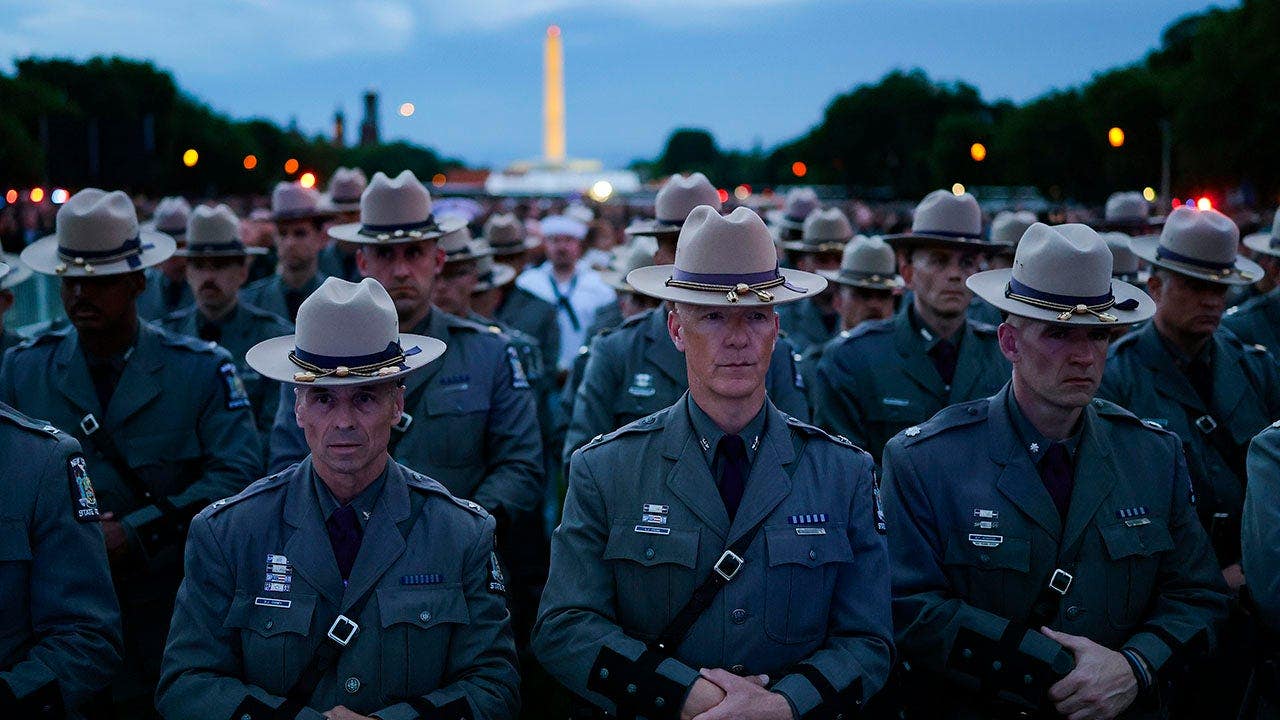
National Police Week, an annual observance honoring the service and sacrifice of law enforcement, culminated in gatherings on the National Mall in Washington, D.C., on May 13, 2026. There, officers and families participated in the 38th annual Candlelight Vigil hosted by the National Law Enforcement Officers Memorial Fund, remembering 109 officers who died in the line of duty in 2025.
The resolution itself highlighted the "extraordinary sacrifice" made by law enforcement and pointed to surging assaults on officers. According to an FBI report released on Monday, assaults against law enforcement climbed to their highest level in a decade last year, though the number of officers killed saw a slight decrease from 2024 to 2025. Nunn, who spearheaded the measure, expressed disappointment over the lack of unanimous support in an interview with Fox News Digital.
"We want to take that best practice of respecting law enforcement in Iowa to the nation's capital, and I was thrilled that we got bipartisan support," Nunn said. However, he added, "I think it unfortunately puts a real spotlight on a chasm we have between those who support law and order and those who are supporting those who undermine it." Every Republican lawmaker present backed the resolution, while House Minority Leader Hakeem Jeffries, D-N.Y., joined 172 of his Democratic colleagues in voting against it.
Only 29 House Democrats supported the measure, many of whom are facing competitive re-election contests in November. Among those voting in favor were representatives from districts where public safety issues have been prominent in campaigns. Conversely, several vulnerable Democrats, including Rep. Gabe Vasquez, D-N.M., voted against it. A spokesperson for Vasquez did not immediately respond to requests for comment from Fox News Digital.
Three Democrats — Reps. Maggie Goodlander, D-N.H., Chrissy Houlahan, D-Pa., and Johnny Olszewski, D-Md. — voted present, opting not to fully endorse or oppose the resolution. House Minority Whip Katherine Clark, D-Mass., stood with Jeffries in opposition, as captured in a photo from the Capitol steps on Nov. 12, 2025.
Critics among Democrats likely took issue with specific language in the resolution that targeted progressive policies. The text stated, in part: "Whereas rhetoric and policies from leftist activists and progressive politicians seek to defund or dismantle local police departments undermine public safety and place both officers and the communities they serve at greater risk." It also condemned sanctuary city policies for allegedly endangering officers.
Additionally, the resolution credited the Trump administration's law-and-order approach with significant crime reductions. Nunn highlighted these achievements, telling Fox News Digital: "We are at a 125-year low for murder rates, 10-year low for drug overdoses. These are things that good community policing, that our law enforcement officers are doing every day, have had a really positive impact."
The vote occurred against a backdrop of heightened national focus on police safety. Last year's surge in assaults, as detailed in the FBI's report, has fueled debates over funding and support for law enforcement. Republicans have framed the Democratic opposition as a broader rejection of backing the badge, while Democrats have not publicly issued a unified response to the resolution's defeat.
Beyond the resolution, House Republicans are advancing a series of anti-crime initiatives this week. One bill would require the attorney general to compile a list of state and local governments adopting cashless bail policies, which GOP lawmakers have criticized for allowing repeat offenders to be released while awaiting trial. "GOP lawmakers have sharply criticized those policies for letting repeat offenders walk free from jail while awaiting trial," according to reports on the legislative push.
The partisan split echoes ongoing tensions over criminal justice reform. The defund the police movement, which gained traction following high-profile incidents in 2020, has been a flashpoint in congressional debates. While some Democrats have distanced themselves from the slogan, others argue for reallocating resources to address root causes of crime rather than outright cuts.
Nunn's expectation of unanimous support underscores the resolution's intent as a unifying gesture during Police Week. Yet the 173-29 vote along party lines — with all present Republicans in favor — highlights deepening divisions in Congress on public safety issues. As assaults on officers continue to rise, the measure's failure may intensify calls for bipartisan cooperation on law enforcement support.
Looking ahead, the House is quietly discussing expansions to personal security measures for lawmakers, amid concerns over political violence. This comes as Republicans pitch their anti-crime slate, potentially setting the stage for further clashes with Democrats on issues like bail reform and police funding.
The events of National Police Week serve as a reminder of the human cost behind the statistics. With 109 officers lost in 2025 alone, families and communities continue to grapple with profound losses. As Congress navigates these policy battles, the resolution's outcome reflects broader ideological rifts that could shape future legislation on crime and policing.