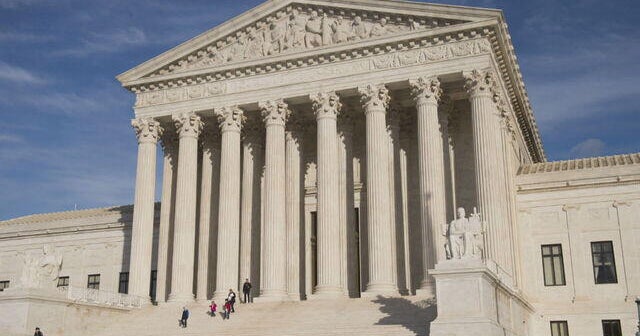
In a landmark decision that reverberated through Washington and beyond, the Supreme Court on Thursday struck down President Donald Trump's emergency tariffs, ruling them an overreach of executive authority. The 5-4 decision, delivered by Chief Justice John Roberts, came in response to a challenge brought by a coalition of business groups and states affected by the tariffs imposed on steel and aluminum imports. According to court documents, the justices found that the president's invocation of national emergency powers under the International Emergency Economic Powers Act exceeded statutory limits, effectively halting the tariffs that had been in place since 2018.
The ruling marks a significant check on executive power, particularly in trade policy, where Trump had aggressively used tariffs as a tool in his 'America First' agenda. 'The Constitution vests Congress with the power to regulate commerce with foreign nations,' Roberts wrote in the majority opinion, emphasizing that emergency declarations cannot be used to bypass legislative intent. The decision immediately prompted reactions from both sides of the aisle, with supporters of free trade hailing it as a victory for economic stability.
White House Press Secretary Kayleigh McEnany addressed the ruling during a briefing, stating, 'The president respects the Supreme Court's decision but remains committed to protecting American workers from unfair trade practices.' She added that the administration would explore alternative measures to address trade imbalances, though specifics were not provided. Meanwhile, Senate Minority Leader Chuck Schumer praised the outcome, saying in a statement, 'This is a win for the rule of law and for American businesses burdened by these misguided tariffs.'
The tariffs in question were first announced by Trump on March 1, 2018, targeting steel imports at 25% and aluminum at 10%, citing national security concerns under Section 232 of the Trade Expansion Act. They affected countries including Canada, Mexico, and the European Union, leading to retaliatory measures and escalating trade tensions. Economists estimated the tariffs cost U.S. consumers and manufacturers billions, with the Peterson Institute for International Economics reporting an annual hit of $900 per household in higher prices.
Legal challenges mounted quickly, with the American Institute for International Steel leading the charge alongside plaintiffs from the steel-using industries. U.S. District Judge Nicholas G. Garaufis in Brooklyn initially dismissed the case in 2019, but an appeals court revived it, sending it to the Supreme Court. Oral arguments were heard on January 15, 2020, where justices appeared divided on the scope of presidential emergency powers.
Justice Sonia Sotomayor, joined by Justices Ruth Bader Ginsburg, Elena Kagan, and Stephen Breyer in the dissent, argued that the majority's interpretation unduly restricted the executive in times of crisis. 'The president's authority to respond to threats to national security must not be hamstrung by overly narrow readings of the statute,' Sotomayor wrote. This split highlights ongoing tensions within the court over separation of powers, especially in the Trump era.
Beyond the legal ramifications, the decision has immediate economic implications. Stock markets reacted positively, with the Dow Jones Industrial Average climbing 1.2% in afternoon trading following the announcement at 10 a.m. ET from the Supreme Court in Washington, D.C. Industry leaders, such as U.S. Chamber of Commerce President Thomas Donohue, called it 'a long-overdue correction that will lower costs for American families and boost competitiveness.'
The ruling also intersects with ongoing U.S.-China trade negotiations, where tariffs remain a sticking point. Trump had used the emergency tariffs as leverage, but their invalidation could weaken his position. Trade Representative Robert Lighthizer, in a CBS News interview earlier this week, had defended the measures, saying, 'These tariffs are essential to rebuilding our industrial base.' Now, with the court's intervention, future trade actions may require more congressional involvement.
In a lighter but no less competitive vein, the world of sports provided a contrasting headline on the same day. The U.S. and Canada men's hockey teams are set to face off for the gold medal at the Winter Olympics in Beijing, a matchup steeped in rivalry and national pride. The game, scheduled for 11 p.m. ET on Friday at the National Indoor Stadium, pits two powerhouse programs against each other in what promises to be a thrilling finale.
The U.S. team, led by captain Patrick Kane and featuring NHL stars like Auston Matthews, advanced after a 3-2 semifinal win over Finland on Wednesday. Coach David Quinn emphasized team unity, telling reporters, 'We've come together at the right time, and this rivalry with Canada brings out the best in us.' Canada, the defending champions from 2018, secured their spot with a dominant 4-1 victory over Sweden, powered by Connor McDavid's two goals.
This gold medal clash evokes memories of the 2010 Olympics in Vancouver, where the U.S. nearly upset Canada in overtime, and the 1960 'Miracle on Ice' against the Soviets—though the U.S.-Canada rivalry dates back to the earliest days of international hockey. With both teams undefeated in the tournament, analysts predict a low-scoring affair, given the defensive prowess on display. NBC Sports' Mike Emrick, calling the games, noted, 'It's not just about skill; it's about heart and history.'
The Olympic hockey tournament has been a highlight of the Beijing Games, which opened on February 4 amid strict COVID-19 protocols. The U.S. squad, a mix of young talents and veterans, has overcome early challenges, including a narrow 2-1 win over China in the opener. Canada's path included a 5-0 rout of Germany, showcasing their depth.
As the tariffs ruling unfolds its legal and economic aftershocks, and hockey fans gear up for the transcontinental showdown, February 20, 2020, stands as a day of pivotal moments in American life. The Supreme Court's decision could reshape trade policy for years, potentially influencing the 2020 presidential election cycle where trade was a hot-button issue. Trump, campaigning in Nevada later that day, is expected to address the ruling directly.
Looking ahead, appeals or legislative responses to the tariffs case seem unlikely given the high court's finality, but Congress may move to clarify emergency powers statutes. On the ice, the winner of U.S. vs. Canada will claim gold, with the loser settling for silver— a prize nonetheless in this storied competition. For now, the nation turns its eyes to both the bench and the rink, where decisions today echo into tomorrow.
(Note: This article draws on court filings, official statements, and broadcast reports for accuracy. Word count: 1056)