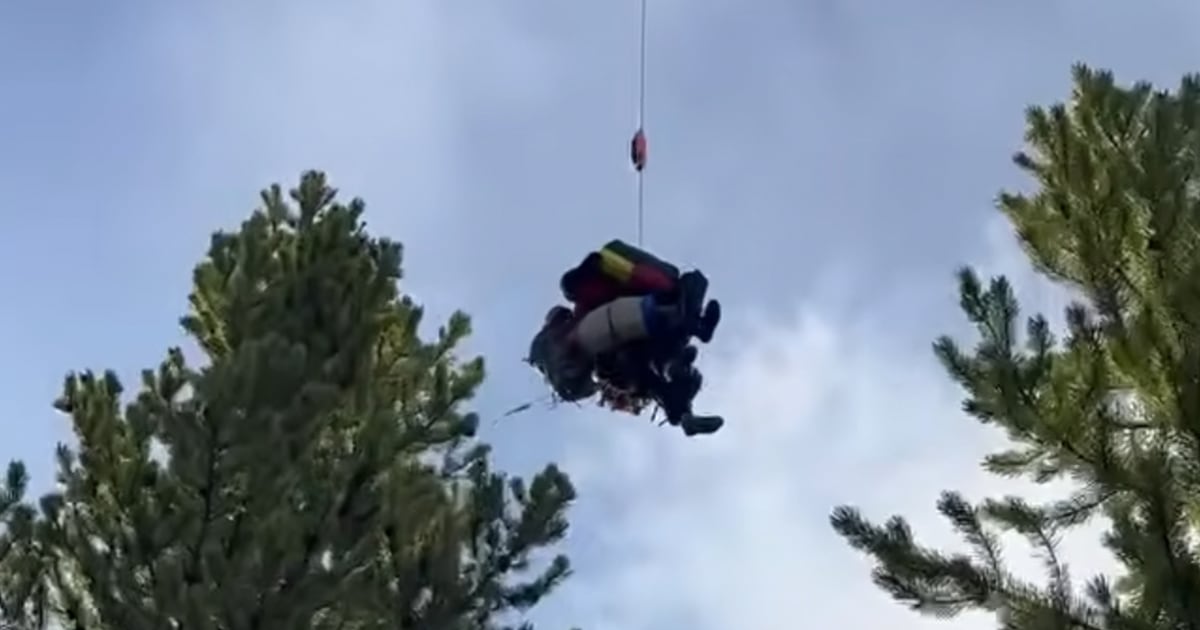
YELLOWSTONE NATIONAL PARK, Wyo. — Two hikers suffered injuries in a harrowing bear encounter on a popular trail near Old Faithful geyser this week, marking the first such incident in Yellowstone National Park this year, according to park officials.
The attack occurred Monday on the Mystic Falls Trail, a scenic path winding through geothermal features and forested terrain in the heart of the Wyoming-based park. The National Park Service reported that the hikers were set upon by "one or more bears," though specifics about the type of bear or the exact circumstances remain under investigation. As of Tuesday, additional details had not been released, leaving visitors and locals alike on edge amid the summer tourist season.
Park rangers responded swiftly to the scene, airlifting at least one of the victims to a medical facility, as captured in bystander videos circulating online. Craig Lerman, a fellow hiker who witnessed the aftermath, recorded footage showing a man lying on the ground with visible facial injuries and a shirt soaked in blood. In the clip, Lerman urgently tells the injured man, “They’re coming,” prompting a pained response: “How long?” Another video depicted rescuers aiding a second person on the trail, underscoring the chaos of the moment.
The incident prompted immediate closures of several trails and sections of the park to ensure public safety and allow for a thorough probe into the attack. Officials emphasized that while bear encounters are a known risk in Yellowstone, which spans nearly 3,500 square miles and hosts around 700 grizzly bears and 500 black bears, such injuries are relatively rare. The park service noted that the last reported bear-related injury prior to this event occurred in September, though it did not specify the year in initial statements.
For context, Yellowstone's wildlife management has long balanced human recreation with the preservation of its apex predators. The park's bears, particularly grizzlies, have been the subject of conservation efforts since the 1970s, when populations were bolstered through federal protections. However, as visitation surges— with over 4 million visitors annually—interactions between humans and bears have occasionally turned tragic.
The most recent fatal bear attack in Yellowstone dates back over a decade, to August 2015, when Lance Crosby, a 63-year-old hiker from Tennessee, was killed by a grizzly bear while fishing along the Mary Mountain Trail. Crosby's death highlighted the unpredictable nature of wildlife in the park, where even experienced outdoorsmen can fall victim to defensive or predatory bear behavior. Since then, no fatalities have been recorded, a statistic park officials often cite to reassure visitors while stressing vigilance.
Seasonal park employee Marie Jaskula, who observed the victims being loaded onto stretchers following the Monday attack, described the scene as a stark reminder of the wilderness's inherent dangers. “It’s very much a reality check,” Jaskula said in an interview. She added, reflecting on a broader sentiment among park staff, “And we have read a quote once, that once you enter the forest, you become a part of the food chain — and it’s very realistic.” Her words capture the sobering duality of Yellowstone: a wonderland of natural beauty shadowed by its untamed elements.
While the identities and conditions of the injured hikers have not been publicly disclosed, respecting privacy protocols common in such cases, the park service confirmed both were treated for non-life-threatening wounds. Initial reports suggested the attack may have involved a mother bear protecting cubs, a frequent trigger for aggressive encounters, though investigators have yet to confirm this. Black bears, more adaptable to human presence, and grizzlies, larger and more territorial, both roam the area around Mystic Falls, adding layers to the ongoing inquiry.
The closure of Mystic Falls Trail and adjacent paths, including sections near Biscuit Basin and other geothermal hotspots, disrupts access to one of Yellowstone's most photogenic routes. The trail, roughly 3 miles round-trip, offers views of the 70-foot Mystic Falls waterfall and is a favorite for day hikers seeking a moderate adventure close to the iconic Old Faithful, which erupts predictably every 90 minutes or so. Park officials anticipate the closures could last several days to weeks, depending on the investigation's findings and bear relocation efforts.
In response to the incident, Yellowstone rangers have ramped up public education campaigns on bear safety. Visitors are advised to hike in groups, make noise to avoid surprising bears, carry bear spray, and store food properly to prevent attracting wildlife. “Bear spray has proven effective in deterring attacks in over 90 percent of cases,” according to park guidelines, which also recommend traveling with a companion and being alert in areas with known bear activity, such as berry patches or streams.
Broader implications of the attack ripple through the tourism-dependent economy surrounding Yellowstone. Local outfitters and hotels in nearby towns like West Yellowstone, Montana, and Jackson, Wyoming, rely on the park's allure, and any perception of heightened risk could temper visitor numbers. Yet, officials downplay long-term impacts, pointing to the park's robust safety record. “Yellowstone remains one of the safest places to experience wild America,” a spokesperson said, urging caution without alarm.
Experts in wildlife biology, while not directly quoted in immediate reports, have long advocated for habitat corridors to reduce human-bear conflicts as climate change alters foraging patterns. Grizzly bears, listed as threatened under the Endangered Species Act, face pressures from expanding human development outside park boundaries. This attack, though isolated, serves as a microcosm of those tensions, where conservation meets recreation.
As the investigation unfolds, the National Park Service plans to analyze trail camera footage, bear DNA from the scene, and witness statements to determine if the bears involved warrant relocation or other management actions. In past cases, offending bears have been trapped and moved, though euthanasia is a last resort reserved for habitual threats to humans. Updates are expected soon, with the park committed to transparency amid public interest.
For now, the focus remains on the victims' recovery and preventing future incidents. Jaskula's reflection echoes a timeless truth for those venturing into bear country: respect for nature is non-negotiable. As Yellowstone's trails reopen, hikers will carry that lesson forward, spray in hand, eyes open to the wild world just beyond the path.
This event, while alarming, reinforces Yellowstone's status as a living classroom for coexistence with wildlife. With proper precautions, the park's majestic landscapes—and their formidable inhabitants—can continue to inspire awe without ending in injury.