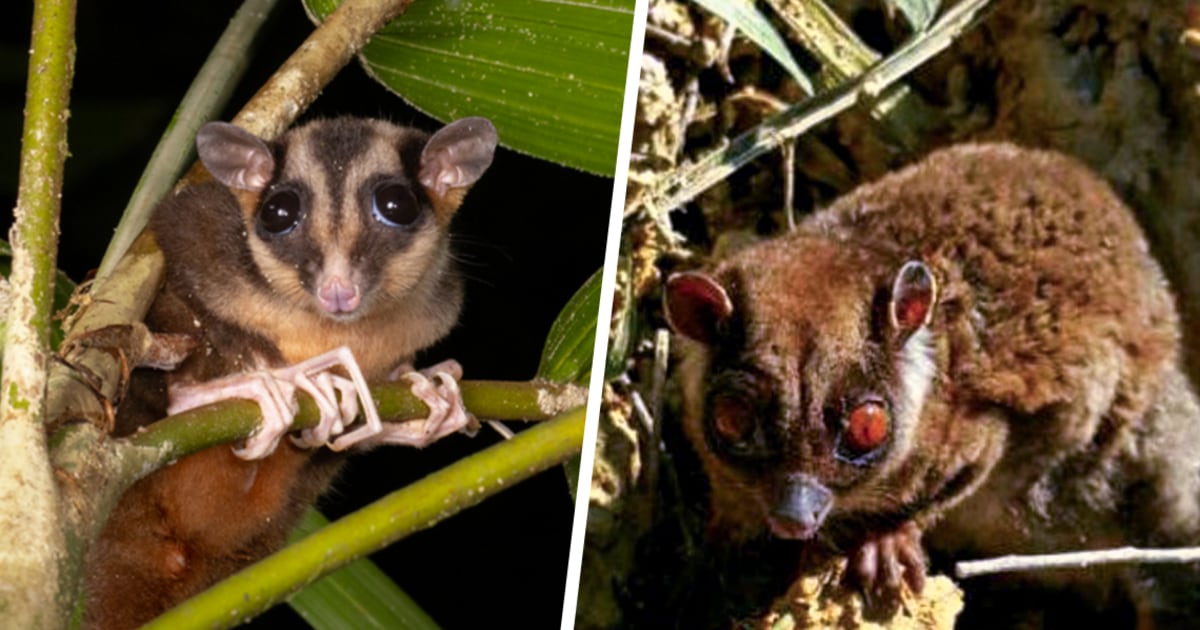
In a remarkable turn of events for the world of wildlife conservation, two marsupial species long believed to have vanished from the Earth more than 7,000 years ago have been discovered alive in the remote forests of New Guinea. The pygmy long-fingered possum and the ring-tailed glider, known only from ancient fossils until now, were confirmed as living creatures through a collaborative effort involving scientists, indigenous communities, and citizen observers. The Bishop Museum in Honolulu announced the findings on Tuesday, highlighting what experts are calling an unprecedented rediscovery of "Lazarus species"—organisms that reemerge after being presumed extinct.
The announcement came after years of dedicated research led by Dr. Kristofer Helgen of the Bishop Museum and Dr. Tim Flannery of the Australian Museum, both specialists in the mammalian fauna of New Guinea. Their work over the past two years culminated in the verification of live specimens, a breakthrough that has sparked excitement in scientific circles. "To be able to say that they indeed are alive brings me joy as a scientist and conservationist. It feels like a second chance to learn about, and protect, these remarkable animals," Helgen said in a news release from the museum.
These elusive creatures, native to the dense rainforests of West Papua in Indonesia, were first identified as extinct based on fossil evidence unearthed in the 1990s. During an archaeological dig in western New Guinea, Dr. Ken Aplin excavated teeth that pointed to the existence of the pygmy long-fingered possum and the ring-tailed glider, but no living examples had been documented since. The term "Lazarus species" draws from the biblical story of resurrection, aptly describing animals like these that defy expectations of permanent loss.
Helgen's path to this discovery began unexpectedly when he spotted a photograph of a gliding ring-tailed possum captured in the wild. Recognizing it immediately as matching Aplin's fossil descriptions, he set out to confirm its identity. The effort gained crucial momentum from indigenous knowledge in the Tambrauw and Maybrat regions of West Papua, where local communities shared insights into the animals' unique behaviors and habitats. According to the Bishop Museum's press release, these communities played a pivotal role in aiding scientists with on-the-ground identification.
For the pygmy long-fingered possum, evidence of more recent survival had already hinted at possibilities. Scientists had previously found two preserved specimens in a jar at the University of Papua New Guinea, suggesting the species might have persisted longer than fossils alone indicated. However, it was the contributions of citizen scientists that sealed the confirmation of its living status. Carlos Bocos, an amateur observer who later became a co-author on the study, uploaded photographs of the possum to iNaturalist, an online platform that allows global users to share and verify natural observations.
Dr. Flannery, Helgen's collaborator, emphasized the rarity of the find in the same press release. "The discovery of two Lazarus species, thought to be extinct for millennia, is unprecedented," he stated. This dual rediscovery in such a short timeframe underscores the hidden biodiversity still lurking in New Guinea's untouched wilderness, an island renowned for its extraordinary array of unique species. New Guinea, split between Indonesia and Papua New Guinea, hosts some of the planet's most pristine ecosystems, yet it faces threats from logging, mining, and climate change.
The ring-tailed glider, a nocturnal marsupial known for its gliding abilities across forest canopies, and the pygmy long-fingered possum, a tiny creature adapted for arboreal life with elongated digits for grasping, represent a window into prehistoric ecosystems. Their survival challenges long-held assumptions about extinction timelines in the region. Fossils suggest these animals thrived during the Pleistocene epoch, but environmental shifts, possibly including human arrival around 50,000 years ago, were thought to have driven them to oblivion.
Indigenous partnerships were instrumental, as locals in West Papua have coexisted with these species for generations, referring to them by names that reflect their elusive natures. The collaboration exemplifies a growing trend in conservation science, where traditional ecological knowledge complements modern tools like camera traps and genetic analysis. Without this synergy, the rediscoveries might have remained hidden, according to museum officials.
Citizen science platforms like iNaturalist have revolutionized such efforts, democratizing discovery and allowing non-professionals to contribute meaningfully. Bocos's photos, posted from his fieldwork in the region, drew the attention of experts who verified the species through morphological comparisons and DNA sampling. This approach not only confirmed the animals' existence but also mapped potential habitats, aiding future protection strategies.
Helgen views the findings as more than a scientific curiosity; he sees them as a beacon for conservation. "It’s a message of hope, one of second chances," he said. To Helgen, the rediscovery proves that extinction can sometimes be averted if hidden populations are identified in time. This is particularly relevant for New Guinea, where habitat loss has pushed dozens of species to the brink, including other marsupials like the endangered tree kangaroo.
The Bishop Museum, founded in 1889 and one of the largest natural history institutions in the Pacific, played a central role in coordinating the research. Its teams have a long history of studying Pacific biodiversity, and this project builds on decades of expeditions to New Guinea. The museum's announcement on Tuesday included calls for increased funding and legal protections to safeguard these newly confirmed species from emerging threats.
Broader implications extend to global conservation efforts. Lazarus species rediscoveries, while rare, offer lessons in resilience. Past examples include the coelacanth fish, thought extinct for 66 million years before resurfacing in 1938, and the black-footed ferret in the United States. Each case highlights how incomplete our knowledge of the natural world remains, especially in biodiverse hotspots like New Guinea.
Looking ahead, scientists plan to conduct population surveys and establish protected areas in Tambrauw and Maybrat. Collaboration with Indonesian authorities and local NGOs will be key, as will ongoing citizen science contributions. Flannery noted that understanding these animals' ecology—such as their diet of insects and nectar for the glider, or the possum's preference for mossy branches—will inform targeted conservation measures.
While the discovery brings optimism, challenges persist. Illegal logging in West Papua has accelerated in recent years, fragmenting habitats and increasing human-wildlife conflicts. Experts urge immediate action to prevent these Lazarus species from facing true extinction once more. As Helgen put it, this second chance must be seized to ensure their legacy endures beyond fossils and fleeting photographs.
The story of the pygmy long-fingered possum and ring-tailed glider serves as a reminder of nature's capacity for surprise. In an era of rapid biodiversity loss, such findings underscore the urgency of exploration and protection. For the scientific community and conservationists worldwide, Tuesday's announcement from Honolulu marks not just a resurrection, but a call to action.