As the world gears up for 2026, scientists and explorers are poised for a series of groundbreaking advancements that could redefine our understanding of Earth, space, and human health. According to a recent report in the Times of India, the coming year promises significant milestones, from deep-drilling missions into the planet's crust to innovative medical breakthroughs and ambitious space launches. These developments, drawn from global research initiatives, highlight a surge in international collaboration amid escalating challenges like climate change and disease.
Leading the charge in Earth exploration is a massive Chinese research vessel slated to embark on a historic journey next year. The 600-foot ship, described by experts as a floating laboratory, will scour the oceans to identify the ideal location for breaching Earth's crust. This ambitious project aims to drill deeper than ever before, potentially unlocking secrets about the planet's geological history and resources. 'This mission represents a pivotal step in probing the unknown layers beneath our feet,' said Dr. Li Wei, a geologist involved in the planning, as quoted in preliminary announcements from the Chinese Academy of Sciences.
The vessel's voyage is part of China's broader push into deep-sea and subsurface exploration, building on previous successes like the Jiaolong submersible's dives to over 7,000 meters. Scheduled to set sail in early 2025, the ship will utilize advanced seismic imaging and robotic drills to target sites in the Pacific Ocean, where tectonic activity offers promising access points. Officials with the State Oceanic Administration emphasized that the expedition could yield data on mantle composition, aiding in earthquake prediction and mineral extraction. However, environmental groups have raised concerns about potential ecological disruptions, with one activist noting, 'While scientific curiosity drives this, we must ensure it doesn't harm fragile marine ecosystems.'
Shifting skiesward, 2026 is expected to bring heightened scrutiny of solar activity, particularly massive solar blasts that could impact Earth's technology-dependent infrastructure. The Times of India article highlights predictions of intensified solar flares, drawing from data by the National Oceanic and Atmospheric Administration (NOAA). These bursts of radiation, part of the sun's 11-year cycle peaking around 2025, pose risks to satellites, power grids, and communications. 'We're preparing for events that could rival the 1859 Carrington Event, which disrupted telegraphs worldwide,' warned solar physicist Dr. Sarah Thompson of NOAA in a recent briefing.
In response, international space agencies are ramping up monitoring efforts. NASA's Solar Dynamics Observatory and the European Space Agency's Solar Orbiter will provide real-time data, enabling early warnings. A joint U.S.-European mission plans to launch additional probes in mid-2026 to study coronal mass ejections up close. This comes amid reports of recent minor flares already causing GPS glitches in aviation, underscoring the urgency. Experts like Thompson stress that while doomsday scenarios are unlikely, proactive measures could prevent billions in economic losses.
On the health front, 2026 heralds advances in combating rare diseases, with gene-editing technologies like CRISPR gaining traction in clinical trials. The report points to ongoing work by the Global Rare Disease Consortium, which aims to sequence genomes for over 7,000 identified conditions affecting millions worldwide. In the U.S., the National Institutes of Health has allocated $500 million for 2026 projects targeting orphan drugs—medications for diseases impacting fewer than 200,000 people per country. 'These breakthroughs could turn fatal diagnoses into manageable ones,' said Dr. Elena Ramirez, a geneticist at the NIH, in an interview with scientific journals.
One notable initiative involves a partnership between U.S. biotech firm CRISPR Therapeutics and European regulators, planning phase-three trials for a therapy against spinal muscular atrophy, a rare neuromuscular disorder. In Asia, Japan's RIKEN institute is developing stem-cell treatments for progeria, a premature aging syndrome. These efforts build on 2024's FDA approval of the first CRISPR-based therapy for sickle cell disease, offering hope but also sparking debates over accessibility. Critics argue that high costs—often exceeding $2 million per treatment—could widen global health disparities, with one advocate stating, 'Innovation must be equitable, not just for the wealthy.'
Equally promising is the development of a revolutionary blood test capable of detecting 50 types of cancers at early stages. According to the Times of India, this multi-cancer early detection (MCED) test, pioneered by Grail Inc., uses liquid biopsy to analyze circulating tumor DNA. Set for wider rollout in 2026 following successful pilots in the UK and U.S., the test boasts a sensitivity rate of over 80% for stage-one cancers. 'This could transform screening from reactive to preventive,' enthused Dr. Michael Landon, Grail's chief medical officer, during a 2024 conference presentation.
The technology scans for methylation patterns unique to cancer cells, potentially reducing the need for invasive procedures like colonoscopies. Trials involving 10,000 participants across five countries have shown it identifies pancreatic, ovarian, and liver cancers—often missed until advanced—with remarkable accuracy. However, some oncologists caution that false positives could lead to unnecessary anxiety and follow-ups. The American Cancer Society supports integration into routine checkups by 2027, pending further validation. In India, where cancer incidence is rising, the test's affordability remains a key hurdle, with local health officials pushing for subsidized versions.
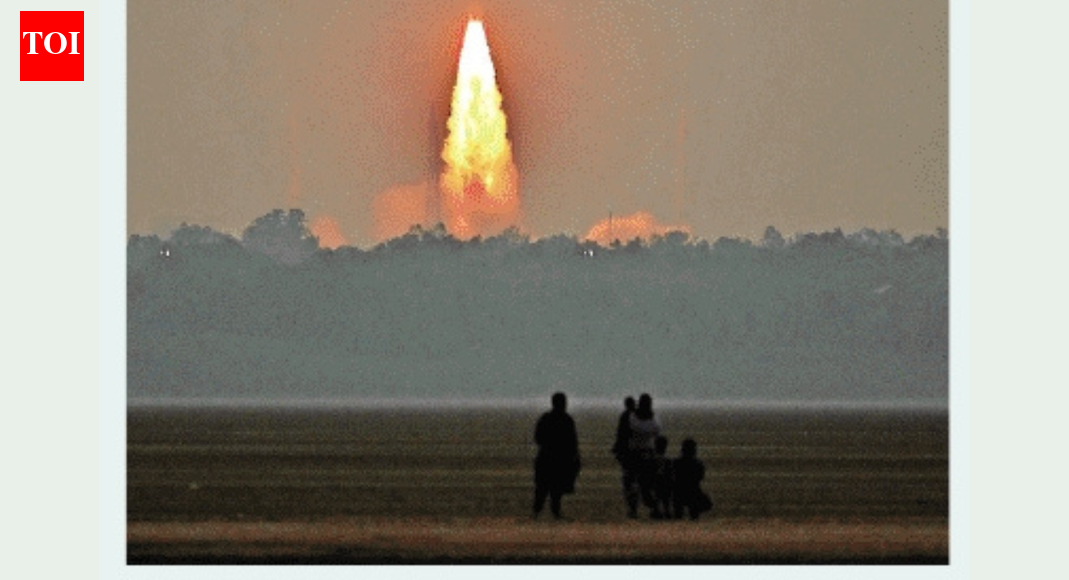
Turning to space, India's space program is set to achieve a milestone with the first private launches of its Polar Satellite Launch Vehicle (PSLV). The Times of India reports that NewSpace India Limited will oversee these commercial missions starting in late 2025, carrying payloads for global clients. The PSLV, a reliable workhorse since 1993, has launched over 50 missions, including NASA's Mars Orbiter and Japan's Hitomi satellite. 'This privatization will boost India's share in the $400 billion space economy,' stated Indian Space Research Organisation (ISRO) chairman S. Somanath in a recent address.
Upcoming launches from Sriharikota's Satish Dhawan Space Centre will include Earth-observation satellites for climate monitoring and constellations for broadband internet. Private firms like Skyroot Aerospace and Agnikul Cosmos are partnering, aiming for 10 missions in 2026. This aligns with India's 2023 space policy reforms, fostering a startup ecosystem valued at $8 billion. Yet, challenges persist, including regulatory hurdles and competition from SpaceX, whose Falcon 9 dominates reusable launches.
Finally, American astronauts are preparing for a return to the lunar surface, with NASA's Artemis program targeting a 2026 crewed landing. The report teases 'Americans head to the moon,' referring to the Artemis III mission, which will send four astronauts—including the first woman and person of color—to the south pole. Using SpaceX's Starship as the lander, the mission builds on Artemis I's 2022 uncrewed test and Artemis II's 2025 crewed orbit. NASA Administrator Bill Nelson remarked, '2026 will mark humanity's next giant leap, establishing a sustainable presence on the moon.'
This endeavor involves international partners like the European Space Agency and Japan, focusing on water ice extraction for future Mars missions. The $93 billion program faces delays from technical issues, such as Starship's heat shield, but officials remain optimistic. Broader implications include mining rare helium-3 for fusion energy and inspiring STEM education globally.
These 2026 advancements collectively signal a renaissance in exploration and innovation, bridging earthly depths with cosmic frontiers. While challenges like funding and ethics loom, the momentum from collaborative efforts offers a blueprint for addressing pressing global issues. As Dr. Wei put it, 'The year ahead isn't just about discovery—it's about safeguarding our future.' With missions launching and trials concluding, the world watches eagerly for the results that could shape decades to come.