APPLETON, Wis. — If NASA's ambitious timeline holds, 2026 will mark the return of American astronauts to the vicinity of the moon for the first time in more than 50 years. The Artemis II mission, slated for launch as early as February, will send four astronauts on a 10-day journey around the lunar surface, testing critical technologies without landing. This flight represents a pivotal step in the U.S. space agency's long-delayed push to reestablish a human presence on the moon, amid intensifying competition with China and renewed political emphasis from the Trump administration.
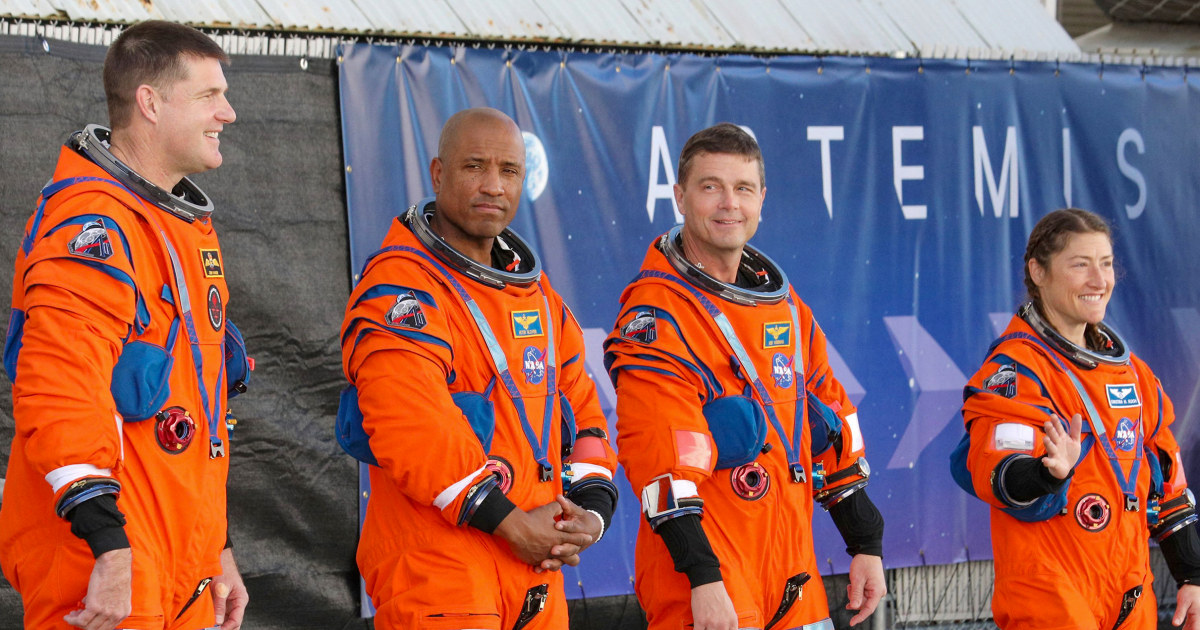
The crew for Artemis II includes NASA astronauts Reid Wiseman, Victor Glover and Christina Koch, along with Jeremy Hansen from the Canadian Space Agency. Selected in 2023, Wiseman, Glover and Koch are veterans of previous spaceflights, while Hansen will be making his debut in orbit. Last weekend, the team completed a rigorous launch rehearsal, donning flight suits, boarding a mockup of the Orion spacecraft and simulating the countdown up to the moments before liftoff. No exact launch date has been set, but officials expect it sometime between February and April from Kennedy Space Center in Florida.
At the heart of the mission is NASA's Space Launch System (SLS) rocket and Orion capsule, both developed over more than a decade at a cost of billions, plagued by setbacks and overruns. The SLS, the most powerful rocket ever built, will propel the crew into space, while Orion will serve as their home during the voyage. This will be the first crewed flight for the system, following the successful uncrewed Artemis I test in 2022, which looped around the moon for 3½ weeks. During Artemis II, the astronauts will conduct docking maneuvers, test life-support systems and perform scientific observations first in Earth orbit and then in lunar orbit.
"Within the next three years, we are going to land American astronauts again on the moon, but this time with the infrastructure to stay," said Jared Isaacman, NASA's newly sworn-in administrator, in an interview with NBC News last week. Isaacman's appointment underscores the administration's commitment to accelerating lunar exploration, building on priorities set during President Donald Trump's first term. The Artemis program itself was launched in 2019 under that administration, salvaging the SLS and Orion from earlier initiatives like the Constellation Program, which dated back to President George W. Bush's era and aimed for moon and Mars missions before being canceled.
Recent developments have further solidified the push. Last week, Trump issued an executive order directing NASA to prioritize "expanding human reach and American presence in space," with a goal of landing astronauts on the moon by 2028. This comes as the U.S. faces growing rivalry from China, whose officials have vowed to put their own astronauts on the lunar surface by 2030. The geopolitical stakes add urgency to Artemis, positioning it not just as a scientific endeavor but as a demonstration of American leadership in space.
Delays have been a persistent challenge for the program. NASA originally targeted 2024 for Artemis II, but technical issues, supply chain problems and budget constraints pushed it back. "There's a lot riding on this, both good and bad," noted Casey Dreier, chief of space policy at The Planetary Society, a nonprofit focused on space advocacy. "Everything seems to be coming together, but this is the first time with humans on this rocket, and we've never tested this life-support system in space before." Dreier highlighted the high stakes, describing the mission as the culmination of nearly 15 years of effort.
For scientists, the return to the moon promises to unlock long-standing mysteries about the solar system's origins. The Apollo missions of the 1960s and 1970s provided foundational knowledge, but left many questions unanswered, particularly about the moon's formation from ancient collisions and the source of its water. "As you can imagine, lunar scientists have had a lot of pent up questions for decades," said Brett Denevi, a planetary scientist at the Johns Hopkins University Applied Physics Laboratory in Laurel, Maryland. Denevi explained that the moon serves as a pristine record of early solar system history, unlike Earth, where plate tectonics and weather have erased much of its past.
"Earth is kind of a terrible record-keeper," Denevi added. "With plate tectonics, weather — these things have just totally erased its very earliest history. But on the moon, you have this terrain that formed about 4.5 billion years ago, and it's just sitting there on the surface for us to explore." Insights from lunar samples could illuminate processes that shaped our own planet, making the mission's scientific payoff potentially profound, even without a landing.
Artemis II sets the stage for more ambitious follow-ons. The subsequent Artemis III mission, planned for 2027, aims to land four astronauts near the moon's south pole — a stark contrast to the equatorial sites visited during Apollo. That region features rugged terrain pocked with craters, including permanently shadowed areas believed to contain abundant water ice. This resource could be vital for sustaining long-term lunar bases and fueling deeper space travel, such as missions to Mars.
Denevi, who leads the geology team for Artemis III, is eager to guide future crews in their explorations. She will help decide landing sites, fieldwork activities and sample collection priorities, with a focus on the shadowed craters — among the coldest spots in the solar system. "Apollo gave us the framework to understand the moon," she said, "and now we have the foundation to ask different questions." Denevi recalled her early career expectations: "When I first started studying the moon, I thought I'd spend my whole career studying historical data. Now to have the opportunity to be involved in going to collect new samples that can provide new pieces to this puzzle, instead of trying to rearrange all of the old pieces, that's going to be a huge step forward."
The broader vision extends beyond the moon. NASA sees Artemis as a stepping stone to sustainable lunar presence, including bases for extended stays, before pushing toward Mars. This aligns with international partnerships, as evidenced by Hansen's inclusion from Canada, part of agreements under the Artemis Accords signed by more than 40 nations. Yet challenges remain: the program's costs have drawn criticism, and any mishap on Artemis II could derail timelines and public support.
Dreier emphasized the dual-edged nature of the mission's success. "Assuming it works, it'll be seen as a major win for the administration," he said. "But if this doesn't work, or if something calamitous happens, that will really reset everything." With the SLS rooted in post-space shuttle retirement efforts starting in 2010, and Orion's origins even earlier, the pressure is on to deliver after years of investment.
As preparations intensify, the Artemis II crew continues training at NASA's Johnson Space Center in Houston. Their flight path will take them about 240,000 miles to the moon, circling it twice before returning, providing unprecedented views and data. While the mission won't touch down, it will validate systems essential for the human landing in Artemis III, targeting the south pole's ice-rich basins.
The excitement in the scientific community is palpable, tempered by caution from past delays. For residents of Appleton and space enthusiasts nationwide, 2026 promises a historic revival of lunar exploration, bridging the gap between Apollo's legacy and a new era of discovery. Whether it unfolds as planned will depend on the flawless execution of this high-stakes test flight.
Looking ahead, the success of Artemis II could accelerate NASA's roadmap, potentially enabling routine lunar visits and laying groundwork for Mars by the 2030s. Officials stress that while timelines are aggressive, the program's infrastructure — from the SLS to international collaborations — positions the U.S. to lead in this renewed space age.