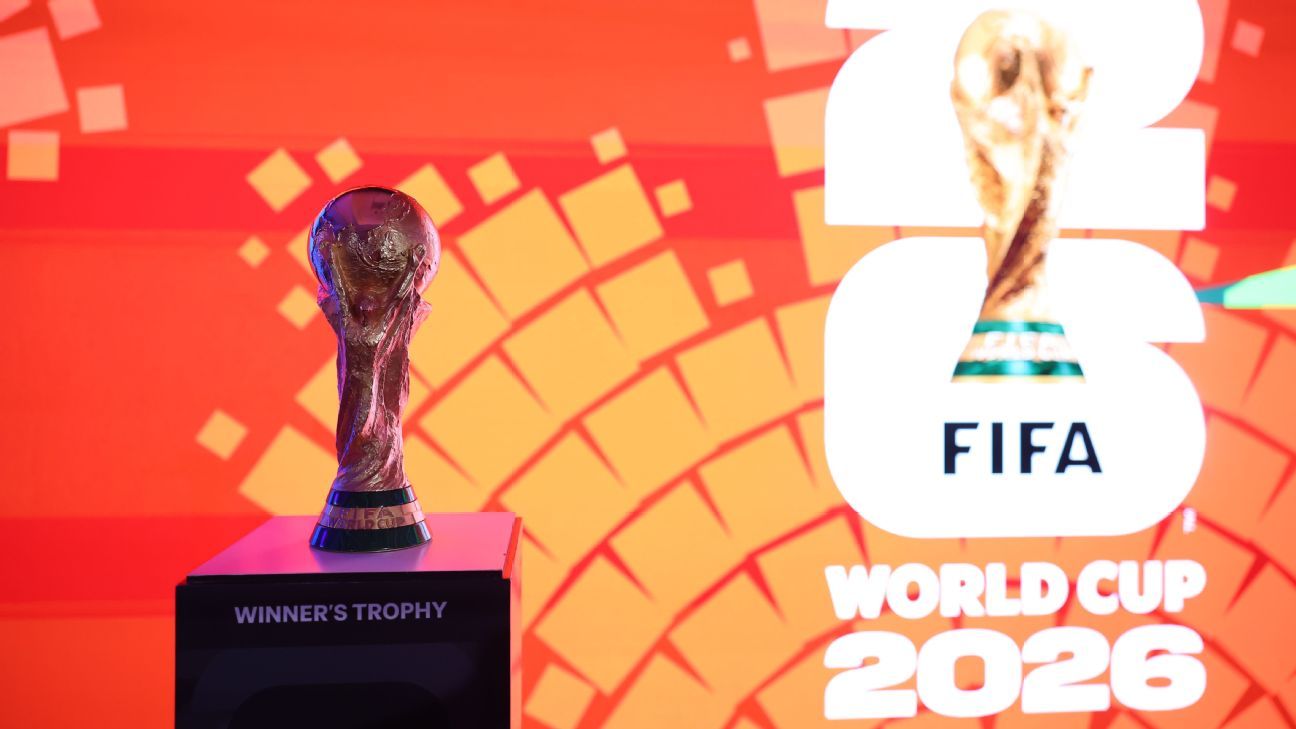
As the countdown to the 2026 FIFA World Cup hits the 100-day mark, excitement is building for the tournament's kickoff on June 11 in Mexico City, where co-host Mexico will face South Africa in the opening match. This expanded 48-team competition, co-hosted by the United States, Canada, and Mexico, promises to be a historic event, with games spread across 16 cities in North America. ESPN's global team of reporters and experts has released an in-depth preview, projecting starting lineups, full squads, and analyzing strengths and weaknesses for the top 15 contenders, including the three host nations. These predictions, based on current form, fitness, and recent performances, offer a snapshot of how favorites like defending champions Argentina and powerhouses such as France and Brazil are shaping up, though experts caution that injuries and emerging talents could reshape rosters in the coming weeks.
Argentina enters the tournament as the reigning champions from their 2022 Qatar triumph, followed by victories in the last two Copa América tournaments, providing a solid foundation for another deep run. Placed in Group J, the Albiceleste will face Algeria on June 16 in Kansas City, Austria on June 22 in Dallas, and Jordan on June 27 in Dallas. ESPN's projected squad includes goalkeepers Emiliano Martinez, Walter Benitez, and Geronimo Rulli; defenders like Nahuel Molina, Cristian Romero, Lisandro Martinez, Nicolas Tagliafico, Valentin Barco, Gonzalo Montiel, Leonardo Balerdi, and Nicolas Otamendi; midfielders Alexis Mac Allister, Enzo Fernandez, Rodrigo De Paul, Leandro Paredes, Thiago Almada, and Nico Paz; and forwards Lionel Messi, Lautaro Martinez, Julian Alvarez, Nico Gonzalez, and Giuliano Simeone.
The team's strength lies in its established core, but challenges loom beyond the starting XI, particularly in defense where full-back options are limited and in attack where young forwards vie for spots. With 38-year-old Lionel Messi set for what is expected to be his final World Cup appearance, the pressure to repeat as champions—no team has done so since Brazil in 1958 and 1962—is immense. Coach Lionel Scaloni faces key decisions on generational transitions, especially after Ángel Di María's departure. "This is especially true on defense, where options at full back are scarce, and in attack, with several promising forwards who are not yet guaranteed starting spots," said Damian Didonato, ESPN's Argentina correspondent. New talents like Valentín Barco, Franco Mastantuono, and Nico Paz could emerge to fill gaps.
In Group G, Belgium confronts a gentler path with matches against Egypt on June 15 in Seattle, Iran on June 21 in Los Angeles, and New Zealand on June 26 in Vancouver. The Red Devils' projected roster features goalkeepers Thibaut Courtois, Senne Lammens, and Matz Sels; defenders Arthur Theate, Maxim De Cuyper, Thomas Meunier, Zeno Debast, Brandon Mechele, Koni De Winter, Timothy Castagne, and Wout Faes; midfielders Youri Tielemans, Amadou Onana, Kevin De Bruyne, Axel Witsel, Hans Vanaken, Nicolas Raskin, Charles Vanhoutte, and Diego Moreira; and forwards Jeremy Doku, Leandro Trossard, Romelu Lukaku, Lois Openda, Charles De Ketelaere, Dodi Lukebakio, and Alexis Saelemaekers.
On paper, Belgium boasts a balanced squad with De Bruyne's genius, Lukaku's power, Courtois in goal—widely regarded as the world's best—and dynamic elements like Doku's trickery. However, injuries have plagued most key players this season, except Courtois, raising questions about their sharpness. Under new coach Rudi Garcia, known for his 2010-11 Ligue 1 title with Lille, the team enters without the intense expectations of past cycles, especially post-Eden Hazard's retirement. "They could be fresh, but they could also be a bit rusty," noted Julien Laurens, ESPN analyst. "This is also Garcia's first tournament as an international head coach—and he could struggle with the pressure and expectation." A milder group stage could ease their path.
Brazil, aiming for a record sixth World Cup title, finds itself in Group C facing Morocco on June 13 in New York/New Jersey, Haiti on June 19 in Philadelphia, and Scotland on June 24 in Miami. The Seleção's projected squad includes goalkeepers Alisson, Ederson, and Hugo Souza; defenders Wesley França, Marquinhos, Gabriel Magalhães, Alex Sandro, Vanderson, Douglas Santos, Eder Militão, Alexandro Ribeiro, and Danilo; midfielders Casemiro, Bruno Guimarães, Andrey Santos, Ederson, and Lucas Paquetá; and forwards Raphinha, Matheus Cunha, Vinicius Jr., Estevão, Gabriel Martinelli, Endrick, João Pedro, and Neymar.
After a turbulent qualification period with two coaches—Fernando Diniz and Dorival Junior—fired, Carlo Ancelotti took over last June, emphasizing speed, technique, and midfield solidity from Bruno Guimarães and Casemiro, without a traditional No. 9. The biggest uncertainty surrounds Neymar, the 34-year-old winger playing for Santos, who has struggled with fitness since 2022. Ancelotti plans to evaluate him until the final call-up, but Brazil appears capable without him, especially with Rodrygo sidelined by injury. Top attackers like Raphinha, Vinicius Jr., and Estevão provide firepower. "Although the team are not ready yet, Ancelotti has brought back confidence," according to Gustavo Zupak of ESPN Brasil. The coach's Italian background adds an intriguing layer to the most successful national team in history.
As one of the host nations, Canada enters Group B with games against a UEFA A team on June 12 in Toronto, Qatar on June 18 in Vancouver, and Switzerland on June 24 in Vancouver. Their projected roster features goalkeepers Dayne St. Clair, Maxime Crepeau, and Owen Goodman; defenders Alphonso Davies, Moise Bombito, Derek Cornelius, Niko Sigur, Alistair Johnston, Richie Laryea, Zorhan Bassong, Luc de Fougerolles, Joel Waterman, and Kamal Miller; midfielders Mathieu Choiniere, Ali Ahmed, Stephen Eustaquio, Ismael Kone, Tajon Buchanan, Nathan Saliba, Marcelo Flores, and Jacob Schaffelburg; and forwards Liam Millar, Jonathan David, Tani Oluwaseyi, Promise David, and Cyle Larin.
Canada benefits from home advantage and a core led by world-class left back Alphonso Davies, with most players at European clubs. However, recent setbacks, including a quarterfinal loss to Guatemala in the 2025 Gold Cup—despite the opponent playing with 10 men—and a 1-1 draw against 90th-ranked Curacao, highlight depth issues in midfield and defense. Coach Jesse Marsch reflected on the Gold Cup defeat, saying, "We've got to learn how to win the biggest moments." Injuries to key figures like Davies, Bombito, and Eustaquio have been concerns. While Canada's talent pool has grown significantly, Cesar Hernandez of ESPN points out, "There's still work to be done beyond the core group." Davies' versatility, potentially as a left winger, could prove pivotal.
England, in Group L, faces Croatia on June 17 in Dallas, Ghana on June 23 in Boston, and Panama on June 27 in New York/New Jersey. The Three Lions' projected squad includes goalkeepers Jordan Pickford, Dean Henderson, and Nick Pope; defenders Nico O'Reilly, Ezri Konsa, Dan Burn, Tino Livramento, Marc Guehi, John Stones, Reece James, Trent Alexander-Arnold, and Lewis Hall; midfielders Elliot Anderson, Declan Rice, Jude Bellingham, Adam Wharton, Jordan Henderson, Morgan Rogers, Phil Foden, and Cole Palmer; and forwards Anthony Gordon, Bukayo Saka, Marcus Rashford, Jarrod Bowen, Ollie Watkins, and Harry Kane.
Aiming to end a 60-year major trophy drought after reaching the Euro 2024 final, England turns to new coach Thomas Tuchel, seen as an upgrade over Gareth Southgate for his tactical expertise. Vulnerabilities persist in defense and midfield, where a true No. 6 to control tempo has been elusive. Elliot Anderson's emergence at Nottingham Forest offers hope for composure in midfield. Center backs like Marc Guehi, now at Manchester City, show promise, but left back remains problematic, with choices between youngsters like Nico O'Reilly and Lewis Hall or inconsistent veterans. Attack is England's forte, led by Harry Kane, with Tuchel sometimes preferring Morgan Rogers over Jude Bellingham in the No. 10 role, alongside Phil Foden, Cole Palmer, and Bukayo Saka. "England need to find only a little improvement to have a strong chance," writes James Olley of ESPN. Tuchel's challenge is forging a clear identity from this talent.
France, in Group I, will play Senegal on June 16 in New York/New Jersey, a FIFA 2 team on June 22 in Philadelphia, and Norway on June 26 in Boston. The projected squad boasts goalkeepers Mike Maignan, Brice Samba, and Robin Risser; defenders Jules Kounde, William Saliba, Dayot Upamecano, Lucas Digne, Malo Gusto, Ibrahima Konate, Lucas Hernandez, Wesley Fofana, and Theo Hernandez; midfielders Manu Kone, Aurelien Tchouameni, Adrien Rabiot, N'Golo Kante, Warren Zaire-Emery, and Eduardo Camavinga; and forwards Ousmane Dembele, Desire Doue, Kylian Mbappe, Michael Olise, Rayan Cherki, Hugo Ekitike, Bradley Barcola, and Marcus Thuram.
For coach Didier Deschamps' final tournament after 14 years—marked by a 2018 World Cup win, 2022 final, Euro 2016 final, and Euro 2024 semifinal—he's shifting from conservatism to a more attacking style. France's depth, especially upfront, is unmatched, with Dembélé, Mbappé, and Olise locks to start, and Cherki, Barcola, or Doué competing for the fourth spot. Midfield blends experience and versatility, but fullbacks Koundé and Digne have had subpar seasons at Barcelona and Aston Villa, respectively, potentially exploitable. "The depth of his team, especially in attacking positions, is incredible," Laurens observed. This mix positions France for a strong showing.
Germany rounds out the preview in Group E, facing Curacao on June 14 in Houston, Ivory Coast on June 20 in Toronto, and Ecuador on June 25 in New York/New Jersey. The projected roster includes goalkeepers Oliver Baumann, Marc-Andre ter Stegen, and Alexander Nubel; defenders Joshua Kimmich, Jonathan Tah, Nico Schlotterbeck, David Raum, Malick Thiaw, Waldemar Anton, Ridle Baku, Antonio Rudiger, and Maximilian Mittelstadt; midfielders Aleksandar Pavlovic, Leon Goretzka, Angelo Stiller, Felix Nmecha, Florian Wirtz, Jamal Musiala, and Lennart Karl; and forwards Serge Gnabry, Kai Havertz, Leroy Sane, Deniz Undav, Karim Adeyemi, Nick Woltemade, and Jonathan Burkardt.
Questions abound for Die Mannschaft, starting with ter Stegen's fitness after injury; alternatives like Jonas Urbig loom if he falters. Kimmich's role—ideally midfield but currently right back—adds flexibility, while coach Julian Nagelsmann could switch to a back three with five center backs. Midfield depth is solid, but central midfield feels light unless Kimmich shifts inside. Attack shines with Musiala and Wirtz, but the No. 9 spot is murky—Havertz isn't a pure striker, and options like Undav or Burkardt are not elite. Wildcard teenager Lennart Karl could surprise. Depth in central defense and attacking midfield is a plus, yet the forward enigma persists.
These projections come amid broader context: ESPN's Power Rankings place the top contenders, with hosts like the USA, Mexico, and Canada expected to leverage home support. Related storylines include Iran's participation status and the USMNT's preparations. As the tournament nears, player injuries—like those affecting Belgium's stars or Brazil's Rodrygo—could alter lineups dramatically. Coaches like Ancelotti and Tuchel are under scrutiny to instill confidence and tactics. For fans, this preview underscores that while favorites hold edges, every contender has exploitable weaknesses, setting the stage for surprises in this unprecedented World Cup.
Looking ahead, the next few months will see friendlies, club seasons conclude, and final squad announcements. With the draw complete and venues like Kansas City, Seattle, and Toronto hosting key matches, the focus shifts to fitness and form. Whether Argentina repeats, France surges, or a host nation shines, the 2026 World Cup—running through July 19—promises global drama on North American soil.