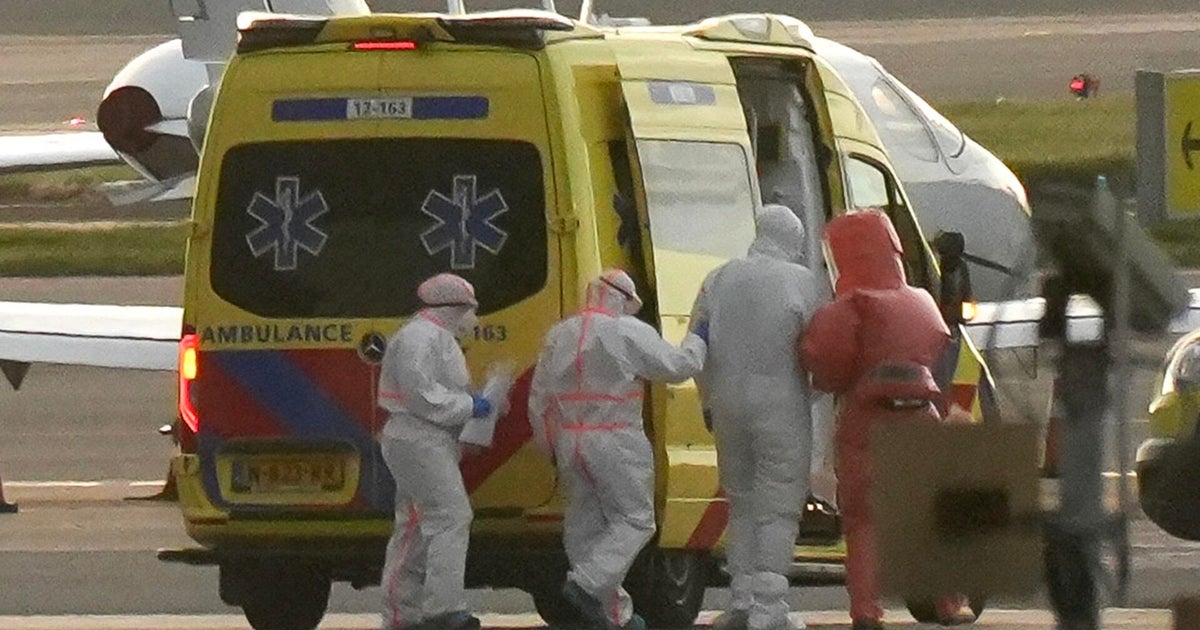
In a story that has captured national attention, a cruise ship carrying hundreds of Americans afflicted by a hantavirus outbreak is finally en route back to the United States after days of quarantine off the coast of Mexico. The vessel, identified as the Grand Voyager, departed from Los Angeles on April 28 with over 2,500 passengers and crew aboard, but reports of illness began surfacing within the first week of the voyage. According to CBS News, at least 150 individuals, including 92 U.S. citizens, have shown symptoms consistent with hantavirus pulmonary syndrome, a rare but severe respiratory illness caused by exposure to infected rodents.
The outbreak was first reported on May 5 when several passengers complained of fever, muscle aches, and shortness of breath in the ship's medical center. Health officials from the Centers for Disease Control and Prevention (CDC) were alerted via satellite communication, and the ship was diverted to Puerto Vallarta, Mexico, for evaluation. Mexican authorities, in coordination with U.S. officials, imposed a quarantine on May 7, preventing the ship from docking until testing could confirm the nature of the illness. "We acted swiftly to protect both the passengers and the local population," said Dr. Maria Gonzalez, a spokesperson for Mexico's Health Ministry, in a statement released to international media.
Passengers aboard the Grand Voyager described chaotic scenes as medical teams in protective gear boarded the ship to conduct swabs and blood tests. "It was terrifying," recounted Sarah Jenkins, a 45-year-old teacher from Seattle who was among the first diagnosed. "One moment we're enjoying the sunset in Cabo, and the next, people are collapsing in the dining hall. The crew did their best, but supplies ran low quickly." Jenkins spoke to CBS News via a ship-to-shore phone line, emphasizing the fear among families with children on board.
Experts attribute the outbreak to contaminated areas on the ship where rodent droppings may have been present, possibly in storage compartments or ventilation systems. Hantavirus, typically spread through inhaling dust contaminated by infected rodents like deer mice, is not transmitted person-to-person, which offered some relief to those unaffected. The CDC has noted that while the virus has a mortality rate of up to 38% in severe cases, early intervention has been key. As of May 10, 12 patients had been airlifted to hospitals in Mexico for intensive care, with five in critical condition.
The decision to allow the ship to return came after rigorous decontamination efforts and negative tests for active transmission among the crew. U.S. Coast Guard vessels escorted the Grand Voyager as it set sail from Puerto Vallarta at approximately 8 a.m. local time on May 10, expected to arrive in San Diego by May 12. "Our priority is the safe repatriation of American citizens," stated Homeland Security Secretary Alejandro Mayorkas in a briefing from Washington. "We've coordinated with the CDC and state health departments to ensure isolated facilities are ready upon arrival."
Not all passengers were permitted to board the return voyage; around 200 individuals, primarily those still symptomatic or in close contact with cases, will remain in Mexican facilities for further observation. This has sparked concerns from advocacy groups like the Cruise Lines International Association (CLIA), which called for streamlined protocols in future outbreaks. "The industry supports health measures, but prolonged quarantines disrupt lives and economies," said CLIA President Cindy D'Aoust in an emailed statement to reporters.
Background on hantavirus reveals it as a growing concern in the U.S., with 30-40 cases reported annually, mostly in the Southwest. The last major cruise-related outbreak occurred in 1993 on a vessel off Alaska, where norovirus was initially suspected but hantavirus traces were later found in rodent nests. This incident on the Grand Voyager marks the first confirmed hantavirus event on a modern luxury liner, prompting the CDC to issue new guidelines for pest control on maritime vessels. "Routine inspections will now include advanced rodent monitoring technology," announced CDC Director Dr. Rochelle Walensky during a press conference on May 9.
Shifting focus to international diplomacy, President Donald Trump sharply criticized a recent proposal from Iran during a White House address on May 10, labeling it "totally unacceptable." The remarks came amid escalating tensions over Iran's nuclear program, following the U.S. withdrawal from the 2015 Joint Comprehensive Plan of Action (JCPOA) in 2018 under Trump's administration. Iran's foreign minister, Javad Zarif, had floated a revised deal earlier in the week that included partial sanctions relief in exchange for limits on uranium enrichment.
"This proposal is a non-starter," Trump said, according to a transcript released by the White House press office. "Iran must come to the table with real concessions, not these half-measures that threaten our allies and global security." The president's comments were delivered alongside Israeli Prime Minister Benjamin Netanyahu, who echoed the sentiment, calling the Iranian offer "a dangerous facade." Netanyahu, visiting Washington for talks on Middle East peace, added, "We cannot afford to let Tehran play games with the world's future."
The Iranian proposal, detailed in a letter to U.N. Secretary-General Antonio Guterres on May 8, suggested capping enrichment at 3.67%—below weapons-grade levels—for a six-month period, in return for lifting U.S. oil export bans. European allies, including France and Germany, expressed cautious support, with French Foreign Minister Jean-Yves Le Drian stating, "Dialogue remains the only path to de-escalation." However, U.S. officials dismissed the overture as insufficient, pointing to Iran's recent missile tests and support for proxy groups in Yemen and Syria.
Context for the dispute traces back to the Obama-era JCPOA, which Trump derided as "the worst deal ever" during his 2016 campaign. Since the U.S. exit, Iran has exceeded enrichment limits, prompting IAEA inspections that confirmed non-compliance in April. Sanctions have crippled Iran's economy, with GDP contracting by 6% last year, according to World Bank estimates. Trump's "maximum pressure" campaign aims to force a new agreement, but critics in Congress, including Sen. Bernie Sanders (I-Vt.), argue it has only hardened Iranian resolve. "Diplomacy, not isolation, is key," Sanders said in a Senate floor speech on May 9.
Reactions from the international community were mixed. Russia's U.N. ambassador, Vassily Nebenzia, accused the U.S. of undermining multilateral efforts, while Saudi Arabia's foreign ministry welcomed Trump's stance as a bulwark against Iranian aggression. In Tehran, state media portrayed the proposal as a goodwill gesture rebuffed by American intransigence, with Supreme Leader Ayatollah Ali Khamenei reportedly instructing negotiators to prepare countermeasures.
As the Grand Voyager steams toward California, public health experts warn of potential ripple effects on the cruise industry, which employs over 1.1 million Americans and generates $50 billion annually. Insurance claims from this incident could exceed $100 million, per industry analysts, and several lines have announced enhanced screening at ports. Meanwhile, in Washington, the Iran standoff looms large ahead of a U.N. Security Council vote on May 15, where the proposal's fate may be debated further.
Looking ahead, the repatriated passengers will undergo a 14-day quarantine at naval bases in San Diego and Norfolk, Virginia, with contact tracing for those who interacted with them pre-voyage. Families waiting onshore expressed relief mixed with anxiety. "We're just praying for their safe return," said Tom Jenkins, Sarah's husband, from their home in Seattle. On the diplomatic front, Trump's team has scheduled talks with European counterparts next week, signaling no immediate breakthroughs but a commitment to sustained pressure.
These concurrent events underscore the unpredictability of global challenges, from health crises at sea to geopolitical flashpoints. As details emerge from both the ship and the White House, Americans await resolutions that balance safety, security, and international relations.