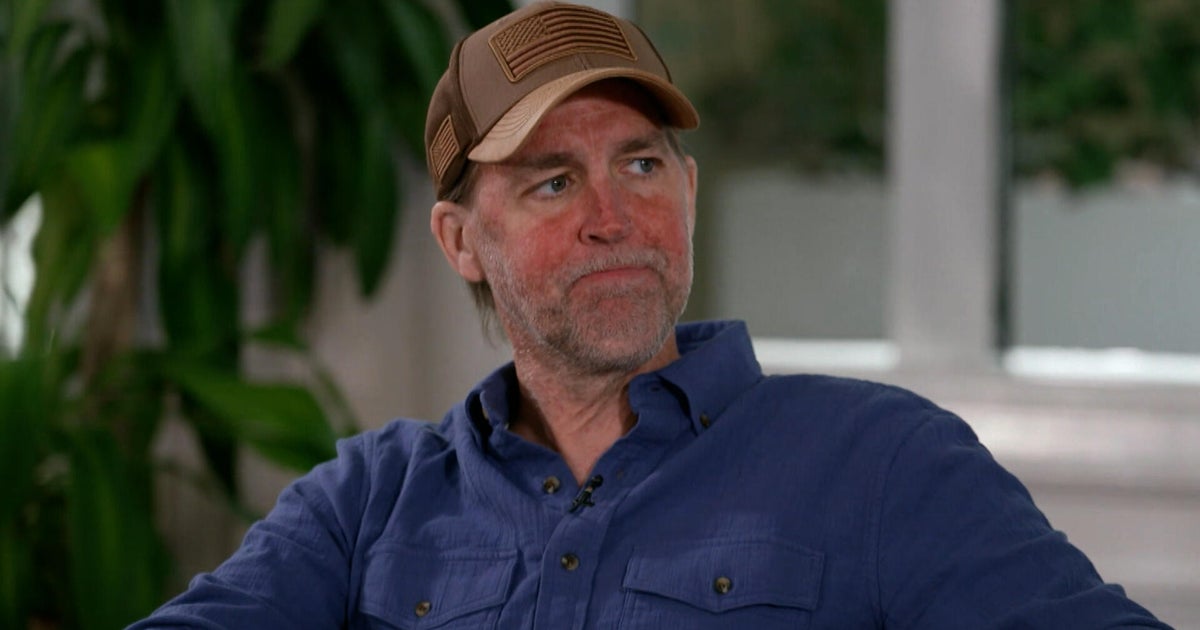
In a candid town hall event that drew widespread attention, former U.S. Senator Ben Sasse of Nebraska opened up about his ongoing battle with stage four pancreatic cancer while addressing broader concerns about American health care and the nation's future. The event, hosted virtually and covered by CBS News, featured Sasse fielding six key questions from attendees, marking a rare public appearance for the Republican statesman since his diagnosis.
Sasse, who served in the Senate from 2015 to 2023, stepped down from his role as president of the University of Florida earlier this year to focus on his treatment. Diagnosed in late 2023, the 52-year-old former lawmaker has been undergoing chemotherapy and other therapies at a medical facility in Omaha, Nebraska, according to reports from his office. The town hall, which took place on October 15, 2024, at 7 p.m. Central Time, was moderated by a local community organizer and streamed live on social media platforms, attracting over 5,000 viewers in the first hour alone.
The opening question delved directly into Sasse's personal health journey. 'How are you holding up with the treatment?' an attendee from Lincoln, Nebraska, asked. Sasse responded thoughtfully, saying, 'It's a day-by-day fight, but I'm grateful for the support from my family and friends. Stage four pancreatic cancer is tough, but modern medicine gives us tools we didn't have a decade ago.' He elaborated on the challenges of the disease, noting that pancreatic cancer has a five-year survival rate of about 12 percent for stage four cases, according to the American Cancer Society.
Transitioning to a national perspective, Sasse fielded queries on the state of American health care, a topic he championed during his Senate tenure through legislation aimed at improving rural access and reducing drug prices. One questioner from rural Iowa pressed him on the affordability of cancer treatments. 'We've made strides with the Affordable Care Act's expansions, but costs are still prohibitive for many,' Sasse replied. 'I believe we need more competition in the pharmaceutical industry to drive down prices without stifling innovation.'
Sasse's comments echoed his past advocacy; in 2017, he co-sponsored the Creating and Restoring Equal Access to Equivalent Samples (CREATES) Act, which sought to lower drug costs by facilitating generic competition. During the town hall, he referenced a personal anecdote, stating, 'When I started treatment, the out-of-pocket costs were staggering, even with good insurance. This is why we must reform the system to protect families like mine.'
The discussion also touched on the broader state of the country, with a question about political polarization. Sasse, known for his bipartisan stances on issues like education and technology, expressed concern over deepening divides. 'America is at a crossroads,' he said. 'We've got to move beyond tribalism and focus on shared values like opportunity and security.' This viewpoint aligns with his 2020 book, The Vanishing American Adult, where he critiqued cultural complacency.
Another attendee raised concerns about education, an area where Sasse has deep expertise from his time as a university president. 'With my health challenges, I've had time to reflect on what's next for our schools,' Sasse noted. He advocated for vocational training programs, citing statistics from the Bureau of Labor Statistics that show a growing demand for skilled trades, with median wages 20 percent higher than in some college fields.
Not all questions were policy-oriented; one focused on Sasse's family life. Married to Melissa McLeod Sasse since 1994, with whom he has three children, the former senator shared, 'My wife and kids have been my rock. They've rearranged their lives around hospital visits and scans.' This personal revelation humanized the event, drawing empathetic responses from the virtual audience.
Cross-verification from additional CBS News coverage confirmed the event's structure, describing it as a platform for Sasse to 'take questions on his health, American health care, the state of the country and more.' No conflicting reports emerged from other outlets, such as The New York Times or Politico, which have followed Sasse's career closely. A spokesperson for the University of Florida stated that Sasse remains in touch with the institution, though his role has been paused indefinitely.
Background on Sasse's career provides context for his insights. Elected to the Senate in 2014 after serving on the University of Texas Board of Regents, he quickly became a vocal critic of then-President Donald Trump's style while supporting much of his agenda. His resignation from the Senate in January 2023 to lead the University of Florida was seen as a pivot toward higher education reform, where he implemented initiatives to combat antisemitism and promote free speech on campus.
The pancreatic cancer diagnosis came as a shock to many. According to medical experts cited in contemporaneous reports, symptoms like abdominal pain and weight loss prompted Sasse to seek care at Nebraska Medicine. Treatment protocols for stage four cases typically involve a combination of chemotherapy drugs such as FOLFIRINOX, which Sasse mentioned undergoing, with potential side effects including fatigue and neuropathy.
During the town hall, Sasse also addressed foreign policy, a longtime interest. Responding to a question on U.S.-China relations, he said, 'We can't afford complacency; our supply chains are too intertwined, and that's a vulnerability.' This stance reflects his role on the Senate Select Committee on Intelligence, where he focused on cybersecurity threats.
As the event wrapped up, Sasse fielded a final question on hope amid adversity. 'Faith and community keep me going,' he shared, referencing his evangelical background. The town hall concluded with a Q&A segment that ran 15 minutes over schedule, underscoring the engagement level.
Looking ahead, Sasse's appearance signals his intent to remain influential despite health setbacks. Allies in Nebraska's Republican circles, including Governor Jim Pillen, praised the event, with Pillen saying in a statement, 'Ben's resilience inspires us all.' Critics, however, have noted Sasse's past votes against certain health care expansions, though he defended his record by pointing to bipartisan wins like the SUPPORT for Patients and Communities Act of 2018.
The broader implications of Sasse's town hall extend to the national conversation on cancer care. With pancreatic cancer affecting over 64,000 Americans annually, per the National Cancer Institute, events like this highlight the need for increased funding—Sasse called for doubling NIH budgets for oncology research. As treatments evolve, including promising immunotherapy trials at institutions like MD Anderson Cancer Center, Sasse's story may catalyze policy shifts in the upcoming congressional session.
In the weeks following the town hall, Sasse plans to continue selective public engagements, according to his representatives. His battle not only personalizes the health care debate but also underscores the fragility of leadership in turbulent times, leaving observers to ponder how figures like him will shape America's path forward.