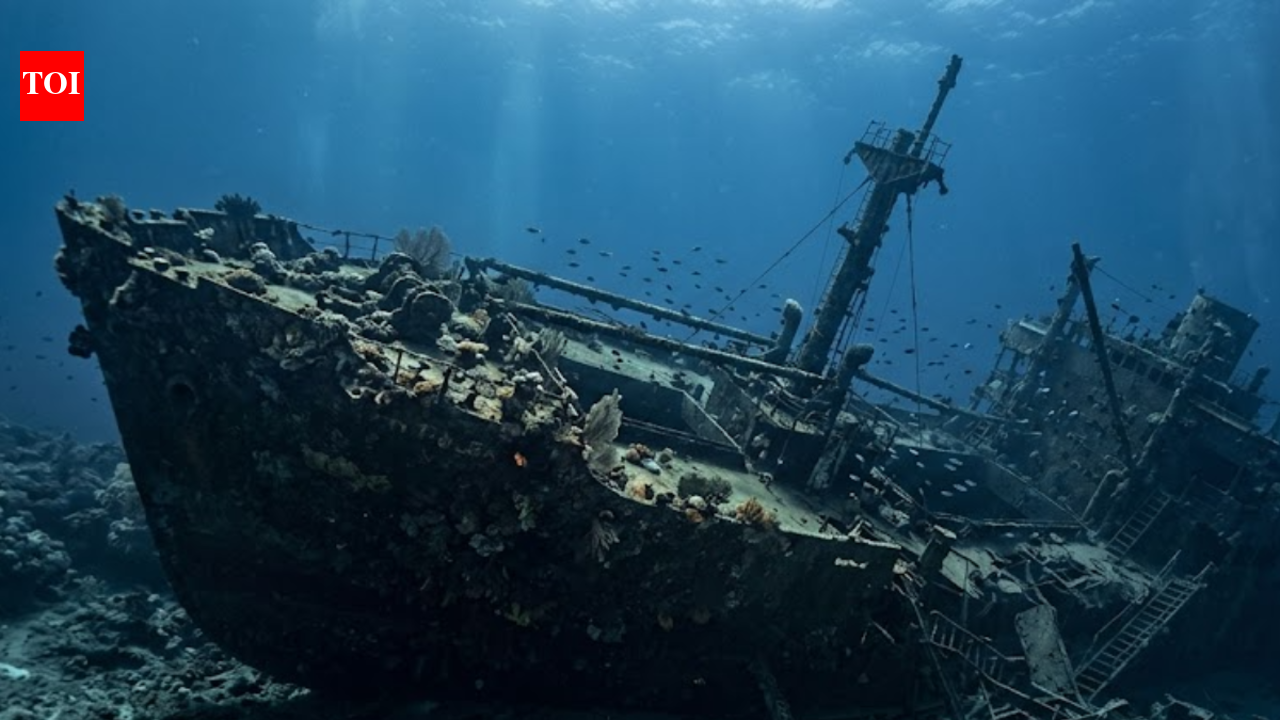
A father and his 5-year-old daughter made an unexpected discovery while fishing on Lake Michigan, locating the long-lost wreck of the George L. Newman, a ship that had been missing for more than 150 years. The find occurred during a routine outing, according to a report from the Times of India Science Desk.
The pair were out on the water when they noticed unusual debris and structures beneath the surface. Officials and maritime experts later confirmed the identification through historical records and sonar imaging. The George L. Newman reportedly sank in the mid-19th century, though exact details of its final voyage remain sparse in public accounts.
"It was just another day on the lake until we saw something that didn't look natural," the father told local authorities, as summarized in the coverage. His daughter, described as curious and observant for her age, first pointed out the anomaly while they drifted over the site.
The discovery adds to a series of recent underwater finds in the Great Lakes region, where shifting sediments and improved scanning technology have helped reveal vessels lost to storms and collisions. Lake Michigan in particular has claimed dozens of ships over the centuries, many of them commercial schooners and steamers carrying lumber, grain or passengers.
According to the Times of India article, the wreck lies in relatively shallow water, making it accessible for further study without specialized deep-sea equipment. Researchers plan to document the site using remotely operated vehicles and non-invasive surveys to avoid disturbing any remaining artifacts.
Maritime historians note that the George L. Newman was a wooden-hulled vessel typical of the era, likely involved in regional trade routes between ports in Wisconsin, Illinois and Michigan. Its disappearance went largely unrecorded in major newspapers of the time, which may explain why the location remained unknown until now.
Local dive clubs and historical societies have expressed interest in the find, though access will be restricted until preservation assessments are complete. "These accidental discoveries often come from people who spend the most time on the water," said one official familiar with Great Lakes shipwrecks, according to the report.
The incident highlights how modern recreational activities can intersect with historical preservation. Similar cases in recent years have involved kayakers, anglers and even drone operators spotting outlines or debris that turned out to be significant wrecks.
Weather conditions on the day of the discovery were described as calm, with good visibility that aided the initial sighting. The father and daughter reportedly marked the location with GPS coordinates before notifying the Coast Guard and state historical authorities.
Further analysis of the hull and any cargo could provide new insights into 19th-century shipbuilding techniques and trade patterns on the inland seas. Experts caution, however, that full excavation is unlikely due to cost and environmental concerns.
The Times of India Science Desk framed the story as an example of everyday exploration leading to scientific and historical value, emphasizing the role of public curiosity in advancing knowledge of the past.
State officials have not yet released the precise coordinates of the site to prevent unauthorized diving or looting. A formal announcement with more details is expected in the coming weeks once initial surveys conclude.
Community members in nearby coastal towns have reacted with a mix of excitement and calls for careful stewardship of the underwater heritage. Some residents recalled family stories of ships lost in sudden squalls, underscoring the lakes' reputation for rapid weather changes.
As documentation proceeds, the find may eventually become part of educational exhibits or virtual tours, allowing the public to learn about the George L. Newman without visiting the physical location.