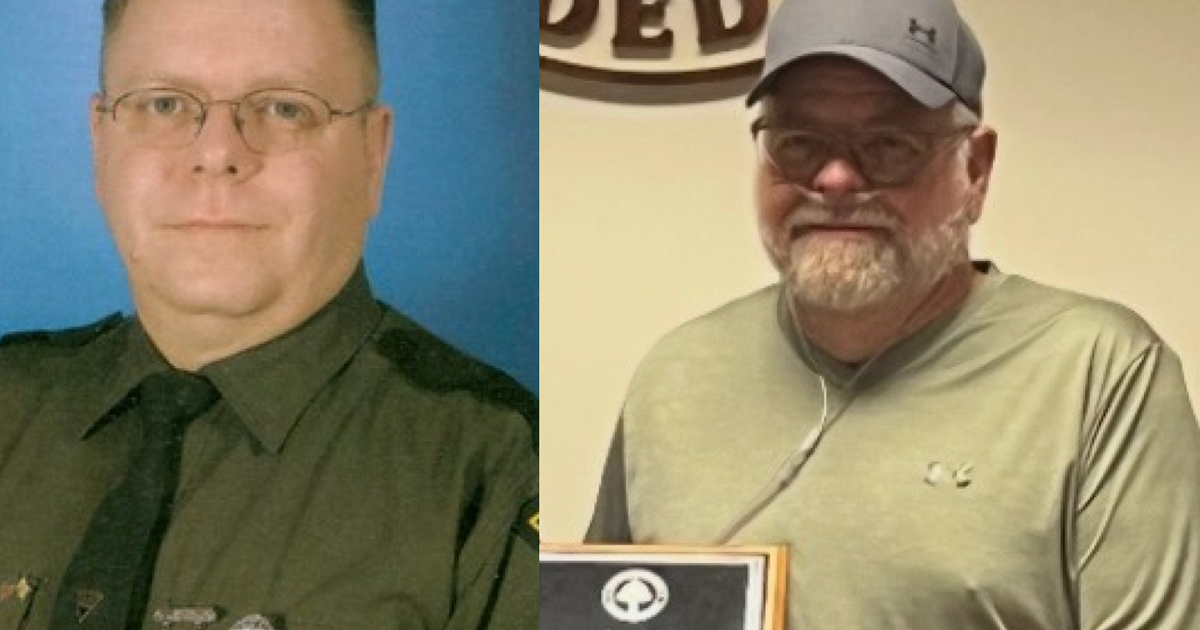
CHARLESTON, W.Va. — For more than four decades, Travis Corbitt patrolled the streets of West Virginia as a dedicated police officer, responding to emergencies and chasing suspects with the grit expected of someone in law enforcement. But in recent years, a persistent shortness of breath began to shadow his every move, turning routine tasks into exhausting ordeals. What started as a nagging issue dismissed as age or poor fitness ultimately revealed itself as idiopathic pulmonary fibrosis (IPF), a rare and progressive lung disease with no known cause. Corbitt's journey from diagnosis to a life-saving double lung transplant at the Cleveland Clinic highlights the insidious nature of the condition and the hope it offers through advanced medical intervention.
Corbitt, now 63, spent 44 years with the sheriff's department before retiring in frustration as his breathing deteriorated. "I don't know how to describe it, but until you are struggling for every breath you draw, you don't know what that feels like," Corbitt said in a recent interview. "It was just a constant struggle to draw a deep breath." Initial visits to his doctor yielded suggestions of allergies or exercise-induced asthma, but Corbitt had no history of allergies, and inhalers provided no relief. The uncertainty weighed heavily on him, especially as a veteran officer accustomed to facing dangers head-on.
As his condition worsened, Corbitt turned to supplemental oxygen, which soon became a full-time necessity. Everyday activities like walking his property or playing golf required elaborate adaptations—he even pulled his oxygen tank behind him on the course. Climbing a short flight of stairs left him winded and in need of rest. "There were times where I thought I was just, you know, out of shape or whatever, when I would have to do physical exertion—chase somebody, run somewhere," Corbitt reflected. "I thought I was just getting out of shape. Looking back on it now, that's probably not what it was."
The turning point came when Corbitt consulted a pulmonologist, who, after mere seconds of listening to his chest, diagnosed pulmonary fibrosis. The news was alarming: the scarring of lung tissue made breathing progressively harder, and for IPF cases like his, the only curative option was a double lung transplant. "It was unsettling," Corbitt admitted. "But I've never been a curl up in a fetal position and cry kind of guy. So when the doc said I needed a double lung transplant, I said, 'If that's where we're going, let's head that way.'"
Pulmonary fibrosis involves the thickening and scarring of lung tissue, reducing the lungs' ability to transfer oxygen into the bloodstream. According to Dr. Rachel Powers, the pulmonologist at the Cleveland Clinic who treated Corbitt, IPF is particularly challenging to diagnose because its symptoms can mimic aging or deconditioning. "Some of the symptoms of it can be somewhat insidious, in that people just notice they're short of breath or they can't do quite as much, and in a lot of people, it coincides with this age range of later 50s to early 60s," Powers explained. "That sometimes is accounted for as 'I'm just getting older.' You can kind of go through a Rolodex of seeing different physicians."
Dr. Aman Pande, another Cleveland Clinic pulmonologist not directly involved in Corbitt's care, noted that early-stage patients are typically managed with medications to slow disease progression, such as antifibrotic drugs. However, in advanced stages like Corbitt's, transplantation becomes the sole viable path forward. The Cleveland Clinic, a leading center for lung transplants, receives referrals from across the country for complex cases. Corbitt's initial intake appointment with Powers occurred in September 2024, and by May 2025, his severe condition placed him high on the national transplant waiting list.
Fortune smiled on Corbitt when, after just a few weeks on the list, he received the life-altering call from the Cleveland Clinic. He and his family rushed to the hospital in Ohio for the procedure. Despite the surgery's risks—major surgery involving the removal and replacement of both lungs—Corbitt approached it with the stoicism honed from his law enforcement career. "Being a police officer for 44 years, I have always known that death was a possibility for me," he said. "Going into surgery, I realized it was a possibility, but I didn't feel like that was where we were. It wasn't a huge concern for me. I realized it was possible, but I wasn't really worried about that part of it."
The operation, performed in mid-2025, proceeded smoothly. "Corbitt's surgery went wonderfully," Powers reported, followed by a "really good recovery." Remarkably, Corbitt began weaning off oxygen just four days post-surgery. He recalled a poignant moment in his hospital bed: "I remember one evening, I was laying in the hospital bed, and I drew a deep, deep breath. It may have been the first one for a year. But just a deep breath. And I thought 'Wow, that feels weird.'" Released after three weeks—a standard timeframe for double lung transplant patients—Corbitt entered an inpatient rehabilitation facility to rebuild his strength.
By late summer 2025, Corbitt was back home in West Virginia, feeling revitalized. He now attends regular follow-ups with Powers, including pulmonary function tests, X-rays, and other monitoring to watch for signs of rejection, which is most common in the first year after transplant. Lung recipients like Corbitt must adhere to strict regimens of immunosuppressive drugs and lifestyle adjustments to protect their new organs. In December 2025, he celebrated the arrival of his seventh grandchild, a joyful milestone amid his recovery.
Looking ahead, Corbitt is eyeing a return to part-time work at the sheriff's department, perhaps in a less physically demanding role. His passion for golf, sidelined by his illness, beckons as warmer weather approaches. "When it warms back up, I'm back on the golf course," he declared enthusiastically. "You can't hold me down." His story underscores the resilience required to navigate a rare disease, from misdiagnosis to transplant success.
IPF affects an estimated 50,000 people in the United States annually, according to the Pulmonary Fibrosis Foundation, with men over 50 at higher risk, though the reasons remain unclear. Diagnosis often comes late because symptoms develop gradually, and there's no single test—doctors rely on imaging, biopsies, and exclusion of other causes. Powers emphasized that while transplants offer hope, donor shortages mean wait times can stretch months or years; Corbitt's relatively swift match was a rarity.
Broader context reveals ongoing research into IPF treatments. Clinical trials at institutions like the Cleveland Clinic explore new antifibrotics and regenerative therapies, but transplantation remains the gold standard for end-stage patients. Corbitt's case, while personal, illustrates the critical role of specialized centers in saving lives. As he rebuilds, his experience serves as a testament to the human spirit's endurance against invisible adversaries.
For families facing similar struggles, Corbitt's narrative offers encouragement. Support groups and organizations like the American Lung Association provide resources, emphasizing early screening for those with persistent respiratory issues. In West Virginia, where rural access to specialists can be limited, Corbitt's path—from local diagnosis to out-of-state transplant—highlights disparities in healthcare delivery. Yet, his positive outcome reaffirms the impact of perseverance and medical expertise.
As Corbitt steps into this new chapter, free from the oxygen tank that once defined his days, he embodies recovery's possibilities. His story, drawn from interviews and medical records, reminds us that even in the face of a relentless disease, breakthroughs can restore what was lost.