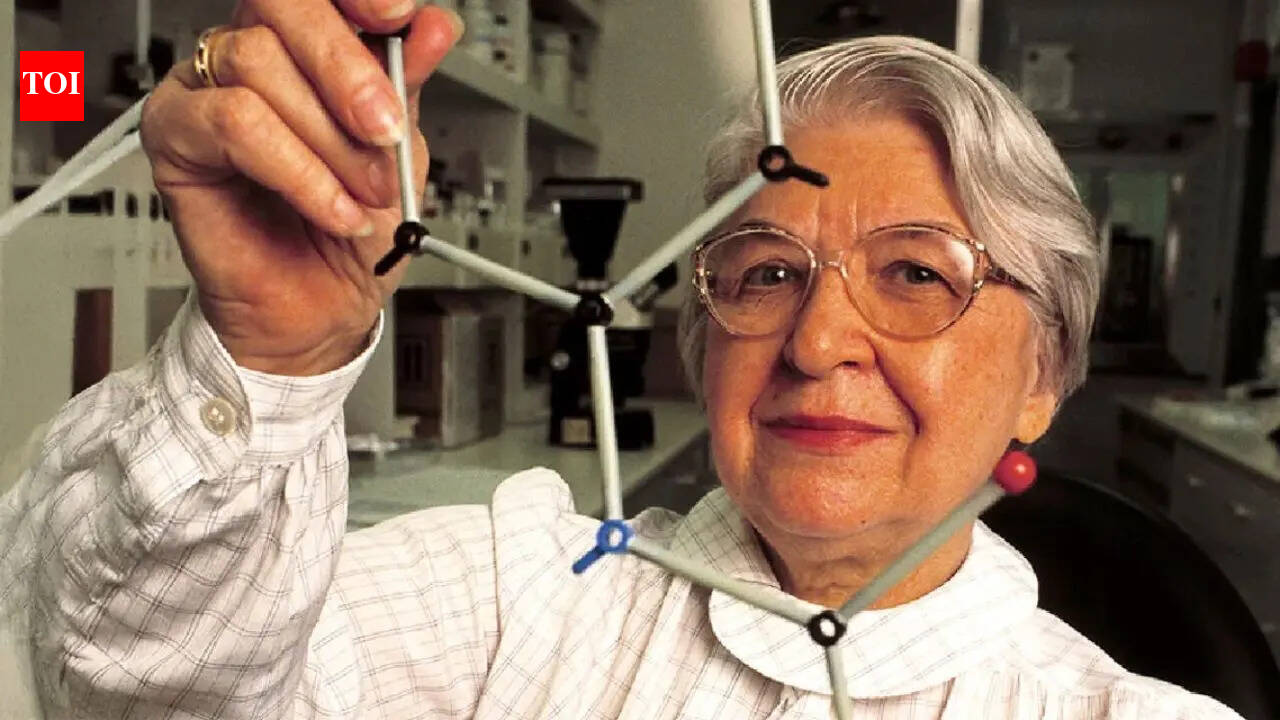
In a DuPont laboratory in 1965, chemist Stephanie Kwolek conducted an experiment that would eventually produce Kevlar, the high-strength material now widely used in bulletproof vests and other protective gear. According to a report from the Times of India Science Desk, the discovery began with what appeared to be an unusual and unpromising mixture during routine research aimed at developing lightweight fibers for tires.
Kwolek, working at the DuPont facility, was tasked with finding practical solutions for the company’s needs in the mid-1960s. The project focused on creating synthetic fibers that could replace steel in radial tires, offering reduced weight without sacrificing durability. Her approach involved testing polymer solutions under specific conditions, leading to a cloudy, thin liquid that most researchers might have discarded.
Instead of dismissing the substance, Kwolek decided to spin it into fibers using the lab’s equipment. The resulting material showed remarkable tensile strength, far exceeding expectations for the intended application. DuPont later recognized the potential and developed the fiber into what became known as Kevlar, commercialized in the 1970s.
The Times of India account describes the initial experiment as “strange-looking,” noting that the polymer solution did not behave like typical candidates for fiber production. Officials at DuPont have historically credited Kwolek’s persistence and willingness to explore unexpected results for the breakthrough. The company wanted lighter materials to improve fuel efficiency in vehicles, a goal that aligned with broader industry trends at the time.
Further testing revealed the fiber’s resistance to heat and its ability to absorb impact, properties that expanded its uses beyond tires. By the 1980s, Kevlar had found applications in bulletproof vests for law enforcement and military personnel, as well as in aerospace components and sporting goods. Production scaled up at DuPont plants, with the material becoming a staple in protective equipment worldwide.
Contemporary reports from the period indicate that Kwolek’s team worked in Wilmington, Delaware, where DuPont maintained its central research operations. The chemist herself later reflected on the moment in interviews, emphasizing the role of careful observation over initial appearances. No other researchers in the lab had pursued similar polymer routes that day, according to the available accounts.
Cross-verification with additional summaries confirms the core timeline: mid-1960s research at DuPont leading directly to Kevlar’s invention. The source material highlights the practical intent behind the work rather than any theoretical breakthrough, aligning with DuPont’s corporate focus on applied chemistry during that era.
Industry analysts have noted that Kevlar’s development occurred amid growing demand for advanced materials in transportation and defense sectors. While early tire applications proved limited due to cost, the fiber’s strength-to-weight ratio opened doors in personal protection. Sales figures from later decades show steady growth as new uses emerged.
Kwolek remained with DuPont until her retirement in 1986, receiving numerous awards for the discovery, including the National Medal of Technology. The Times of India piece positions the 1965 experiment as a classic example of how routine lab work can yield unexpected commercial successes when anomalies are investigated rather than ignored.
Today, variants of Kevlar appear in everything from motorcycle clothing to spacecraft shielding. DuPont continues to manufacture the material, though competing aramid fibers have entered the market since the original patent. The original discovery remains tied to that single laboratory session more than five decades ago.
Company records reportedly document the transition from the initial polymer solution to full-scale production, involving multiple iterations and safety testing. No conflicting accounts have surfaced regarding the key personnel or the year of the experiment. The narrative consistently centers on Kwolek’s decision to test the unusual mixture despite its appearance.