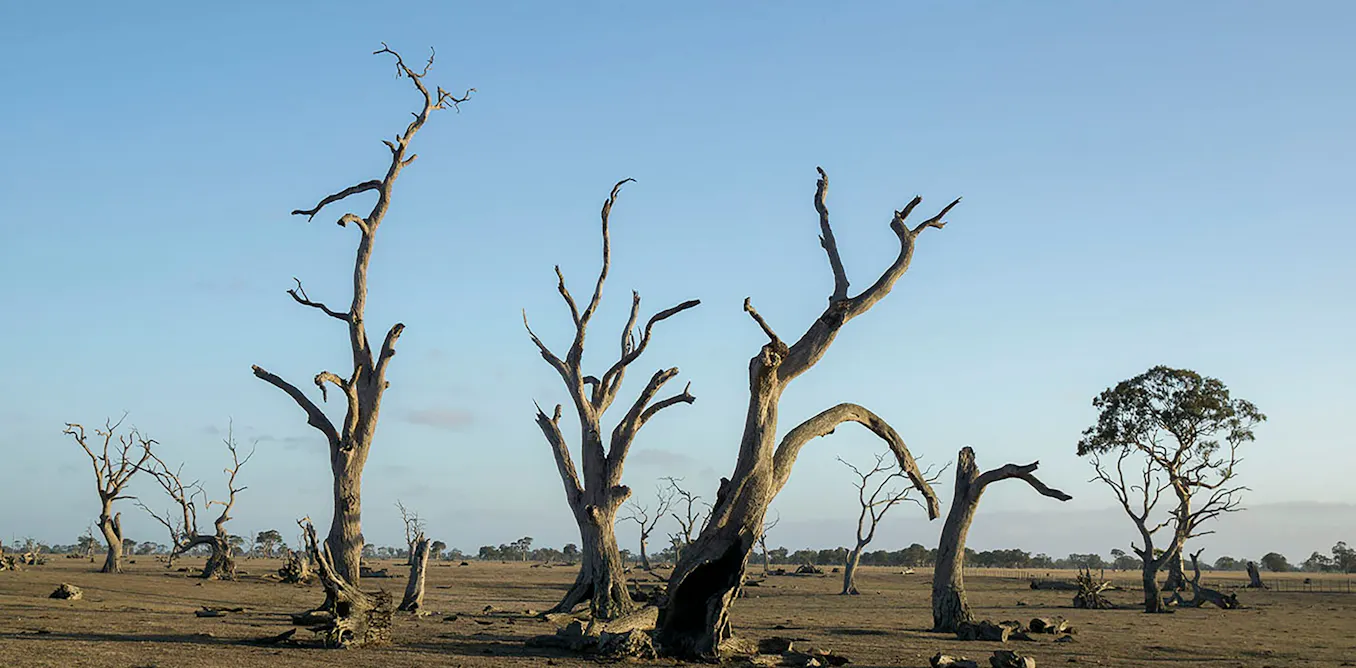
In the quiet expanse of rural Australia, where land holds stories as deep as its rivers, Eva Hornung's latest novel, The Minstrels, delves into the tangled roots of ownership, belonging, and community. Published by Text Publishing, the book follows the life of Gem, a spirited young girl growing up on a family farm near the fictional town of Bolton, and explores how her deep connection to the land shapes her world amid shifting social and environmental tides. Hornung, an award-winning author known for her poignant examinations of human-animal bonds and societal fringes, brings her signature depth to this ambitious tale that spans decades and blurs the line between realism and speculation.
Hornung's literary credentials lend weight to The Minstrels. Her previous novel, The Last Garden, was shortlisted for the prestigious Miles Franklin Literary Award, while Dog Boy not only clinched the Prime Minister’s Literary Award for Fiction but has since been enshrined as a Text Classic, complete with an introduction by acclaimed author Yann Martel. These accolades underscore Hornung's ability to weave complex narratives that resonate with Australian experiences, from the intimacy of family dynamics to broader questions of identity and place.
At the heart of the novel lies The Minstrels, a striking geographical feature described as a “half-chasm, half-gorge through which the river ran and then reissued, changed.” This site, straddling the boundary between Gem's family property and a neighbor's, is steeped in local lore. According to the narrative, it is “the site of various legends, some suicides, accidental deaths and many conceptions,” embodying both beauty and peril for the farming and Indigenous communities around Bolton. Gem, the protagonist whose “favourite word” is the evocative “Minstrels”—called a “dry, sibilant, singing word”—forges a pivotal relationship with this place from her childhood.
Gem's bond with The Minstrels extends beyond personal attachment; it becomes a lens for examining land rights and communal responsibilities. As a white child on inherited land, Gem strikes a deal with Uncle Jim, an Aboriginal elder, trading access to the site for lessons in language and place-based knowledge. “This is my grandmother’s country,” Uncle Jim tells her, highlighting the stark reality: “And it is all privately owned. We have no access.” Gem reflects on this revelation, noting it as “a mystery she hadn’t even known about,” though on some level, she realizes, “she’d always known.” This exchange, as depicted in the novel, captures the unspoken tensions of settler colonialism in Australia, where access to sacred lands remains a fraught issue.
The story traces Gem's evolution from a wild child in a close-knit family to a young woman confronting broader societal changes. Her relationship with her brother Will is central, marked by love and complexity. Will views himself as “an ordinary boy with an extraordinary sister who was all his own,” while their mother perceives Gem as “a difficult dirty girl permanently attached” to their otherwise perfect family. These familial secrets, which surface early in the narrative, propel the siblings on divergent paths, yet a thread of mutual protection endures, illustrating the enduring ties that bind even amid upheaval.
Hornung masterfully manipulates time in The Minstrels, compressing decades into a reader's experience that feels both expansive and intimate. The novel begins with a typical Saturday in Gem's household, rife with hidden undercurrents, and stretches backward to an era when “mothers dressed up for Saturday fish and chips, wearing gloves and seamed stockings.” It propels forward into a near-future where societal fractures deepen, blending realist elements with speculative ones. As novelist Joan Silber observes in her book The Art of Time in Fiction, “It’s the fiction writer’s task to put the reader through the strangely desirable misapprehension that three decades have passed during the five hours it took to read certain pages.” Hornung achieves this with stunning precision, balancing showing and telling to craft a sense of Gem's full, complicated life across 350 pages.
Central to Gem's journey is her reckoning with her position as a white “benefactor” in her friendship with Uncle Jim. Early interactions reveal his cool assessment: Gem notices him “eye her coolly and without apparent gratitude for all her generosity.” Through this relationship, Hornung introduces the Walmajarri term utnyu, which translates variably as “Whitefellow/.../corpse; dead (ghost/body); very sick; very bad; white person.” This linguistic insight prompts Gem to confront her settler legacy, navigating vanities and deeper learnings. Uncle Jim later affirms their bond: “I’m interested in my country, and you come along with it. Turns out you’re inseparable from it.” The friendship that emerges is profound, underscoring themes of mutual respect across cultural divides.
The novel also probes contemporary conflicts over land use. At one point, animal activists target Gem with camera phones and online campaigns, leading to unexpected alliances. While the exact reasons for her singled-out status remain unclear—especially given the abundance of farmers in the area—these encounters highlight how respect and care can bridge ideological gaps. Hornung extends this ethic to the beyond-human world, suggesting that true stewardship transcends human boundaries.
Another vignette involves an immigrant family seeking refuge on Gem's farm, constructing a modest rock hut by the river before vanishing as swiftly as they arrived. This episode questions notions of ownership from multiple angles, illustrating how land serves as both sanctuary and contested space. In the novel's speculative future, these themes intensify: new legislation erodes traditional property rights, allowing city dwellers to access rural farmlands for unconventional gatherings. Gem, portrayed as receptive to these intruders, forms new communities, though darker episodes—like hiding in her cellar from squatters—hint at underlying perils without deep exploration.
The near-future sections, in particular, grip with their plausibility. As societal structures falter, “land ownership becomes a product of might, as the artifice of the legal contract is revealed. No one cares what is written on a piece of paper or inside a computer when the internet is inoperable and the world follows different rules.” Viewed through Gem's perspective, this new order evokes a frightening realism, where the divide between urban and rural worlds widens dramatically. Hornung grapples with these complexities without resorting to clichés or undue sentiment, employing beautiful language to depict Gem's grit, independence, and fierce intelligence.
While the narrative prioritizes positive portrayals of communal care and appreciation for place, some moments feel weighted toward optimism. For instance, scenes of individuals fostering community receive ample space, whereas threats to safety, such as squatter incursions, are touched upon more briefly. This emphasis aligns with the book's interrogation of settler views on ownership and security, though it leaves room for readers to ponder unresolved tensions.
The Minstrels arrives at a time when discussions of Indigenous land rights and environmental stewardship are increasingly urgent in Australia. Hornung's work echoes ongoing debates, such as those surrounding native title claims and rural-urban divides, without prescribing solutions. By centering Gem's profound relationship to place, the novel invites reflection on how personal histories intersect with collective ones.
As Gem returns to her roots after university and family upheavals—including the forced sale of the land—the story culminates in a testament to resilience. Her path, marked by separations and reconnections, mirrors the evolving landscape around Bolton. Hornung's portrayal ensures that readers emerge with a nuanced understanding of the characters' transformations, driven by their encounters with The Minstrels.
Critics have praised the novel's scope and empathy. One review notes its “stunning job” of conveying a lifetime's arc, calling it a “compelling read” that witnesses “her full and complicated life, and her profound relationship to place.” With its blend of historical nostalgia, present-day reckonings, and futuristic warnings, The Minstrels positions itself as a significant addition to Australian literature, prompting conversations about who truly belongs to the land and how we care for it.
Looking ahead, Hornung's exploration may influence ongoing literary and cultural dialogues. As Australia grapples with reconciliation efforts and climate challenges, books like this one offer vital narratives for bridging divides. Readers eager for insightful fiction on these themes can expect The Minstrels to resonate long after its final pages.