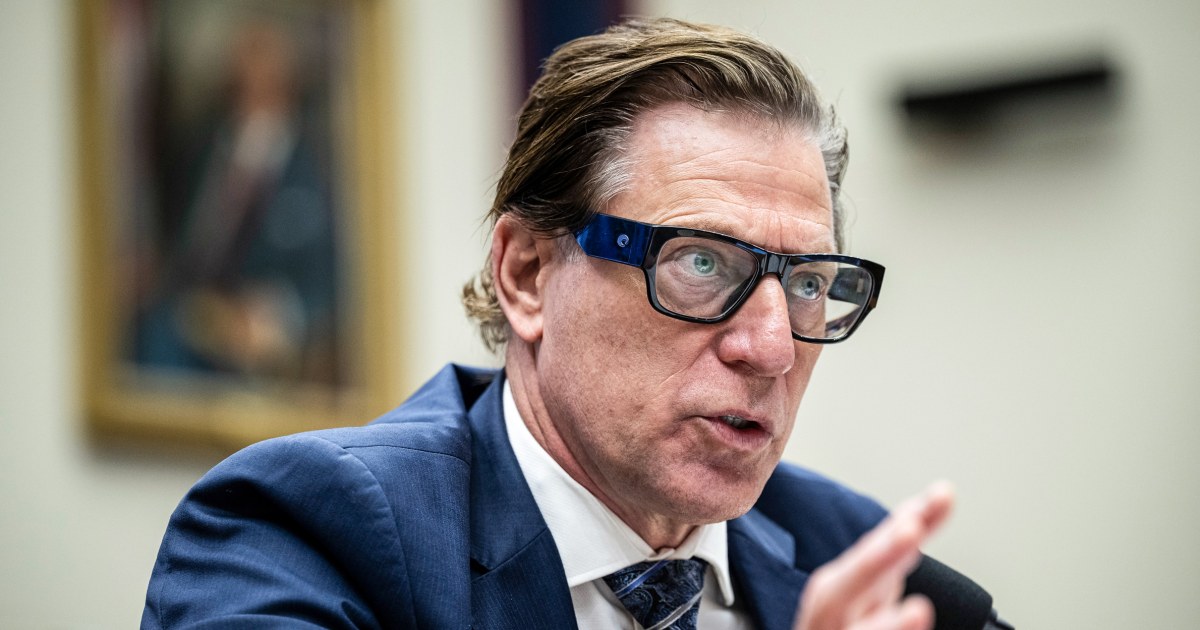
WASHINGTON — David Richardson, who served as acting administrator of the Federal Emergency Management Agency for roughly six months, resigned on Monday, according to two administration officials who spoke to NBC News.
Richardson's departure comes at the end of a challenging period for FEMA, marked by proposed budget cuts from President Donald Trump's administration and public calls from the president to phase out the agency once hurricane season concludes at the end of November. In a joint statement, FEMA and the Department of Homeland Security, which oversees the agency, expressed "sincere appreciation" to Richardson "for his dedicated service."
A DHS spokesperson announced that Karen Evans, FEMA's current chief of staff, will assume the role of acting administrator starting December 1. Richardson, in his own statement, explained that he had agreed to lead the agency temporarily during a difficult time and was now ready to return to the private sector. "I agreed to be the acting administrator through hurricane season when others wouldn’t," Richardson said. "Hurricane season ends on 1 December. Since the danger has largely passed, I can now leave for other opportunities."
The White House directed all inquiries about Richardson's resignation to the Department of Homeland Security, declining further comment. Richardson, a former Marine Corps officer with no prior experience in emergency management, was appointed to the temporary role in May, shortly after the previous acting administrator, Cameron Hamilton, was removed from the position after just a few months.
During his tenure, Richardson simultaneously served as assistant secretary in DHS's Countering Weapons of Mass Destruction Office, a dual role that drew some scrutiny amid FEMA's ongoing challenges. The agency has faced increased examination this year over its capacity to handle disasters, especially as climate change intensifies extreme weather events like hurricanes and floods.
One of the most significant criticisms of Richardson centered on FEMA's response to the catastrophic floods that struck Texas' Hill Country on July 4. The disaster claimed more than 130 lives, including 27 girls and counselors at Camp Mystic, a Christian youth summer camp. Richardson was unreachable for 24 hours following the onset of the flooding, and it was later disclosed that he had been on vacation over the holiday weekend.
In a phone interview on Monday night, Richardson reflected on his time at FEMA, saying his initial understanding of the role was "to shut it down." However, he pointed to the agency's handling of the Texas floods and severe flooding in western Alaska as evidence of its ongoing necessity, albeit on a reduced scale. "We want to push it back to the states," he said, adding that he believes states can take on more responsibility and that President Trump intends to reform the agency rather than eliminate it entirely.
This perspective aligns with comments from Homeland Security Secretary Kristi Noem, who in a June appearance on NBC News' "Meet the Press" clarified that Trump does not aim to completely dismantle FEMA but to overhaul its operations. Earlier, in testimony before Congress, Hamilton had expressed opposition to eliminating the agency, stating that he did not believe it was "in the best interest of the American people to eliminate the Federal Emergency Management Agency." His remarks contrasted with Trump's suggestions that states should primarily handle disaster responses.
Internal dissent within FEMA has been vocal. In August, nearly 200 employees signed an open letter criticizing the Trump administration's approach to disaster preparedness, particularly in the wake of the Texas floods. The letter accused Secretary Noem's policy requiring review of all FEMA expenditures exceeding $100,000 by her office of delaying the agency's response to the deadly event. It also questioned the qualifications of both Richardson and Hamilton, noting that neither had "legal qualifications, Senate approval, and the demonstrated background required of a FEMA Administrator."
At least 21 FEMA employees who signed the letter were subsequently placed on administrative leave. Richardson pushed back against these claims on Monday night, insisting that the $100,000 expenditure cap did not hinder critical operations. "Anything life-threatening, we didn’t go by the $100,000 cap," he said.
Richardson's resignation was met with approval from some of his critics. Rafael Lemaitre, a former director of public affairs at FEMA and a member of the advisory council for Sabotaging Our Safety, an advocacy group focused on disaster preparedness, issued a statement saying, "Appointing someone with zero disaster management experience to lead FEMA is like putting someone who’s never flown a plane in the cockpit during a hurricane."
Democratic members of the House Homeland Security Committee echoed this sentiment in a post on X, writing, "David Richardson was incompetent, inexperienced and had no business running FEMA. He’ll be remembered for vanishing when the families of Texas needed him most. Good riddance."
The broader context of FEMA's troubles includes the Trump administration's proposed major budget reductions, which have fueled debates about the agency's future role in national disaster response. As hurricane season officially wraps up, attention now turns to how the incoming acting administrator, Karen Evans, will navigate these reforms and any potential restructuring under Trump's direction.
Evans, who has served as FEMA's chief of staff, brings internal experience to the role but faces an agency still recovering from recent controversies and preparing for whatever changes lie ahead. With states being encouraged to shoulder more of the burden, questions remain about how effectively the federal government can coordinate large-scale emergencies in the future.
Richardson's exit underscores the tensions within the administration over FEMA's direction, as the U.S. grapples with increasingly frequent and severe weather events. While some see his departure as a step toward needed change, others worry it signals further instability at a critical agency.