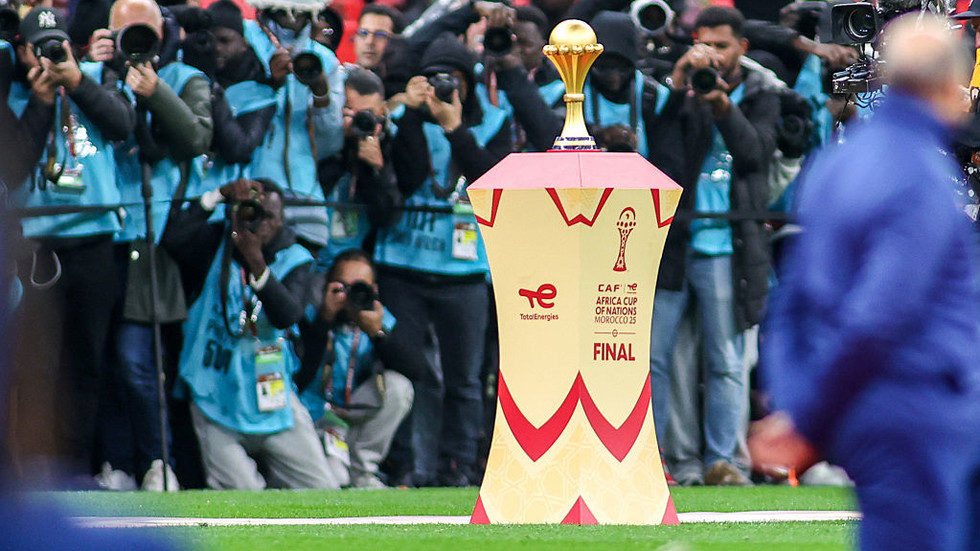
RABAT, Morocco — In a stunning reversal that has sent shockwaves through the African football community, the Confederation of African Football (CAF) has stripped Senegal of its 2025 Africa Cup of Nations title and awarded the championship to host nation Morocco. The decision, announced in a statement on Tuesday, came after an appeal from the Royal Moroccan Football Federation (FRMF) and a thorough review of the controversial final match played on January 18, 2026, at the Stade Ibn Battouta in Rabat.
The final, which drew over 65,000 fans to the stadium and millions more watching across the continent, was marked by heated moments that escalated into chaos. Late in regulation time, a Senegalese goal was controversially disallowed by the referee, prompting outrage from the Lions of Teranga. Moments later, Morocco was awarded a penalty, leading Senegal's coach, Pape Bouna Thiaw, and his players to walk off the field in protest for 15 minutes. Upon their return, Moroccan star Achraf Hakimi stepped up to take the spot kick but missed, sending the ball wide. Senegal eventually prevailed 1-0 in extra time, securing what was believed to be their second AFCON title after their 2021 triumph.
CAF's ruling invoked Article 84 of the Africa Cup of Nations Regulations, declaring the Senegal team to have forfeited the match due to their protest. "In application of Article 84 of the Regulations of the Africa Cup of Nations, the Senegal team is declared to have forfeited the match, with the result recorded as 3–0 in favor of the Federation Royale Marocaine de Football (FRMF)," the statement read. This forfeiture not only hands Morocco its first AFCON crown but also rewrites the tournament's history, as Senegal's victory parade in Dakar had already begun celebrations nationwide.
The decision has drawn sharp criticism from Senegalese officials. On Wednesday, the Senegalese Football Federation (FSF) issued a strongly worded condemnation, describing the ruling as “unfair, unprecedented, and unacceptable” and arguing that it “discredits African football.” The FSF announced plans to appeal the verdict to the Court of Arbitration for Sport (CAS) in Lausanne, Switzerland, potentially prolonging the controversy into the coming months.
CAF did not spare Morocco from repercussions, imposing sanctions on both sides for their conduct during and around the match. Thiaw faces a five-match suspension and an undisclosed fine, while the FSF has been levied approximately $615,000 for misconduct. On the Moroccan side, Hakimi received a two-match ban, and the FRMF was fined roughly $315,000 for security breaches, ball boy misconduct, and interference with officials. In a lighter note amid the tensions, Moroccan midfielder Ismaël Saibari's original three-match suspension—for an incident involving stealing the Senegal goalkeeper's towel during the game—was reduced to two matches, and his $100,000 fine was lifted. All other appeals from both nations were dismissed by the CAF disciplinary committee.
The final's drama unfolded under the bright lights of Rabat's national stadium, where Morocco, as hosts, entered as favorites after a strong semifinal run that included a 2-1 victory over Egypt. Senegal, powered by stars like Sadio Mané and emerging talents, had navigated a tough group stage and knockout rounds, including a penalty shootout win against Algeria in the quarters. The disallowed goal, ruled offside by VAR after a lengthy review, sparked immediate fury from Senegalese players, who surrounded the referee in protest.
Eyewitnesses described the 15-minute walkout as tense, with security forces intervening to prevent further escalation. Fans in the stands chanted in support of their teams, and the match was briefly halted as organizers negotiated the players' return. The penalty award to Morocco, for a foul in the box, added fuel to the fire, though Hakimi's miss kept Senegal in contention. The extra-time winner, a header from substitute forward Ismaila Sarr, sealed what many called a gritty, comeback victory at the time.
This is not the first time CAF has altered match outcomes due to disciplinary issues. In a notable precedent from October 2024, the confederation awarded Nigeria a 3-0 victory over Libya in a 2025 AFCON qualifier following an investigation into the mistreatment of the Nigerian squad. The Super Eagles were reportedly held at a Libyan airport for 16 hours without food or water upon arrival, leading to the forfeiture ruling against Libya. The North African nation was fined $50,000, and Nigeria was granted three points in the standings, underscoring CAF's willingness to enforce regulations strictly.
Moroccan football authorities celebrated the ruling as a vindication. FRMF president Fouzi Lekjaa, in a post-announcement statement, praised CAF for upholding the "integrity of the game." "This decision restores justice to the tournament and honors the spirit of fair play," Lekjaa said, according to reports from Moroccan state media. Meanwhile, Senegalese captain Kalidou Koulibaly expressed disappointment on social media, posting, "We fought with everything we had. This feels like a robbery."
The broader context of the 2025 AFCON highlights the growing tensions in African football governance. Hosted by Morocco for the first time since 1988, the tournament was expanded to 24 teams and featured matches across five cities, including Casablanca and Marrakech. Prize money exceeded $7 million for the winners, making the title more lucrative than ever. Senegal's original win would have netted them that sum, but now Morocco stands to claim it, boosting the Atlas Lions' profile ahead of World Cup qualifiers.
Experts in sports law have weighed in on the implications. Dr. Aisha N'Diaye, a professor of sports governance at the University of Dakar, noted that while forfeitures are rare, they align with FIFA's global standards. "Article 84 is clear on protests that abandon the field; it's there to prevent disruptions," she said in an interview with local radio. However, she added that the appeal to CAS could succeed if Senegal proves the protest was justified by refereeing errors.
The fallout has already affected international relations in African sports. The West African Football Union (WAFU) issued a statement supporting Senegal's appeal, calling for "transparent arbitration." In contrast, the Union of North African Football (UNAF), which includes Morocco, endorsed CAF's decision, emphasizing the need for discipline. This divide underscores regional rivalries that often spill into football, from colonial-era grudges to modern economic competitions.
As the dust settles, players from both sides face uncertain futures. Hakimi, a Real Madrid defender, will miss upcoming friendlies, while Thiaw's suspension could sideline him for Senegal's next World Cup African qualifiers starting in March 2026. Saibari, playing for PSV Eindhoven, expressed relief over the reduced ban, telling reporters, "It was a silly moment; I'm glad it's behind us."
Looking ahead, the CAS appeal process typically takes 2-3 months, during which the title's status remains in limbo. If upheld, Morocco's victory will be etched in history, potentially inspiring a new generation of Atlas Lions fans. For Senegal, a successful challenge could reinstate their glory and prompt reforms in CAF's disciplinary protocols. Either way, the 2025 AFCON will be remembered not just for its on-field action but for this off-field saga that tested the limits of sportsmanship and authority.
In the end, this controversy serves as a reminder of football's power to unite and divide. As one Rabat fan put it after the announcement, "We wanted the win on the pitch, but rules are rules." Whether that sentiment holds through the appeals remains to be seen, but African football's spotlight is firmly on the unfolding drama.