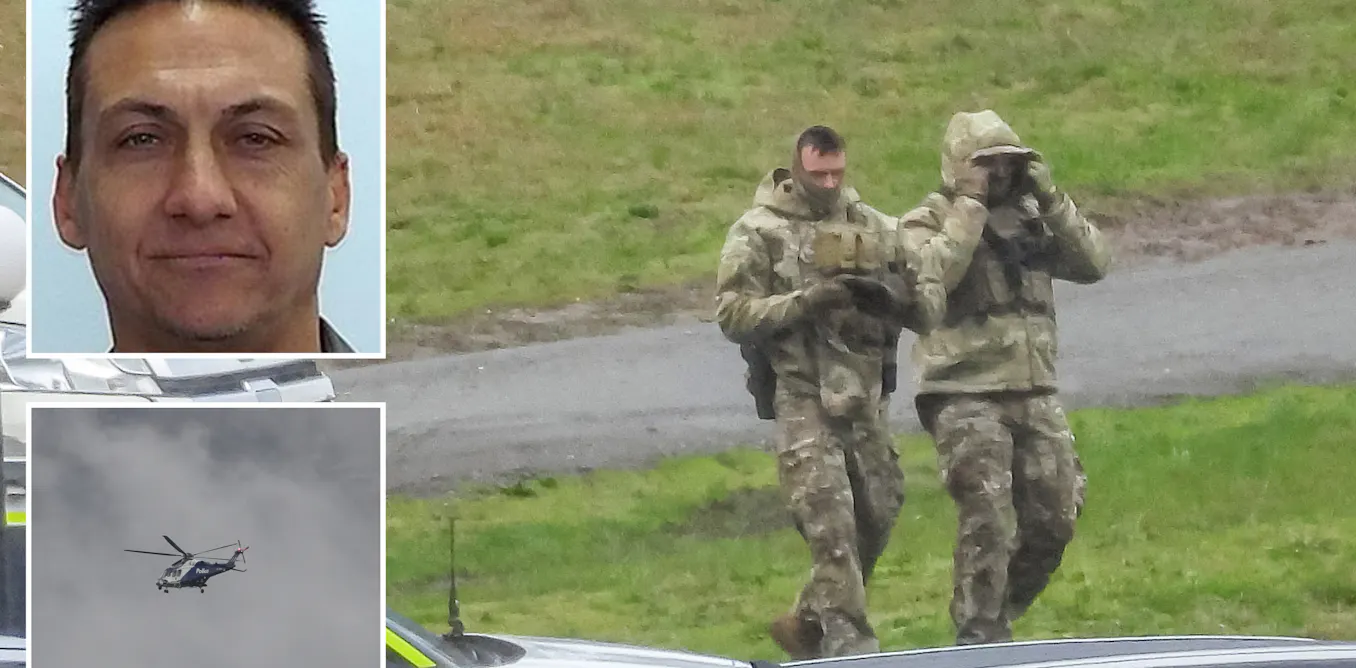
In a dramatic end to one of Australia's most intense manhunts, a man believed to be Dezi Freeman, the fugitive accused of killing two police officers, was fatally shot by police in north-east Victoria on Monday morning after 216 days on the run. The incident occurred during an operation to locate Freeman, who had evaded capture since allegedly shooting and killing the officers in August 2025 amid the rugged bush terrain of the region. Victoria Police Chief Commissioner Mike Bush addressed the media in a press conference later that day, emphasizing the ongoing efforts to confirm the man's identity while highlighting the dangers faced by officers in such operations.
Freeman's evasion began following the fatal shooting of the two officers, sparking what has been described as an extraordinary pursuit involving hundreds of police officers, drones, helicopters, and specialist dogs at its peak. The search covered treacherous terrain in north-east Victoria, with more than 100 properties raided in the effort to track him down. According to police statements, the manhunt persisted even after a pivotal announcement in February, when authorities declared they "strongly believed" Freeman was dead—a declaration that experts suggest may have been a tactical ploy to lure him out of hiding by implying a reduction in search intensity.
Bush, during the press conference, noted there was "a lot to suggest Freeman had taken his own life," but police had followed every possible lead without success until recently. The breakthrough came last week when authorities received a tip-off indicating Freeman was holed up in a caravan or shipping container-style structure on a rural property. "Police appealed for the person to come out of where he was hiding, which resulted in a three-hour standoff," Bush said. Despite opportunities to surrender peacefully, the situation escalated, leading to the fatal shooting. No officers were injured in the encounter, and Freeman was regarded as a high-level threat, prompting a cautious and prepared approach by the responding team.
The identity of the deceased man has not yet been officially confirmed, though a police spokesperson earlier stated: "A man has been fatally shot by police at a property in north-east Victoria this morning as part of the operation to locate Desmond Freeman." Bush reiterated that formal identification would be sought as soon as possible, underscoring the procedural steps following such critical incidents. This event marks the conclusion of a saga that captivated the nation, with the $1 million reward offered for information on Freeman's whereabouts ultimately paying off through public assistance.
Background on the initial crime reveals a tragic sequence of events in August 2025, when Freeman allegedly ambushed and killed two officers during a routine operation in the bushland. The motive remains under investigation, but the attack prompted an immediate and massive response from Victoria Police, involving units from homicide, armed crime, and fugitive squads, alongside local detectives. As the manhunt unfolded, investigators parallelly built a case focused on the crime scene where the officers were shot, preserving evidence from that location and any subsequent sites, including discarded clothing or weapons linked to Freeman.
Throughout the 216 days, the operation expanded to examine potential accomplices, with Bush intimating that police had several suspects in mind for possibly aiding Freeman. "Given the amount of time Freeman was on the run, it is highly likely he had assistance," according to analysis from experts involved in reviewing the case. The search not only combed the physical landscape but also evaluated witnesses and physical evidence, all while protecting crime scenes from public access and environmental damage. Now, the site of Monday's shooting will join this list, requiring meticulous processing to integrate into the broader murder investigation.
The criminal probe into the officers' deaths has progressed through standard stages for major crimes: initial scene analysis, witness identification, evidence collection, and the pursuit of arrests. With Freeman's likely demise, the investigation reaches its arrest phase, albeit in a fatal confrontation rather than a capture. Detectives will continue to tie loose ends, particularly regarding any support network that sustained Freeman during his evasion—a network that could lead to additional charges against others.
Beyond the homicide case, Monday's events trigger mandatory reviews of police actions. Victoria Police's Professional Standards Command will oversee investigations into both the initial shooting of the officers and the fatal encounter with Freeman. This is standard procedure for critical incidents resulting in death or serious injury during police-public interactions, aimed at assessing preventability and potential policy adjustments. "Investigations look to assess if the incident was preventable or whether changes need to be made to police policies and procedures," as outlined in protocols for such cases.
Additionally, the deaths of the two officers and Freeman qualify as reportable under the Victorian Coroners Act, necessitating a coronial inquest. Unlike a standard investigation, an inquest involves public hearings to examine the full circumstances, particularly in homicides without charges or deaths in custody. This mirrors a previous case in 2020, when an inquest was held after four Victorian police officers were killed during a traffic stop. Victoria Police has reportedly been preparing a comprehensive report for the coroner since the August incident, which will now incorporate details from the recent shooting.
The manhunt's scale and duration have drawn comparisons to other high-profile Australian pursuits, underscoring the challenges of policing in remote, harsh environments. At its height, the operation mobilized an array of resources, from aerial surveillance to ground teams navigating unforgiving terrain. The February declaration of Freeman's presumed death, while not ruling out continued searches, appears to have played a strategic role. "The fact police actively continued to search for Freeman despite stating he was likely dead suggests the statement may well have been a tactic to lure him out," experts have observed, noting how such ploys can encourage fugitives to lower their guard.
Public reaction to the resolution has been mixed, with relief over the end of the threat tempered by sorrow for the officers' deaths and questions about the final standoff. Community members in north-east Victoria, who endured the prolonged police presence and property searches, expressed cautious optimism in local reports. One resident, speaking anonymously, told media outlets that the tip-off likely came from someone in the tight-knit rural network, highlighting how local knowledge proved decisive after months of frustration.
Looking ahead, the implications for Victoria Police extend to training and operational tactics. The high-threat assessment of Freeman necessitated utmost caution, but the three-hour standoff raises discussions on de-escalation in fugitive apprehensions. Broader reforms could emerge from the Professional Standards Command's findings and the coroner's inquest, potentially influencing how future manhunts balance intensity with safety. As Bush concluded in his press conference, the focus now shifts to honoring the fallen officers while ensuring justice through thorough investigation.
In the coming weeks, formal identification and autopsy results will clarify the man's identity, while the homicide case against Freeman—had he been captured alive—would have proceeded to trial. Instead, the narrative closes with a fatal shot, leaving families, investigators, and the public to process the toll of 216 days. The $1 million reward's role in eliciting the tip-off serves as a testament to community-police collaboration, even as the full story of Freeman's survival and support remains partly shrouded.
This incident not only concludes a chapter in Victorian law enforcement history but also prompts reflection on the human cost of such pursuits. With no officers harmed in the final operation, attention turns to healing and procedural evolution, ensuring that lessons from the bushland chase inform safer strategies moving forward.