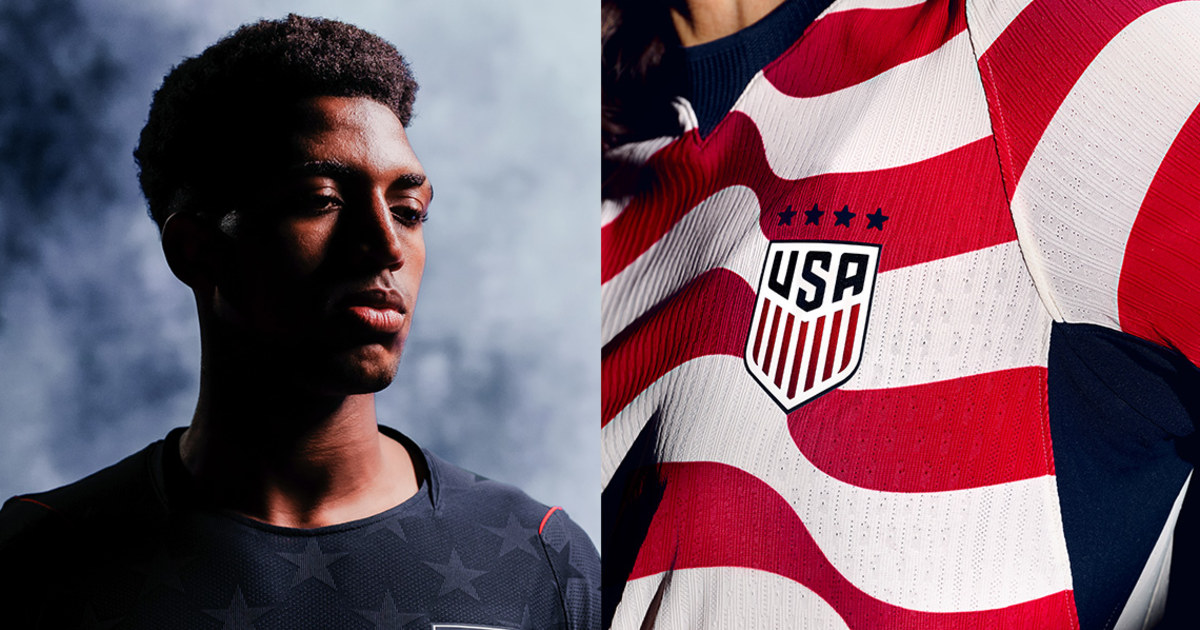
In a vibrant display of national pride, U.S. Soccer and Nike have unveiled the new uniforms for the United States men's national team ahead of the 2026 World Cup, which the country will co-host. The kits, dubbed the 'stars' and 'stripes' designs, were revealed on Monday during an appearance on NBC's TODAY show, featuring a red-and-white striped home jersey and a sleek dark blue away kit adorned with subtle star motifs. These uniforms aim to unite fans and players alike as the team prepares to compete on home soil for the first time since 1994.
The unveiling comes at an exciting time for American soccer, with the World Cup set to kick off in June 2026 across multiple U.S. venues, including iconic stadiums in Los Angeles, New York, and Miami. The U.S. men's team, under the guidance of coach Gregg Berhalter, will wear the new kits starting with an exhibition match against Belgium later this month. Their World Cup campaign begins on June 12 at SoFi Stadium in Inglewood, California, against Paraguay in a group-stage opener that promises to draw massive crowds.
Goalie Matt Freese, who joined the unveiling on TODAY, expressed the surreal excitement surrounding the event. "It would be an incredible opportunity, an incredible moment if I were to be selected to the final roster," Freese said. Reflecting on his childhood aspirations, he added, "People say 'dream come true,' and obviously that's a cliche. But when I was dreaming about this moment 20, 25 years ago, we didn't know [the World Cup] would be in America. And so, it's even better than a dream come true." Freese's comments underscore the personal stakes for players as the tournament approaches, blending nostalgia with the thrill of hosting.
The 'stripes' kit, designed as the primary home uniform, features bold, thick red and white lines that wave across the chest, evoking the image of an American flag fluttering in the wind. This loud and patriotic design ensures the team stands out on the pitch, with the iconic 'USA' logo prominently displayed on the chest. In contrast, the 'stars' away kit offers a more understated look in dark blue, accented by red trim and faint shadows of stars scattered throughout the fabric, providing versatility for both match days and off-field appearances.
Ronnie J. Stewart, Nike's global product director, highlighted the intentional duality of the designs in a press release. "I think between both kits there is something for everybody," Stewart said. "If you want to be loud and proud and represent the crest, no one's going to doubt who's there for you in the light kit. If you're looking for that lifestyle look that works off the field, the dark is for you." His remarks emphasize how the uniforms cater to diverse fan preferences while maintaining a cohesive brand identity.
Player input played a crucial role in the development process, according to U.S. Soccer officials. Athletes contributed feedback on everything from the fit and breathability of the fabric to the precise placement of seams, ensuring the kits perform under the intense physical demands of international competition. This collaborative approach reflects a broader trend in sports apparel, where athlete endorsements help refine products for optimal comfort and functionality during high-stakes games.
What sets these uniforms apart is their application across the entire U.S. Soccer ecosystem. For the first time, all national teams—from the senior men's and women's squads to youth and developmental programs—will don the same 'stars' and 'stripes' designs. This unifying aesthetic fosters a sense of shared identity, bridging generations of players and supporters. U.S. Soccer officials noted that the move aims to strengthen the federation's brand as it gears up for the global spotlight of the World Cup.
The 2026 tournament, co-hosted by the United States, Canada, and Mexico, marks a historic return to North American soil 32 years after the 1994 event, which drew record crowds and boosted soccer's popularity in the U.S. Back then, the Stars and Stripes flew high as the host nation reached the round of 16, igniting a surge in youth participation that continues to fuel the sport's growth. Today's unveiling taps into that legacy, positioning the new kits as symbols of evolution and ambition for American soccer.
Nike, as the long-standing kit supplier for U.S. Soccer since 1997, has a track record of innovative designs that blend performance with cultural resonance. Past uniforms, like the bold white kit from the 2014 World Cup, have become collector's items among fans. The 2026 editions build on this tradition, incorporating advanced materials for moisture-wicking and temperature regulation, essential for matches in varying climates across the host cities.
As the exhibition against Belgium approaches—scheduled for late October at a yet-to-be-confirmed venue—the team is using these friendlies to fine-tune strategies and integrate the new gear. Belgium, a perennial powerhouse with stars like Kevin De Bruyne, presents a formidable test, allowing the U.S. squad to gauge readiness against top-tier opposition. Reports from training camps suggest high morale, with players eager to showcase the kits in action.
Beyond the pitch, the uniforms are expected to drive merchandise sales and fan engagement. U.S. Soccer anticipates a surge in demand, similar to the pre-1994 boom when hosting rights were announced. Retailers like Nike's online store and major sports outlets are already promoting pre-orders, with prices starting around $90 for authentic jerseys. This commercial aspect underscores soccer's expanding economic footprint in the U.S., projected to generate billions in revenue from the tournament.
Critics and fans alike have praised the designs for their patriotic flair, though some online discussions question whether the stripes kit might distract during play. According to social media reactions compiled by sports outlets, the majority applaud the bold aesthetics, with one fan tweeting, "These kits scream USA—perfect for home soil glory." U.S. Soccer has yet to respond to aesthetic critiques, focusing instead on the functional benefits highlighted in the reveal.
Looking ahead, the path to June 2026 includes qualifiers, more exhibitions, and roster decisions that will shape the final squad. For prospects like Freese, the uniforms represent more than apparel; they're a tangible link to a once-distant dream now unfolding at home. As the nation prepares to welcome the world's best, these kits serve as a rallying cry, uniting a diverse fanbase in anticipation of what could be soccer's biggest moment in American history.
The broader implications extend to youth development, where the unified designs across teams could inspire young athletes nationwide. Programs in cities like Appleton, Wisconsin—home to growing soccer leagues—stand to benefit from the heightened visibility, potentially increasing enrollment and investment in local clubs. With the World Cup's global audience expected to exceed 5 billion viewers, the U.S. team's performance in these uniforms could cement soccer's place in the American sports landscape for decades.
In the end, as Tim Rohan, sports editor for NBC News, observed in his coverage, the 'stars' and 'stripes' kits are more than fabric—they're a statement of readiness. With the clock ticking toward June, U.S. Soccer's latest chapter promises to be one of fervor and unity, on and off the field.