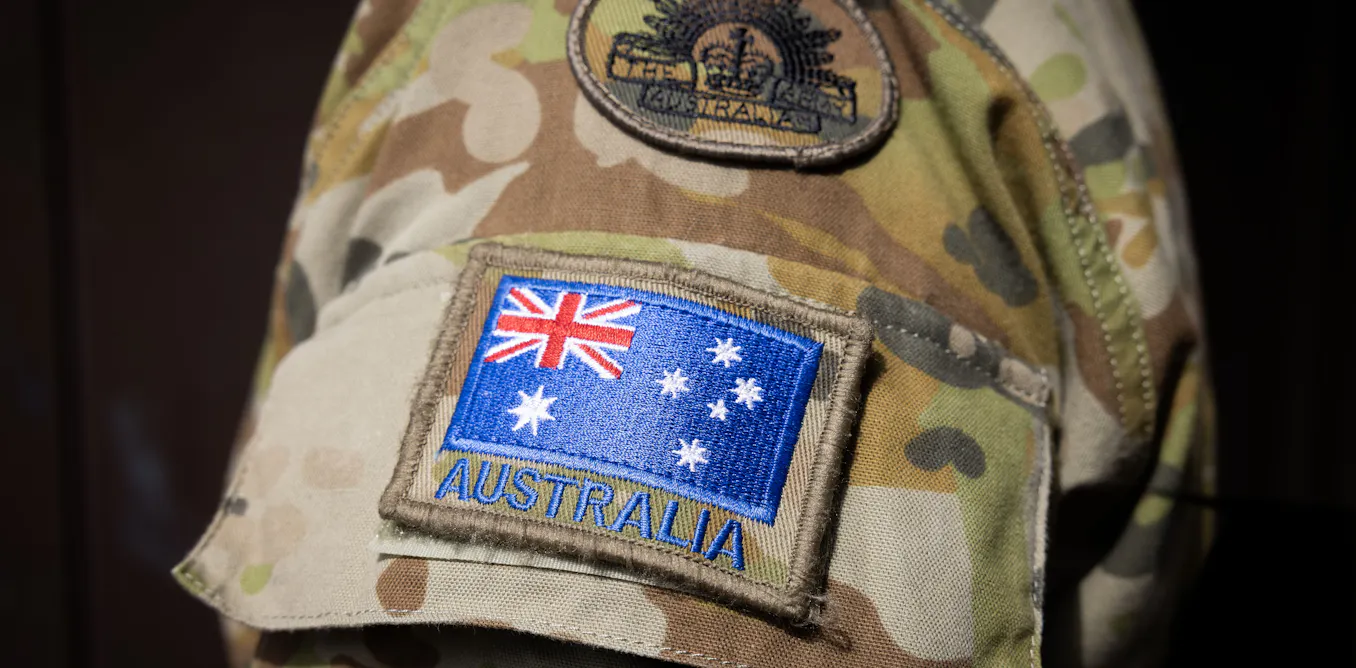
In a significant escalation of Australia's military posture amid rising global tensions, Prime Minister Anthony Albanese's government announced plans on Thursday to boost defence spending to approximately 3 percent of gross domestic product by 2033. The commitment, detailed in the newly unveiled 2026 National Defence Strategy and Integrated Investment Program, includes an additional A$14 billion over the next four years and A$53 billion over the coming decade, surpassing previous projections from the 2024 strategy.
Defence Minister Richard Marles, who released the documents in Canberra, framed the move as a response to an increasingly volatile world. "We are now seeing the biggest peacetime increase in defence spending in our nation’s history," Marles stated in his prepared remarks. He emphasized that Australia is confronting "its most complex and threatening strategic circumstances since the end of World War II," with international norms eroding and conflicts proliferating across regions.
The announcement comes under pressure from the United States, particularly the incoming Trump administration, which has urged allies to ramp up military budgets. Last year, Elbridge Colby, a top Pentagon official, specifically referenced the 3 percent figure in calls for Australia to invest more in its defences. The pledge is likely to appease Washington, as the U.S. has lobbied for greater contributions from partners in the Indo-Pacific region.
However, the 3 percent target relies on a revised definition of defence spending aligned with NATO standards, which broadens what counts toward the total. Under this metric, which includes some tangential items like certain infrastructure and research expenditures, Australia is already spending about 2.8 percent of GDP on defence. Critics, including some analysts, argue this makes the figure appear larger than under Australia's traditional, narrower definition, where current spending hovers around 2 percent and was projected to reach only 2.3 to 2.4 percent by 2034.
The opposition Coalition had pledged during the last election to achieve 3 percent under the stricter domestic criteria, a commitment the Albanese government has now matched but through the adjusted NATO lens. At last year’s NATO Summit in Washington, D.C., members agreed to elevate their collective target to 5 percent of GDP by 2035, with 3.5 percent dedicated to core defence needs and the remaining 1.5 percent to related investments. Australia, not a NATO member but a close ally, is adopting this framework to align with global partners.
Overall, the new program allocates a staggering $887 billion across the defence portfolio through to 2035-36, with about $425 billion earmarked for capabilities—an increase from the $330 billion outlined in 2024. This funding will prioritize enhancements to the Australian Defence Force's deterrence and response capabilities against emerging threats. Key investments include between $12 billion and $15 billion over the next decade for drones and counter-drone systems, aimed at bolstering surveillance and strike options in contested environments.
Marles highlighted the strategy's focus on long-term self-reliance, noting investments to strengthen domestic industry and reduce dependence on foreign suppliers. "The 2026 National Defence Strategy reflects a clear-eyed assessment of a more dangerous and uncertain world – and a confident response to it," he said. "It puts Australia on a path to strengthen our defence self-reliance. It reinforces the industrial and national foundations of defence. And it situates Australia firmly within a network of trusted regional and global partnerships."
Above all, Marles added, the plan ensures Australia remains "secure, sovereign and ready – not just for today’s challenges, but for the decade ahead." The minister pointed to ongoing collaborations, such as the AUKUS pact with the United States and United Kingdom, which includes nuclear-powered submarines, as integral to this networked approach. Recent tensions in the South China Sea and Russia's war in Ukraine have underscored the need for such alliances, according to government briefings.
The extra funding builds on the 2024 strategy's baseline, which had already committed substantial resources to modernization. For instance, the government is accelerating acquisitions of long-range missiles, cyber defence tools, and naval assets to address gaps identified in strategic reviews. Experts consulted by The Appleton Times noted that while the NATO definition expands the budget, the core increases in capability spending represent genuine growth.
One analyst, speaking on condition of anonymity due to ongoing policy discussions, described the move as pragmatic. "It's a way to meet international expectations without overhauling domestic priorities," the expert said. However, others in the defence community have expressed concerns that the broader definition might dilute accountability, potentially including non-military items that stretch the term "defence."
Public reaction in Australia has been mixed, with polls showing broad support for stronger defences but wariness over costs amid economic pressures like inflation and housing shortages. The Australian Strategic Policy Institute, a think tank in Canberra, welcomed the announcement but called for transparency on how the NATO metrics will be applied. "Clarity is key to maintaining public trust," a spokesperson said.
Internationally, the commitment aligns with broader Western efforts to counterbalance China's military expansion in the Asia-Pacific. Beijing has criticized such moves as provocative, though Australian officials maintain the strategy is defensive in nature. Marles reiterated that the focus is on sovereignty, not aggression, during a press conference following the release.
Looking ahead, the government plans to access private capital to supplement public funds, potentially through public-private partnerships for defence manufacturing. This could involve Australian firms in producing advanced technologies like hypersonic weapons and autonomous systems. Implementation will be monitored by Parliament's Joint Standing Committee on Foreign Affairs, Defence and Trade, with the first progress report due in mid-2026.
As Australia navigates this era of strategic competition, the 3 percent pledge under the revised definition marks a pivotal shift. It signals Canberra's intent to play a more robust role in regional security while balancing fiscal realities at home. With the strategy now in place, attention turns to execution, as the nation prepares for potential flashpoints in the years to come.
The broader implications extend to economic ripple effects, with the defence buildup expected to create thousands of jobs in high-tech sectors across states like South Australia and Western Australia, home to key shipbuilding and submarine projects. Yet, as Marles noted in his address, the true measure of success will be Australia's ability to deter threats without direct conflict. "In the face of this, the Albanese government is pursuing every avenue of increasing defence capability quickly: mostly through bigger defence appropriations but also through accessing private capital," he concluded.