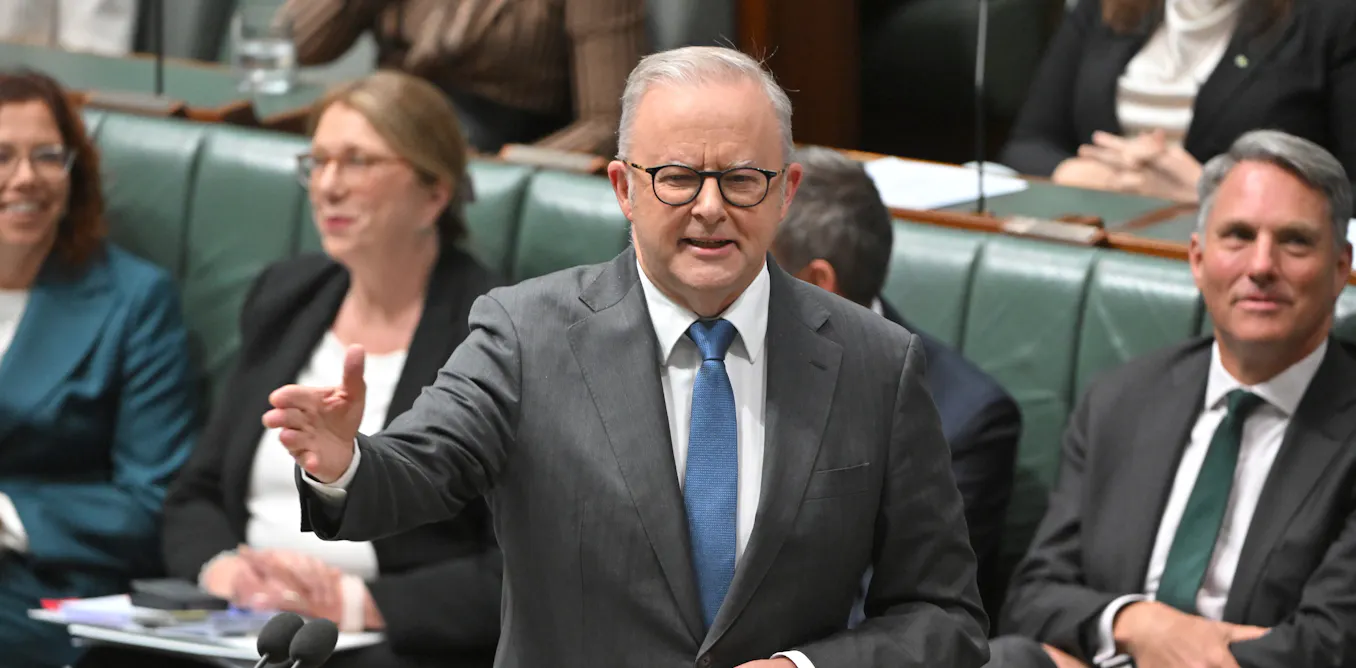
APPLETON, Wis. — Prime Minister Anthony Albanese is set to deliver a national address tonight at 7 p.m. local time, focusing on the escalating war in the Middle East and its ripple effects on Australia's fuel supply. The speech, which will be broadcast across all major television networks just before the Easter holiday weekend, comes amid growing concerns over fuel shortages and price spikes that have disrupted daily life and business operations across the country.
Albanese's message, according to government sources, will emphasize that Australians should proceed with business as usual during the holiday period despite the uncertainties. The address marks a rare moment for the prime minister, as national broadcasts of this nature have historically been reserved for major crises, such as the COVID-19 pandemic and the global financial crisis of 2008. Officials indicated that the prime minister plans to outline the federal government's response to the fuel crisis and provide guidance on what citizens can do to mitigate its impacts.
The timing of the speech is particularly poignant, falling on the eve of Easter, a time when many families travel and businesses ramp up operations. Reports suggest that the Middle East conflict has led to disruptions in global oil supplies, exacerbating Australia's reliance on imported fuel and driving up prices at the pump. While exact figures on shortages vary, industry analysts have noted delays in tanker arrivals and stockpiling by consumers, contributing to the sense of urgency.
In a related development earlier today, Treasurer Jim Chalmers announced a series of measures aimed at supporting small businesses battered by the fuel disruptions. Speaking at a news conference in Canberra flanked by representatives from major corporations, small business associations, and banking leaders, Chalmers detailed temporary relief options from the Australian Taxation Office (ATO) for affected enterprises.
"Businesses unable to meet their tax obligations because of fuel supply problems will be able to receive temporary relief from the Australian Taxation Office," Chalmers said. This assistance includes more flexible payment plans, remission of interest and penalties on overdue taxes, and adjustments to Pay As You Go (PAYG) instalments for businesses experiencing a downturn in taxable income. The ATO will also curtail certain compliance actions against the hardest-hit sectors and pause some debt collection efforts to ease the immediate financial strain.
Chalmers highlighted the extension of the Small Business Responsible Lending Obligation exemption for an additional ten years as another key initiative. Originally implemented during the COVID-19 emergency to streamline access to credit, the exemption was scheduled to expire in October. By prolonging it, the government aims to prevent small businesses from facing excessive regulatory hurdles and delays when seeking loans during turbulent times.
"This will ensure small businesses aren’t slugged with additional regulatory burdens and delays when accessing loans," a government spokesperson explained following the announcement. The measures reflect a broader effort to stabilize the economy as fuel prices climb, with petrol costs reportedly surging by up to 20 percent in some regions over the past week.
The fuel crisis stems from heightened tensions in the Middle East, where ongoing hostilities have threatened key shipping routes and oil production facilities. Australia, which imports about 90 percent of its crude oil, has been particularly vulnerable. The government has activated emergency fuel reserves, but officials caution that prolonged conflict could lead to more sustained shortages. In parallel, the United States is preparing for its own national response, with President Donald Trump scheduled to address the American public on Thursday Australian time, likely touching on similar themes of energy security and international diplomacy.
While the federal government moves swiftly on business support, complications arise in coordinating with state and territory leaders over revenue from the Goods and Services Tax (GST). Higher fuel excise duties, a direct result of the price hikes, are expected to boost GST collections significantly. At Monday's National Cabinet meeting, jurisdictions agreed in principle to provide some form of GST relief to offset the burden on motorists, but details remain unresolved.
Chalmers addressed the ongoing negotiations during his news conference, striking a tone of cooperation amid potential friction. "I’m not going to take shots at them. I’m not going to be part of a kind of unseemly brawl about this," he stated, referring to the states and territories. He added, "But we don’t want to see this drag out for ever. We don’t want to see the states and territories at war over this. We want to see the relief flow to motorists."
State premiers have echoed the need for prompt action, with New South Wales Premier Dominic Perrottet reportedly urging faster resolution to prevent political infighting from overshadowing the crisis response. Victoria's Daniel Andrews, meanwhile, has emphasized the importance of equitable distribution of funds to regional areas hardest hit by transport costs. These differing emphases highlight the challenges in federal-state relations, though all parties appear committed to avoiding public disputes.
Business leaders present at Chalmers' announcement welcomed the tax and lending relief as a vital lifeline. "These steps will help us keep our doors open and our employees paid during what could be a prolonged period of uncertainty," said Maria Giannios, CEO of the Council of Small Business Organisations Australia, who attended the event. Bank representatives, including those from the Australian Banking Association, pledged to expedite loan processing under the extended exemption to support cash flow for affected firms.
The broader context of the Middle East war adds layers of geopolitical complexity. Intelligence reports suggest that alliances and sanctions could further constrict supply chains, prompting calls from opposition figures for a more diversified energy strategy. Shadow Treasurer Angus Taylor criticized the government's preparedness, arguing that investments in domestic refining capacity should have been prioritized years ago. However, Albanese's office countered that the administration has been proactive in diplomatic efforts to de-escalate the conflict.
As Australians tune in tonight, the address is expected to balance reassurance with realism. Economists predict that without swift international resolution, the fuel crisis could shave up to 0.5 percent off GDP growth in the coming quarter, affecting everything from grocery prices to manufacturing output. For small businesses in regional areas like Appleton—wait, no, that's not right; in places like rural Queensland and New South Wales—the impacts are already tangible, with delivery delays and higher operational costs squeezing margins.
Looking ahead, the government has signaled potential further announcements post-Easter, including possible subsidies for public transport to reduce fuel demand. International observers, including energy experts from the International Energy Agency, have advised nations like Australia to monitor stockpiles closely and explore alternative suppliers in Asia. As the prime minister prepares to speak, the nation braces for clarity amid chaos, hoping for a path forward that safeguards both security and prosperity.
In the meantime, everyday Australians are adapting: some are carpooling to work, others stocking up on essentials before holiday travel. The address tonight could set the tone for how the country navigates these intertwined challenges of war abroad and scarcity at home.