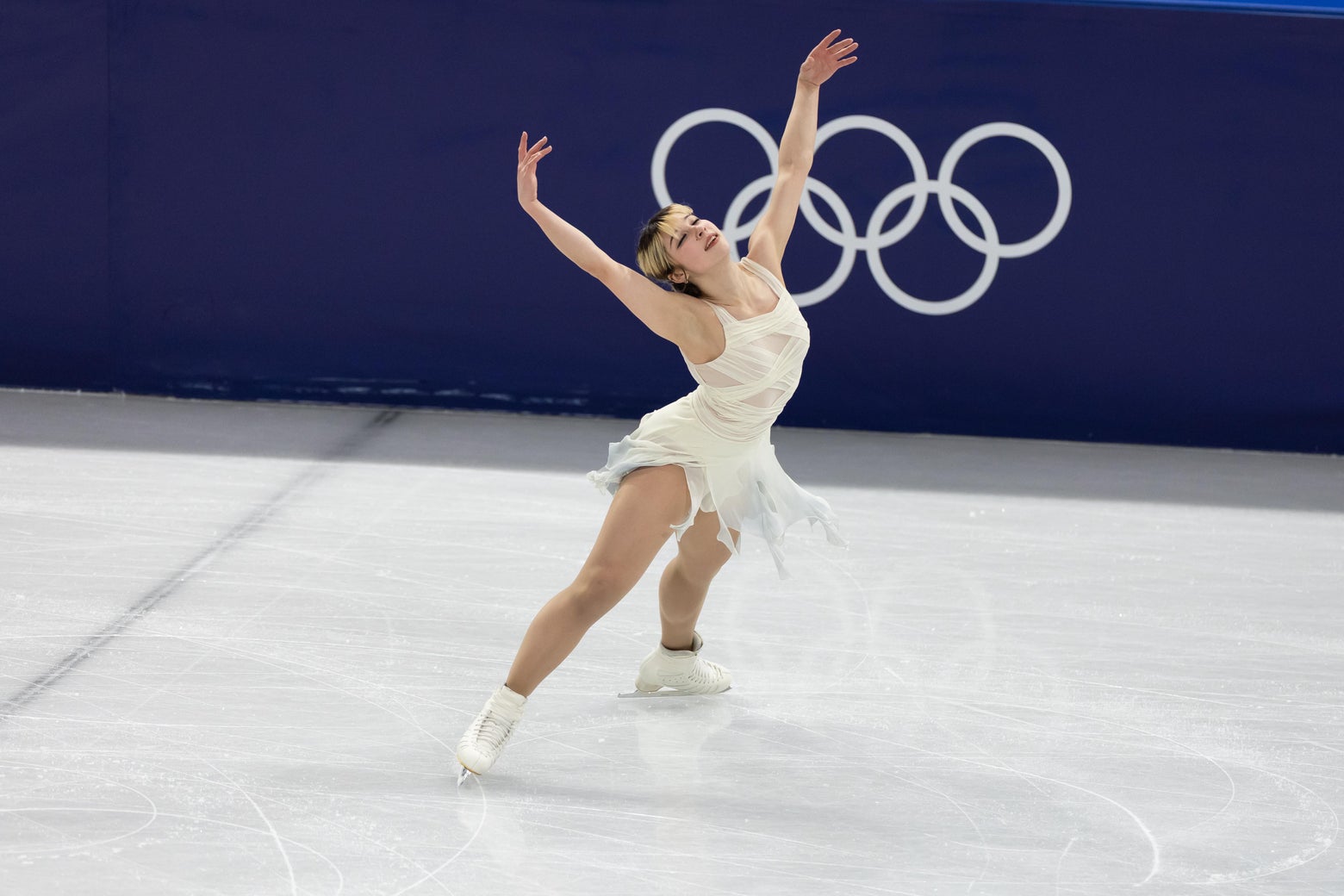
MILAN, Italy — In the women's figure skating short program at the 2026 Winter Olympics in Milan Cortina, Japan's skaters dominated the standings, positioning themselves for a potential historic podium sweep as the competition heads into the free skate on Thursday. Seventeen-year-old Ami Nakai led after her performance on Tuesday night at the Mediolanum Forum, scoring a personal best of 78.71 points with a flawless triple axel and other high-difficulty elements. Reigning Olympic champion Kaori Sakamoto of Japan followed closely in second place with 77.23 points, while American Alysa Liu held third at 76.59 points, keeping the U.S. hopes alive for an end to its 20-year medal drought in women's singles.
The event unfolded amid high expectations for Team USA, which entered the Games with strong medal prospects across multiple disciplines but has faced setbacks. The Americans won gold in the team event earlier in the week, but ice dance duo Madison Chock and Evan Bates settled for silver, and men's singles favorite Ilia Malinin finished eighth after a fall-plagued performance. In women's singles, the U.S. team, dubbed the "Blade Angels" by some observers, featured Liu, 20-year-old Isabeau Levito, and 26-year-old Amber Glenn, but only Liu remained in contention for a podium spot after the short program.
Japan's strong showing highlighted the depth of its women's program. No country has ever swept the Olympic women's figure skating podium, though the Russian Olympic Committee came close in 2022, taking gold and silver before doping disqualifications altered the results. Kaori Sakamoto, who earned bronze in Beijing, has since won two world championships and now leads Japan's bid for history. Sakamoto, skating to "Time to Say Goodbye" by Andrea Bocelli and Sarah Brightman, executed a triple lutz, double axel, and triple flip-triple toe combination. Judges noted a quarter under-rotation on the triple toe and an unclear edge on the lutz, but her score kept her just 1.48 points behind Nakai.
Ami Nakai, making her Olympic debut, captivated the crowd with a program set to selections from La Strada, incorporating Italian flair to appeal to the local audience. The 17-year-old, who has not yet competed at senior world championships, opened with a triple axel, followed by a triple lutz-triple toe and a triple loop — the most technically demanding short program of the night. Her performance earned praise for its youthful energy and precision, securing the top spot and marking the highest short program score this season outside of Sakamoto's.
Mone Chiba, the 2025 world bronze medalist, rounded out Japan's top performers in fourth place with 74.00 points. Skating to Donna Summer's "Last Dance," Chiba delivered a triple flip-triple toe, double axel, and triple lutz, noted for her posture and technique. Commentator Johnny Weir described her style as "soigné," emphasizing her elegant execution amid the event's more somber musical choices.
Alysa Liu, the reigning world champion, provided a bright spot for the United States. The 20-year-old from Richmond, California, skated to Laufey's "Promise," opening with a triple flip and including a double axel from a spread eagle position. Her most challenging element, a triple lutz-triple loop combination attempted last, was deemed slightly underrotated by judges but executed with strong flow and artistry. Liu's personal best score placed her 2.12 points behind Nakai, and she expressed remarkable composure afterward. "I wish it were longer," Liu said in a post-performance interview, adding that her initial thought upon finishing was a desire for more time on the Olympic ice. She further noted, "I don’t feel like my life is on the line anymore," reflecting on her mindset since returning to the sport last year after a hiatus.
Liu's journey adds significant context to her performance. She first competed at the Olympics in 2022 as a teenager but stepped away from skating, believing her career was over. Her unexpected return in 2025 led to a world title in her debut senior season. Unlike some peers pushing for quadruple jumps, Liu has chosen not to attempt her former quadruple lutz, prioritizing injury prevention and artistic expression. This approach, she has said, has allowed her to skate with newfound freedom.
Adeliya Petrosian, an 18-year-old competing as an Individual Neutral Athlete due to sanctions on Russian and Belarusian competitors, finished fifth with 72.89 points — 5.82 points off the lead and 3.7 points from the podium. One of 13 athletes from Russia and Belarus cleared by the International Olympic Committee for not supporting the war in Ukraine or ties to military entities, Petrosian skated to Michael Jackson music. She completed a double axel, triple lutz with arms overhead, and triple flip-triple toe combination, earning high levels for technical elements and a personal best score that briefly led the competition.
Petrosian's background includes limited international experience, with only one senior outing at the 2025 Olympic qualifying event in Beijing. She has reportedly trained a quadruple loop in domestic competitions but has dealt with injuries. Her coach, Eteri Tutberidze — linked to past doping controversies — is barred from formal involvement during the Games, though she was observed in the arena. The audience at the Mediolanum Forum greeted Petrosian warmly, focusing on her performance rather than geopolitical tensions.
Isabeau Levito, an 18-year-old from New Jersey with family ties to Milan — her mother hails from the city, and her grandmother lives 13 minutes from the venue — placed eighth with 70.84 points, 5.75 points behind the podium. Levito's program, a "Sophia Loren Medley" including "Zoo Be Zoo Be Zoo," featured a triple flip-triple toe, double axel, and triple loop, the latter judged underrotated. Her graceful, ballerina-like style drew comparisons to classic Hollywood poise, marking a solid Olympic debut that she can build on for future Games, such as 2030.
Amber Glenn's performance was a stark contrast, ending in disappointment for the oldest American woman to qualify for the Olympics since 1928. The 26-year-old national champion, the first openly queer woman on the U.S. Olympic figure skating team, skated to Madonna's "Like a Prayer" after receiving encouragement from the singer herself. Glenn landed her planned triple axel early, but faltered on a triple flip-triple toe — staying upright but not fully rotating — and then popped her triple loop into a double, which scores zero points in the short program under International Skating Union rules.
The error visibly affected Glenn, who left the ice in tears and continued weeping in the kiss-and-cry area. "I had it," she told her coach, lamenting that a single extra rotation could have kept her in medal contention. Her score of 62.45 points placed her 13th, effectively ending her Olympic medal hopes. Glenn has been open about mental health challenges in the sport, and this high-pressure moment underscored those struggles.
The short program results set the stage for a compelling free skate, where the top 24 women will compete starting Thursday afternoon at the Mediolanum Forum. Japan's trio — Nakai, Sakamoto, and Chiba — hold a combined advantage, with Sakamoto, who plans to retire after these Games, favored to defend her title. For Liu, a medal would mark the first for an American woman since Sarah Hughes' gold in 2002, potentially validating her resilient comeback.
Beyond the ice, the event reflects broader themes in figure skating, including the impact of geopolitical issues on neutral athletes like Petrosian and the evolving emphasis on mental well-being. Liu's unflappable demeanor stands out, especially compared to Malinin's pre-Games regrets about lacking high-stakes experience. As the competition progresses, all eyes will be on whether Japan's dominance holds or if Liu can channel her carefree approach into a breakthrough performance.
The Milan Cortina Olympics continue through February 23, with figure skating wrapping up the women's event by Friday. Officials from the International Skating Union reported smooth operations despite a packed schedule, and attendance at the short program exceeded 12,000 spectators, many cheering the international field under the arena's lights.