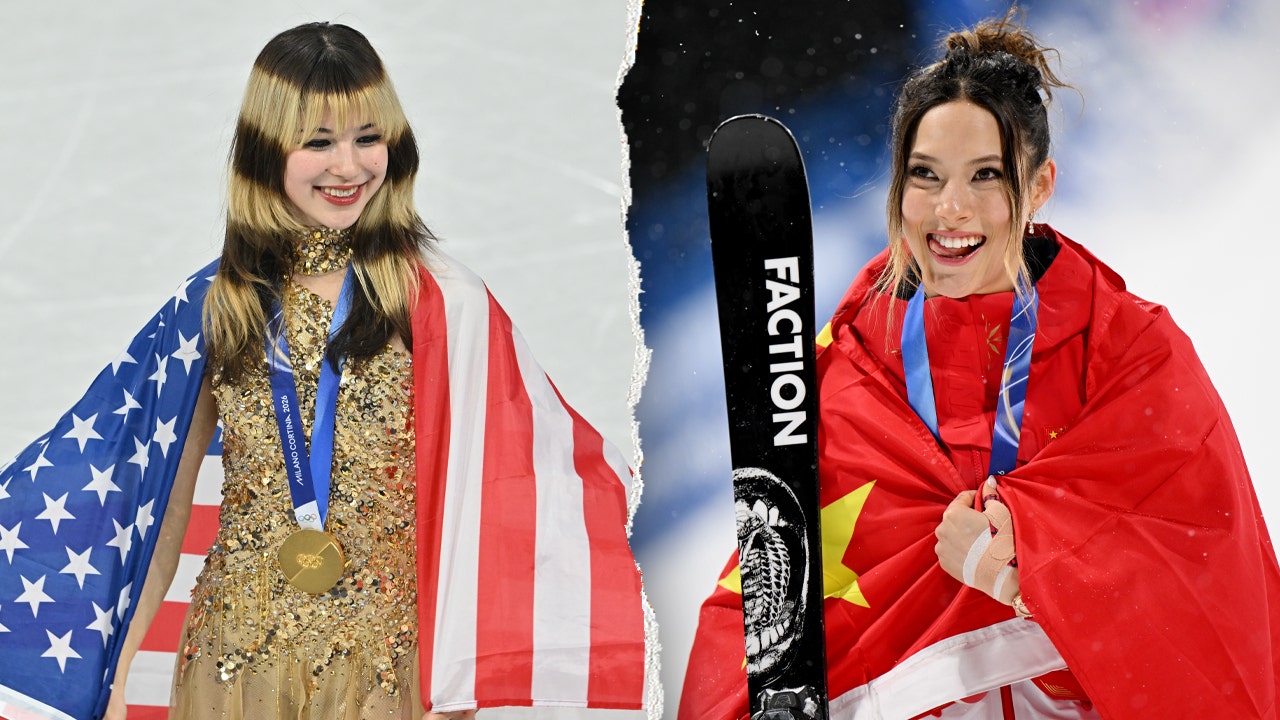
MILAN, Italy — Olympic figure skater Alysa Liu has come to the defense of her longtime friend Eileen Gu, the American-born freestyle skier who faced intense backlash for choosing to compete for China at the recent Winter Olympics. In an interview with The New York Times, Liu described the criticism leveled at Gu as hypocritical, highlighting the complexities of immigrant families and the pure spirit of sport amid geopolitical tensions.
Liu, who won gold in the women's single skating event at the Milan Cortina Winter Olympics on February 19, 2026 — marking the first American victory in that category since 2002 and the first medal for an American woman since 2006 — has known Gu since they were both around 13 years old. Both hailing from the Bay Area, the athletes share similar roots as children of Chinese immigrants. "I’ve known Eileen since I was 13 or something. We’re from the Bay Area. She’s super nice, and her mom is from China," Liu said. "I think people are hypocritical for shaming her for representing China. So, in my head, it’s a bit hypocritical, because her mom is an immigrant. Y’all would have told her to go back to China. Now that they’re back in China, you’re mad."
Gu's decision to switch allegiances from the United States to China in 2019 sparked widespread controversy, particularly during the Olympics where she secured two silver medals and one gold in freeskiing events, including the women's halfpipe final on February 22, 2026, in Livigno, Italy. The backlash intensified on social media, where Gu and Liu were frequently compared due to their parallel backgrounds and successes. Gu's mother, Yan Gu, a former Peking University student who earned a master's degree in chemistry and biochemistry from Stanford University, raised Eileen as a single parent after immigrating to the U.S. Details about Eileen's father remain private; Gu has declined to comment on him publicly, according to The New York Times.
In contrast, Liu's father, Arthur Liu, fled China following his involvement in the Tiananmen Square protests of 1989. He came to the United States, where Alysa was born via surrogate and anonymous egg donor. The Liu family remained steadfastly loyal to Team USA, with Arthur reportedly "not open to persuasion" when approached about having Alysa compete for China, according to The Economist. This loyalty came at a cost: ahead of the 2022 Beijing Winter Olympics, Liu and her father were allegedly targeted by a Chinese government spying operation, an experience Liu described as "a little bit freaky and exciting" during a roundtable interview at the U.S. Olympic and Paralympic Committee Media Summit in October.
"You know what I mean? It's so… unbelievable. You know what I mean like, that's crazy," Liu told Fox News Digital. "Like, imagine finding that out at such a young age, I mean, like in a weird way, I was like, 'Am I like in some prank show?' Like, is this world real. Like, I must be some movie character. But, I mean, it was like it made sense to me, you know, from like everything my dad did back in his activist days."
The political dimensions of Gu's choice drew high-profile commentary, including from Vice President JD Vance. During an interview on Fox News amid the Olympics, Vance expressed disappointment in Gu's decision. "I have no idea what her status should be, I think that's ultimately up to the Olympics Committee, I won't pretend to wade into that," Vance said. "I certainly think that someone who grew up in the United States of America who benefited from our education system, from the freedoms and liberties that makes this country a great place, I would hope they want to compete with the United States of America. So, I'm going to root for American athletes, I think part of that is people who identify themselves as Americans. That's who I'm rooting for in this Olympics."
Gu responded sharply to Vance's remarks, framing herself as a target of American political rhetoric. "I’m flattered. Thanks, JD! That’s sweet," she said, according to USA Today. In a broader reflection, Gu added: "So many athletes compete for a different country.... People only have a problem with me doing it because they kind of lump China into this monolithic entity, and they just hate China. So it's not really about what they think it's about. And also, because I win. Like if I wasn't doing well, I think that they probably wouldn't care as much, and that's OK for me. People are entitled to their opinions." She further described feeling like a "punching bag for a certain strand of American politics."
Liu echoed Gu's emphasis on the apolitical nature of athletics. "And it’s sport, it doesn’t matter what country we represent. Sport is sport, and she has a love for competition, she has love for the game. I think that’s all that matters. There’s no shame in going to where opportunity is," Liu told The New York Times. Her comments come as both athletes navigated intense scrutiny; Liu's Olympic triumph propelled her social media following beyond Gu's, though she recently withdrew from the upcoming World Figure Skating Championships in Prague, Czech Republic.
Gu's switch was part of a larger Chinese initiative that accelerated between 2018 and 2022, aimed at recruiting foreign-born athletes of Chinese heritage to enhance national teams, particularly for the 2022 Beijing Winter Olympics and events like soccer, according to The China Project. Gu, a top target alongside Liu, made her debut for the U.S. in the Freestyle Ski World Cup in January 2019 before requesting a change of nation with the International Ski Federation just months later. In June 2019, she competed for China for the first time. Announcing her decision on Instagram, Gu stated she aimed "to help inspire millions of young people" in China and "to unite people, promote common understanding, create communication, and forge friendships between nations."
Gu's mother, Yan, gave birth to Eileen at age 40 and raised her as a single parent, per Olympics.com. Not much is known about Gu's father; she has not publicly commented on him and declined to answer questions about him with The New York Times.
The recruitment efforts highlighted the dual loyalties many athletes of immigrant backgrounds face. While Gu embraced the opportunity in China, Liu's family history of activism made such a move untenable. Arthur Liu's participation in the 1989 protests, which were brutally suppressed by the Chinese government, underscored the personal stakes involved. U.S. Air Force Olympian Kelly Curtis and Team Israel bobsled captain AJ Edelman offered public support for Gu amid the controversy, emphasizing solidarity among athletes, according to Fox News Digital.
Gu has also addressed broader geopolitical issues, such as allegations of China's persecution of Uyghurs and other Turkic Muslim minorities in Xinjiang. In an interview with Time magazine, she expressed skepticism about forming opinions without extensive personal investigation. "I haven’t done the research. I don’t think it’s my business. I’m not going to make big claims on my social media," Gu said. "I’m just more of a skeptic when it comes to data in general.… So it’s not like I can read an article and be like, ‘Oh, well, this must be the truth.’ I need to have a ton of evidence. I need to maybe go to the place, maybe talk to 10 primary source people who are in a location and have experienced life there. Then I need to go see images. I need to listen to recordings. I need to think about how history affects it. Then I need to read books on how politics affects it. This is a lifelong search. It’s irresponsible to ask me to be the mouthpiece for any agenda."
The experiences of Gu and Liu illustrate the intersection of sports, identity, and international politics. As children of immigrants, both have leveraged their talents on the global stage, yet their choices have ignited debates about loyalty, opportunity, and nationalism. Liu's defense of Gu underscores a message of empathy, even as the two paths diverge sharply.
Looking ahead, the fallout from these Olympics may influence future athlete decisions. With China continuing its talent recruitment and the U.S. emphasizing homegrown stars, cases like Gu's could become more common. Liu's withdrawal from the world championships suggests the toll of high-stakes competition, while Gu's medals position her as a rising force in Chinese sports. As the dust settles in Milan and Livigno, the conversation around dual citizenship and representation in Olympics remains as heated as ever, with athletes like Liu and Gu at its center.
For now, Liu stands by her friend, prioritizing the joy of competition over borders. The broader implications for international sports governance, including rules on nationality changes enforced by bodies like the International Ski Federation and the International Olympic Committee, will likely face renewed scrutiny in the coming years.