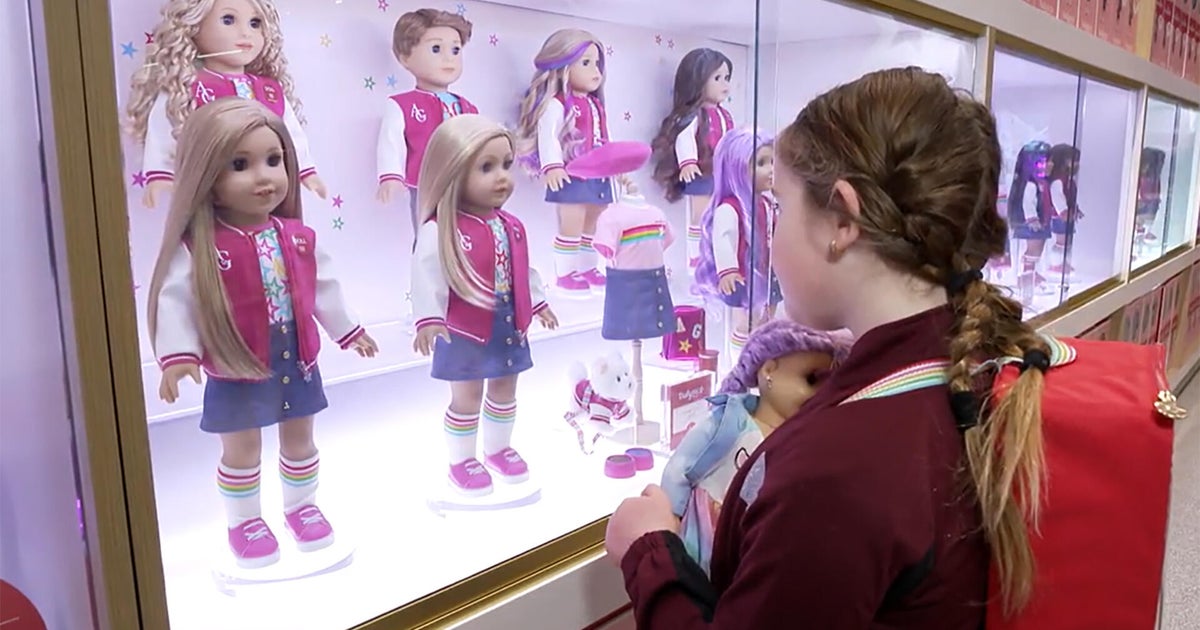
MADISON, Wis. — As families across the country mark a milestone in the world of children's toys, American Girl is commemorating its 40th anniversary with events and reflections on its enduring legacy of empowering young girls through storytelling. Founded in 1986, the brand has built a devoted following by crafting dolls, books, and accessories that immerse children in the lives of historical and contemporary figures, capturing the spirit of girlhood across American eras.
The celebration comes at a time when American Girl, now a subsidiary of Mattel Inc., continues to evolve its offerings to resonate with new generations. According to a report from CBS News, the company's origins trace back to founder Pleasant Rowland, a former schoolteacher who sought to create educational toys that went beyond mere playthings. Rowland launched the brand with a focus on historical dolls representing pivotal moments in U.S. history, starting with characters like Kirsten Larson, a Swedish immigrant in 1854 Minnesota, and Addy Walker, an enslaved girl escaping to freedom during the Civil War.
Over the decades, American Girl has expanded its collection to include dolls from diverse backgrounds and time periods, from the Revolutionary War to the present day. The brand's books, which accompany each doll, delve into themes of resilience, friendship, and self-discovery, often drawing on meticulous historical research. For instance, the core lineup features nine historical characters, each with accessories that bring their stories to life, such as Kaya, a Nez Perce girl in 1764, or Josefina Montoya, a Hispanic girl in 1824 New Mexico.
The 40th anniversary highlights, as detailed in CBS News coverage, include special events at American Girl stores nationwide, where visitors can participate in doll-themed workshops and storytelling sessions. One such event in the brand's Chicago flagship store featured interactive exhibits allowing children to "time travel" through American history via augmented reality experiences tied to the dolls' narratives. "American Girl has always been about celebrating the power and potential of girls," a company spokesperson told CBS News during the anniversary segment.
Beyond historical dolls, American Girl has introduced contemporary lines like Truly Me, which lets girls customize dolls in their own image, promoting self-expression and body positivity. The brand also offers Girl of the Year dolls, annual releases that address modern issues such as environmental activism or mental health. In 2023, for example, the Girl of the Year was Kavi Sharma, an Indian American girl pursuing her passion for dance while navigating cultural identity.
The company's growth has not been without challenges. Acquired by Mattel in 1998 for $700 million, American Girl faced criticism in the early 2000s for pricing that some deemed exclusionary, with dolls retailing around $115 and outfits costing upwards of $25. However, the brand responded by launching more affordable options and online exclusives. According to sales data reported by industry analysts, American Girl generates over $500 million in annual revenue, underscoring its market dominance in the educational toy sector.
Experts in child development praise the brand's approach to fostering empathy and historical awareness. Dr. Elena Ramirez, a professor of education at the University of Wisconsin-Madison, noted in a recent interview that "toys like American Girl dolls encourage girls to see themselves as agents of change, learning from the past to shape their futures." Ramirez's comments align with studies showing that narrative-based play enhances emotional intelligence and cultural understanding among children aged 8 to 12, the brand's primary demographic.
American Girl's commitment to diversity has evolved significantly. Early collections were critiqued for limited representation, but recent additions include dolls like Melody Ellison, set in 1964 Birmingham during the Civil Rights Movement, and Nanea Mitchell, a Hawaiian girl amid World War II. The brand has also partnered with organizations like the Girl Scouts of the USA to promote leadership programs, with events that blend doll play with real-world skill-building activities.
In the digital age, American Girl has adapted by launching apps and online communities where fans can share stories and customize virtual dolls. The company's YouTube channel, boasting millions of views, features doll unboxings and historical skits that extend the brand's educational reach. During the pandemic, virtual tea parties and story hours kept engagement high, with participation spiking by 40% in 2020, according to internal metrics shared with media outlets.
Critics, however, point to ongoing debates about the brand's portrayal of history. Some historians argue that certain narratives simplify complex events, such as the treatment of Indigenous stories in Kaya's collection. American Girl has addressed these concerns through updated books and advisory boards that include diverse scholars. "We're constantly refining our stories to ensure accuracy and sensitivity," the company stated in response to feedback compiled by CBS News.
The anniversary also spotlights philanthropy. American Girl's WellieWishers line supports causes like literacy and animal welfare, with a portion of proceeds funding grants for girls' programs. In 2022 alone, the brand donated over $1 million to nonprofits, including partnerships with Make-A-Wish to create custom dolls for children facing illnesses.
Looking ahead, American Girl plans to release new historical characters and expand its retail footprint, with a focus on sustainability—introducing eco-friendly doll clothing made from recycled materials. Industry watchers anticipate continued innovation, especially as competing brands like Barbie pivot toward inclusivity. Mattel CEO Ynon Kreiz emphasized in a recent earnings call that "American Girl remains a cornerstone of our portfolio, driving meaningful engagement with families."
For many families, the brand's appeal lies in its ability to spark intergenerational conversations. Parents who grew up with the dolls now share them with their children, creating lasting bonds. At a recent anniversary event in Los Angeles, attendee Maria Gonzalez shared, "My daughter loves how the dolls show strong girls from all walks of life—it makes history feel personal." Such testimonials underscore the brand's role in nurturing confidence and curiosity.
As American Girl enters its fifth decade, its story mirrors broader cultural shifts toward empowering young women. From suffrage-era tales to modern tales of activism, the dolls serve as mirrors and windows, reflecting diverse experiences while opening doors to new possibilities. With the toy industry projected to grow by 5% annually through 2030, American Girl's blend of nostalgia and forward-thinking positions it well for the future.
In Madison, where the company's headquarters have long been based, local leaders hailed the milestone as a point of pride. "American Girl has put Wisconsin on the map for innovative toys that educate and inspire," said Mayor Satya Rhodes-Conway. The celebration continues with a year-long series of events, inviting families to join in honoring the girls—past, present, and future—who define the American experience.