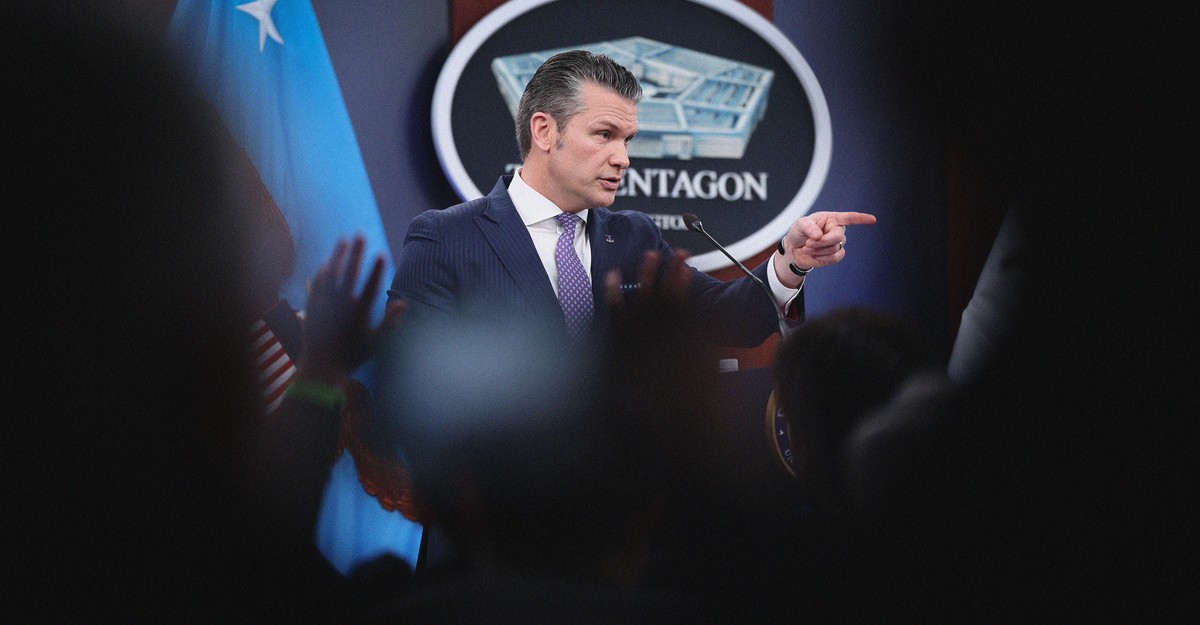
In a dramatic escalation of internal tensions within the Pentagon, Defense Secretary Pete Hegseth has fired General Randy George, the Army's top officer, just over halfway through his four-year term as chief of staff. The move, announced as effective immediately, comes amid the 33rd day of U.S. military operations against Iran, marking what officials describe as the most significant wartime shake-up in the Army's leadership in decades. According to a Pentagon official who spoke on condition of anonymity, Hegseth asked George to step down and retire without delay, a decision that has raised concerns about stability in the military's largest branch at a critical juncture.
The White House is also weighing the potential ouster of Army Secretary Dan Driscoll, a close ally of Vice President J.D. Vance, according to people familiar with the discussions. One Pentagon official indicated that Driscoll is expected to leave the department soon, though no official timeline has been confirmed. This dual leadership crisis unfolds as more than 50,000 U.S. troops, including Army units, are deployed in the Gulf region, supported by over a dozen ships and submarines. Ground forces from the Army could soon play a pivotal role if President Donald Trump authorizes deeper incursions into Iran, such as operations to seize enriched uranium stockpiles or control of Kharg Island, the country's key oil-exporting hub.
Hostilities with Iran erupted on February 28, with U.S. and Israeli forces launching strikes in response to escalating threats. So far, the conflict has centered on air and naval operations, but the arrival of elements from the Army's 82nd Airborne Division in the region over the past week signals preparations for possible ground engagements. The war has already claimed the lives of 13 American service members, prompting somber visits to Dover Air Force Base in Delaware by both Hegseth and George to honor the fallen. The U.S. has expended billions of dollars in Army-managed munitions to counter Iranian drone and ballistic missile assaults, leaving the service scrambling to replenish its stockpiles.
Hegseth, a former Fox News host and Army National Guard veteran who served in Iraq, has overseen an unprecedented wave of dismissals since taking office in 2025. His actions surpass the dismissal rates of any previous Pentagon chief, even during the prolonged conflicts in Iraq and Afghanistan. In recent months, he has removed the chairman of the Joint Chiefs of Staff, the Navy's top admiral, the Air Force's No. 2 general, and dozens of other senior officers and military lawyers. A spokesperson for Hegseth, Sean Parnell, confirmed George's departure in a statement to CBS News, describing it as "effective immediately," but provided no further details on the rationale.
Critics within the military have attributed these firings to Hegseth's push for greater alignment with the Trump administration's priorities. He has publicly lambasted senior officers for what he calls insufficient loyalty to the president's agenda and an overemphasis on legal constraints in warfare, drawing from his own experiences in Iraq. George's tenure had appeared precarious since Hegseth's arrival, particularly given the secretary's history of targeting leaders linked to the prior administration or those who championed diversity efforts, which Hegseth has derided as "woke shit."
The timing of George's dismissal, just one day after Hegseth intervened in an Army investigation, has fueled speculation about underlying rivalries. Hegseth overruled the suspension of two Apache helicopter crews probed for a low-altitude flyover near Nashville at the home of musician Kid Rock, a prominent Trump supporter. In a post on X, formerly Twitter, Hegseth declared, "Carry on, patriots," signaling his support for the pilots. This episode underscores a broader pattern where officers who question administration directives face repercussions, according to current and former officials.
One former Pentagon official, speaking anonymously, downplayed the immediate shock of George's exit in light of Hegseth's prior moves. "Three years ago it would have been a big deal," the official said. "But Hegseth has already fired the chairman of the Joint Chiefs and chief of naval operations; you could argue it's a big deal he lasted this long." Indeed, many in the ranks have grown accustomed to the churn, concluding that voicing dissent could cost them their positions.
General George, an Iowa native who enlisted in the Army at 18, rose through the ranks after graduating from West Point and serving as an infantry officer. He led troops in Iraq and Afghanistan and later acted as a senior aide to former Defense Secretary Lloyd Austin under President Joe Biden. Confirmed by the Senate in September 2023 to head the Army for a four-year stint, George sought to build bridges with the incoming Trump team by emphasizing the service's modernization efforts, adoption of advanced warfare technologies, and partnerships with the tech industry. Despite these overtures, sources say he remained a prime target for Hegseth.
Complicating matters is the reported friction between Hegseth and Driscoll, both Army veterans with political aspirations. Over the past year, the two have been embroiled in a rivalry, according to current and former officials. Driscoll, who attended Yale Law School alongside Vice President Vance and maintains a close relationship with him, was initially viewed as more secure due to his White House connections. He has played a prominent role in U.S. peace negotiations to end the war in Ukraine, occasionally drawing attention that may have irked Hegseth.
Yet Driscoll's position now hangs in the balance. A Pentagon statement addressing inquiries about his future was terse: "All positions held by political appointees at the War Department are at will and serve at the pleasure of the President and Secretary of War." Earlier this year, Hegseth himself faced scrutiny from White House officials, but his staunch advocacy for Trump and oversight of successful operations—like the June 2025 bombing of Iran's nuclear facilities and the January 2 raid capturing Venezuelan leader Nicolás Maduro—have bolstered his standing. He is now directing the more intricate U.S.-Israeli campaign against Iran.
Hegseth has touted the military's progress in the Iran conflict, claiming operations are ahead of schedule with thousands of targets struck. President Trump echoed this optimism yesterday, stating the war could wrap up in another two or three weeks—a projection many analysts view as overly ambitious given Iran's resilience and the regime's grip on power. The initial U.S. goal of prompting regime change through bombardment now seems remote, hampered by unclear strategic objectives and the economic fallout from Iran's blockade of the Strait of Hormuz.
As the Army navigates this leadership vacuum, questions swirl about George's successor. It remains unclear whom Trump will nominate, but Army Vice Chief of Staff General Christopher LaNeve, a close Hegseth ally who has advanced rapidly under the secretary, is positioned as a likely interim or permanent replacement. LaNeve's rise highlights the preferences shaping the upper echelons of the military under the current administration.
The shake-up arrives at a precarious moment for U.S. forces in the Gulf, where the integration of Army assets into ongoing operations could prove decisive. With munitions shortages looming and potential ground missions on the horizon, the abrupt changes risk sowing doubt among troops and allies alike. Military analysts have noted that while tactical successes abound, the lack of a defined endgame continues to plague the effort, potentially prolonging the conflict beyond initial expectations.
Beyond the immediate personnel turmoil, Hegseth's broader purge has reshaped the Pentagon's culture. Reports indicate that military lawyers are now under review, part of an effort to streamline decision-making in line with the administration's vision. As the war with Iran enters its second month, the stability of the Army's command structure will be tested, with implications for both operational effectiveness and morale across the services.
Looking ahead, the White House and Pentagon face mounting pressure to clarify their plans for the Iran theater. Trump's recent comments suggest a desire for swift resolution, but the evolving dynamics in Tehran and regional alliances may dictate otherwise. For now, the focus remains on sustaining momentum while addressing the leadership gaps that could undermine the U.S. position in this high-stakes confrontation.