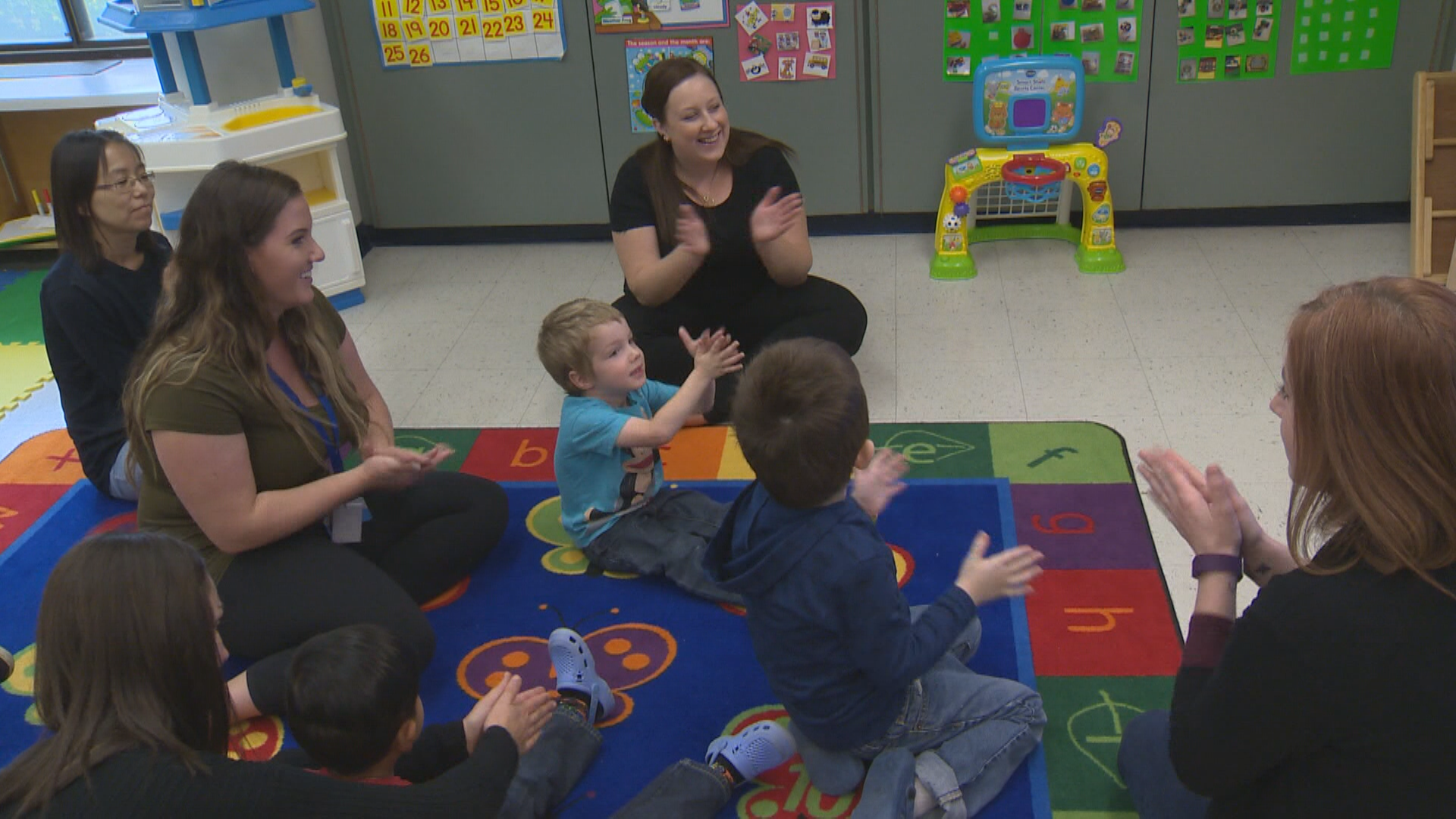
SASKATOON, Saskatchewan — As the world marks World Autism Awareness Day on April 2, communities across Canada are turning their attention to the experiences of individuals on the autism spectrum, highlighting the need for greater inclusion and understanding. This annual observance, established by the United Nations in 2007, kicks off Autism Awareness Month and serves as a platform to celebrate neurodiversity while addressing ongoing challenges faced by autistic people in everyday life.
According to Julain Tomlinson, CEO of Autism Services of Saskatoon, the prevalence of autism in Canada underscores its broad impact. “The stats are currently that there’s at least one in 50 children in Canada that are on the autism spectrum and more recent data suggests that it’s even more prevalent than that, so it affects all of us,” Tomlinson said in a recent interview. These figures, drawn from health authorities and advocacy groups, point to an estimated 1 in 50 school-aged children diagnosed, with emerging studies suggesting rates could climb as high as 1 in 36 in some regions, reflecting improved diagnostic practices and broader recognition of the spectrum.
The day emphasizes not just awareness but active support for navigating a world often built around neurotypical norms. Aiden Young, a Person-Centred Consultant for Inclusion Saskatchewan, described the daily hurdles autistic individuals encounter. “Being able to navigate a world that’s not really designed for neurodiverse folks, kind of an exploration process from employment, housing, and navigating the system,” Young explained. For many on the spectrum, sensory sensitivities — such as aversion to loud noises, bright lights, or crowded spaces — can turn routine activities into significant obstacles, from commuting to work to attending school events.
In Saskatoon, local efforts have made strides in fostering inclusion, but advocates stress that more remains to be done. Tomlinson praised the city's progress in raising awareness through community programs and educational initiatives. “Saskatoon has done great work around raising awareness and inclusion,” she noted. However, she called for expanded resources, particularly in professional and educational settings. “We need to create more inclusive workplaces, we need to be able to support our schools, they’re supporting children with autism. There’s a whole variety of things that we need to be doing,” Tomlinson added.
Young echoed this sentiment, pointing to persistent misconceptions that hinder empathy and support. Social media, he said, often perpetuates stereotypes that misrepresent autism.
“There is a misconception that having a breakdown or nervous breakdown is a part of autism spectrum disorder and that is actually not really capturing the whole picture,” Young said. “People with autism (are) not being rude, they are simply being overstimulated.”This clarification is crucial, as overstimulation can lead to what appears as withdrawal or frustration, but is in fact a response to environmental overload rather than intentional behavior.
Autism spectrum disorder encompasses a wide range of traits, from those who require substantial support to individuals who live independently but may struggle with social cues or sensory processing. The term "spectrum" reflects this diversity, with no two experiences identical. Organizations like Autism Services of Saskatoon provide tailored programs, including family counseling, skill-building workshops, and advocacy training, to bridge these gaps. Inclusion Saskatchewan, where Young works, focuses on policy advocacy and community integration, pushing for systemic changes in housing and employment equity.
World Autism Awareness Day originated from a UN General Assembly resolution aimed at increasing global understanding and acceptance. Each year, landmarks around the world light up in blue — a color long associated with the cause — to symbolize solidarity. In Canada, the observance aligns with national efforts like the 2019 federal framework for autism, which commits to better access to diagnosis, therapy, and lifelong support. Yet, implementation varies by province; in Saskatchewan, wait times for assessments can stretch months, leaving families in limbo.
Local businesses are stepping up to contribute. Throughout April, Stacked Pancake House in Saskatoon will donate $2 from every meal sold to Autism Services, a gesture that could raise thousands for programs serving hundreds of families. “It's heartening to see community partners like this get involved,” Tomlinson said, noting that such fundraisers help fund everything from sensory-friendly playgroups to adult transition services. Last year, similar initiatives in the city brought in over $10,000, demonstrating the power of grassroots support.
Experts like Young advocate for direct engagement as the most effective way to dispel myths. “Take a step into the community and see all the diverse people out there and… going into a space where people with autism tend to connect and being able to connect with those folks,” he suggested. Events during Awareness Month, such as panel discussions at the University of Saskatchewan and art exhibits featuring autistic creators, offer such opportunities. These gatherings not only educate but also showcase strengths like intense focus, pattern recognition, and creative problem-solving that autistic individuals bring to society.
Beyond misconceptions about behavior, broader societal barriers persist in employment, where unemployment rates for autistic adults can exceed 80% in some studies. Housing challenges are equally daunting; accessible options are scarce, and navigating rental applications or maintenance requests can be overwhelming for those with communication differences. In schools, while Saskatchewan has inclusive education policies, teachers often lack specialized training, leading to uneven support for the roughly 1 in 50 students on the spectrum.
Tomlinson highlighted the ripple effects on families. “It affects all of us,” she reiterated, pointing to the emotional and financial strain on parents seeking therapies that can cost thousands annually without full public coverage. Recent data from the Public Health Agency of Canada supports this, showing that autism-related expenses average $7,000 per year per family, with diagnostic delays exacerbating costs.
As Awareness Month unfolds, advocates are calling for policy shifts. In Ottawa, bills like C-248 aim to embed autism supports into the Canada Health Act, potentially standardizing care nationwide. Saskatchewan's government has pledged $5 million over three years for autism services, but critics argue it's insufficient given rising diagnoses. “More work needs to be done,” Tomlinson affirmed, urging sustained investment in research and training.
The autistic community itself is increasingly vocal, with self-advocates leading the narrative toward acceptance over mere awareness. Groups like the Autistic Self Advocacy Network emphasize neurodiversity as a natural variation, not a deficit. In Saskatoon, young leaders are organizing peer support circles, fostering connections that extend beyond April.
Looking ahead, the focus remains on building a more equitable world. By listening to autistic voices and challenging outdated views, communities can transform challenges into opportunities for growth. As Young put it, stepping into these spaces isn't just educational — it's essential for a truly inclusive society. With events continuing through the month, including webinars and family fun days, the message of World Autism Awareness Day resonates: understanding starts with connection.
For those seeking to learn more, resources from Autism Services of Saskatoon and Inclusion Saskatchewan are available online, offering guides on sensory accommodations and allyship. As April progresses, the hope is that these efforts will spark lasting change, ensuring that every individual on the spectrum can thrive.