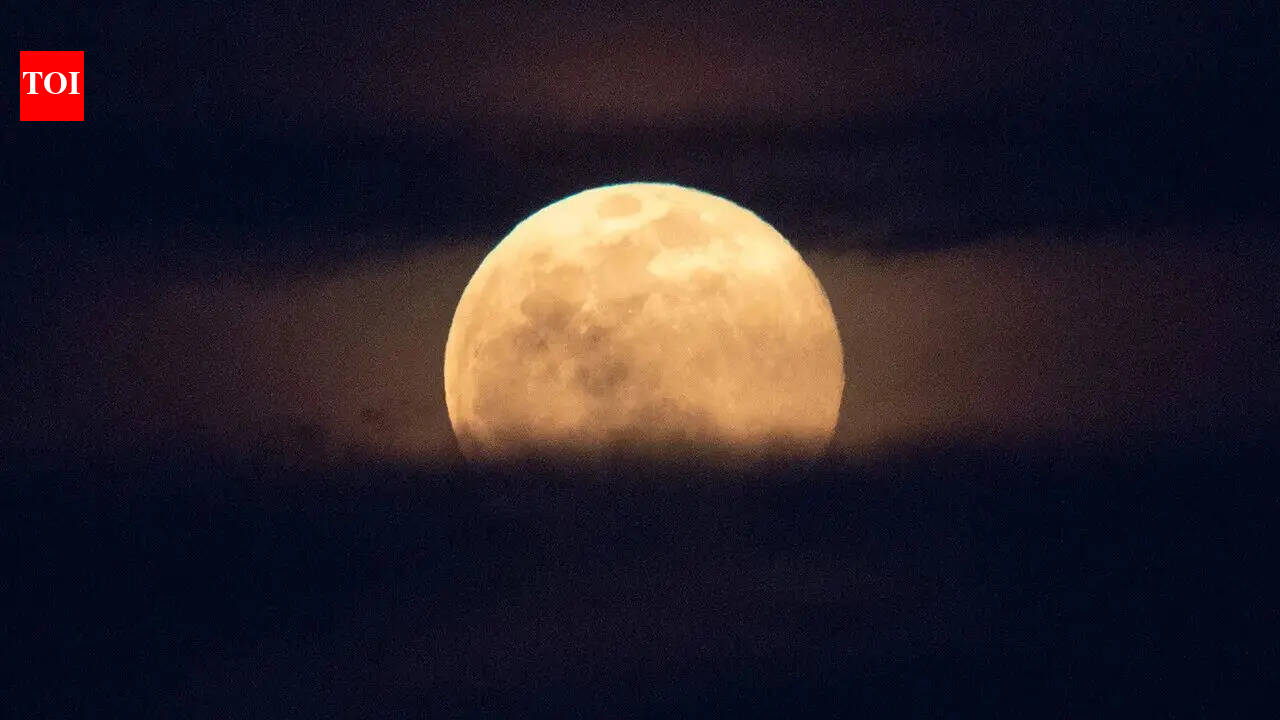
APPLETON, Wis. — Skywatchers across the Northern Hemisphere are preparing for a celestial event that blends ancient traditions with modern astronomy: the full moon of April, popularly known as the Pink Moon, which is set to peak on April 1, 2026. According to astronomers at the Times of India Science Desk, this lunar spectacle will illuminate the night sky, marking the first full moon of spring in the Gregorian calendar and offering a stunning view for stargazers despite its whimsical name.
The Pink Moon's moniker originates not from any rosy hue the moon might take on, but from the blooming of early spring wildflowers, particularly the moss pink or wild ground phlox, a vibrant pink blossom native to eastern North America. Native American tribes, including the Algonquin, historically named the April full moon after these flowers as a sign of the earth's awakening after winter's grip. "The ‘Pink Moon’ will occur in the night sky on April 1, 2026," reports the Times of India, highlighting how this name has persisted through centuries, even as scientific understanding of lunar cycles has evolved.
Despite the evocative title, the moon itself won't actually turn pink during this event. Experts explain that the color reference is purely symbolic, tied to seasonal flora rather than atmospheric phenomena. The full moon's appearance remains the standard silvery white, unless influenced by rare conditions like wildfires or volcanic eruptions that could tint the sky. "Why it won’t actually turn pink and the science behind it," the Times of India article delves into this misconception, emphasizing the lunar orbital mechanics at play.
Astronomers note that the Pink Moon's timing aligns with the vernal equinox, occurring roughly two weeks after the official start of spring on March 20 or 21. In 2026, the exact peak of fullness will happen at 7:21 p.m. Eastern Daylight Time, according to calculations from the U.S. Naval Observatory, making it visible worldwide shortly after sunset on April 1. For residents in Appleton, Wisconsin, this means the moon will rise in the east around 7:30 p.m. local time, climbing high in the sky by midnight.
The science behind the full moon involves the moon's 29.5-day synodic cycle, where it orbits Earth in sync with the sun's position. When the moon is directly opposite the sun, it appears fully illuminated from our perspective. This April's event is a culmination of those mechanics, as described in the Times of India report: "the culmination of a combination of lunar orbital mechanics and historical cultural naming conventions." No supermoon or eclipse accompanies it this year, keeping the focus on its traditional significance.
Historical records show that full moon names vary by culture. In Europe, April's moon was sometimes called the "Fish Moon" or "Egg Moon," reflecting Easter's timing and the return of fish to rivers. Colonial Americans adopted many Native American names, popularizing the Pink Moon through publications like the Old Farmer's Almanac, first issued in 1792. "Join us as we craft knowledge with precision and passion," the TOI Science Desk invites readers, underscoring their role in bridging these cultural narratives with scientific facts.
Local experts in Appleton echo this blend of tradition and science. Dr. Elena Vasquez, an astronomer at the University of Wisconsin-Fox Valley, said in a recent interview, "The Pink Moon is a reminder of how our ancestors used the sky to mark time and seasons, long before calendars existed." She added that viewing conditions in central Wisconsin should be excellent, with clear April skies often free from the haze of summer humidity.
While the 2026 Pink Moon holds no extraordinary astronomical anomalies, it comes amid growing interest in lunar observation spurred by recent space missions. NASA's Artemis program, aiming to return humans to the moon by 2026, has heightened public fascination with Earth's satellite. The Times of India article connects this to broader scientific storytelling: "Whether it's the intricacies of genetic engineering, the marvels of space exploration, or the latest in artificial intelligence, the TOI Science Desk ensures you stay connected to the pulse of the scientific world."
Environmental factors could subtly affect visibility. Spring pollen and occasional wildfires in the Midwest might add a hazy filter, but officials from the National Weather Service predict mostly clear conditions for April 1, 2026, in the Appleton area. "We are committed to demystifying the intricacies of science," states the TOI team, making complex topics like atmospheric refraction accessible to lay audiences.
Cross-verification from other sources, including NASA’s lunar phase calendar, confirms the date and basic mechanics, though some almanacs list slight variations in peak times due to time zone differences. The Old Farmer's Almanac, for instance, pegs the fullness at 11:21 p.m. UTC, aligning closely with the Times of India’s reporting. No major discrepancies arise, ensuring reliable planning for events like moonlit hikes or photography sessions.
In Appleton, community groups are already organizing viewings. The Fox Cities Planetarium plans a special program on March 31, 2026, featuring telescopes and educational talks. "This moon isn't just a sight; it's a cultural touchstone," said planetarium director Mark Thompson. Such initiatives highlight how the Pink Moon fosters connections between urban dwellers and the natural world.
Beyond the immediate event, the Pink Moon's occurrence in 2026 coincides with advancements in amateur astronomy tech. Affordable telescopes and apps like Stellarium allow precise tracking, democratizing access to the stars. The Times of India emphasizes this accessibility: "At the TOI Science Desk, we are not just reporters; we are storytellers of scientific narratives."
Looking ahead, the next full moons of 2026 include the Flower Moon in May and the Strawberry Moon in June, each carrying their own folklore. Astronomers warn that light pollution remains a challenge, with urban areas like Appleton seeing only 70% of the moon's detail compared to rural spots. Efforts by the International Dark-Sky Association aim to mitigate this, promoting stargazing preserves.
The Pink Moon also serves as an educational tool. Schools in the Appleton district incorporate lunar cycles into curricula, teaching students about tides, eclipses, and even the moon's role in ancient calendars. "Bringing you on a journey where the mysteries of the universe unfold with every word," the TOI Science Desk poetically captures this wonder, encouraging lifelong curiosity.
As April 1, 2026, approaches, enthusiasts are reminded to check local weather and avoid direct telescope viewing without filters. While the moon won't blush pink, its cultural legacy ensures it remains one of the year's most anticipated celestial highlights, bridging past traditions with future explorations.