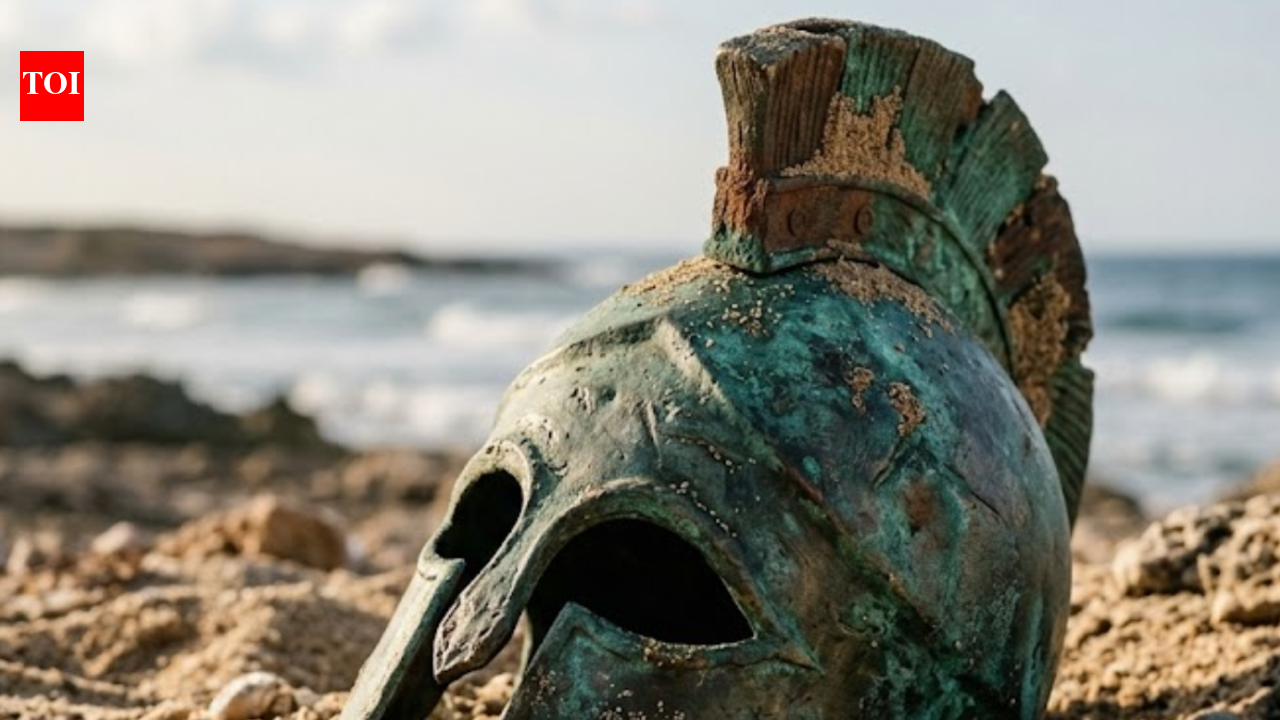
VERGINA, Greece — Archaeologists have finally unraveled a mystery that has puzzled scholars for nearly five decades: the identities of the remains in an ancient Macedonian tomb believed to hold the bones of one of history's most influential kings. According to a recent scientific study published in the journal Science Advances, the skeletal remains in Tomb I at Vergina are confirmed to be those of King Philip II of Macedon, father of Alexander the Great, along with members of his royal family. The discovery ends years of debate over whether the tomb contained Philip II or his son, Philip III.
The tombs at Vergina, located in northern Greece, were first unearthed in 1977 by Greek archaeologist Manolis Andronikos. At the time, the find was hailed as one of the most significant archaeological discoveries of the 20th century. Tomb I, a lavish underground chamber adorned with intricate frescoes depicting hunting scenes and mythological figures, contained the cremated remains of a man, a woman, and a newborn, all housed in golden caskets. Andronikos immediately proclaimed the male remains to be Philip II, who ruled Macedon from 359 to 336 B.C. and transformed the kingdom into a dominant power in the ancient world.
But skepticism soon arose. Some experts argued that the bones belonged to Philip III, Alexander's half-brother, who succeeded Philip II briefly before his execution in 317 B.C. The debate centered on the age of the male skeleton, estimated at around 35 to 55 years old, which could fit either ruler. Philip II was about 46 when assassinated at his daughter's wedding in Aegae, the ancient Macedonian capital near modern-day Vergina. Philip III, however, was younger, around 35 at his death. Without definitive proof, the controversy simmered, with scholars like Antonis Bartsiokas from Aristotle University of Thessaloniki challenging Andronikos's claims in publications throughout the 2000s.
The breakthrough came through advanced forensic analysis led by researchers from the University of Seville in Spain and Aristotle University. According to the study, reported by the Times of India, the team used computed tomography scans, radiographic imaging, and osteological examinations to identify telltale signs of injuries on the male skeleton. "The knee showed severe osteoarthritis consistent with lameness described in ancient texts," said study co-author Sofia Iliopoulos, a bioarchaeologist at Aristotle University. Philip II was famously lame in one leg from a battle wound, a detail corroborated by historians like Diodorus Siculus.
Further evidence pointed to the timeline. The tomb's artifacts, including a golden wreath with 313 oak leaves and acorns, and an ivory-handled sword, aligned with Philip II's era of conquests, including victories over the Greeks at Chaeronea in 338 B.C. The woman's remains, likely Queen Cleopatra (not to be confused with the Egyptian ruler), showed no signs of childbirth, supporting historical accounts that she died shortly after giving birth to a daughter who was also interred. The newborn's tiny bones confirmed the tragic family end.
"This scientific study has solved a long-standing mystery," the Times of India reported, highlighting how DNA analysis was ruled out due to the cremation process but was unnecessary given the skeletal pathology matches. The remains had lain anonymous for 2,300 years, their royal status obscured by time and tomb robbers who had partially looted the site before its modern discovery.
Philip II's life was as dramatic as the tomb that now confirms his resting place. Born in 382 B.C., he ascended the throne amid civil strife and foreign invasions. Through military innovation—introducing the sarissa pike and professional phalanx—he unified Greece under Macedonian hegemony. His assassination, allegedly by his bodyguard Pausanias, paved the way for Alexander's empire-building campaigns that stretched from Egypt to India. Historians credit Philip with laying the groundwork for Hellenism, the cultural fusion that defined the ancient world.
The Vergina tombs complex includes three main burial sites, with Tomb II often associated with Alexander IV, Philip II's grandson, murdered at age 13 in 310 B.C. Tomb III, opened in 2022, revealed more royal artifacts but no bodies. Greek authorities have kept the tombs sealed to preserve them, allowing only non-invasive studies. "The confirmation strengthens Vergina's claim as the royal necropolis of Macedon," said Greek Culture Minister Lina Mendoni in a statement following the study's release on October 10, 2024.
Not all experts are fully convinced, however. Ian Worthington, a historian at the University of Missouri, noted in a recent interview that while the injury evidence is compelling, the cremation makes age estimation tricky. "Ancient sources are often contradictory," Worthington said. "Plutarch describes Philip as one-eyed from a wound, but the skeleton shows no such damage. It's a strong case, but not ironclad." The study authors countered that eye injuries might not leave detectable bone evidence after cremation.
The findings have reignited interest in Macedonia's turbulent history. During Philip's reign, the kingdom expanded from a peripheral state to a superpower, absorbing Thrace, Thessaly, and parts of Illyria. His policies of integrating conquered peoples foreshadowed Alexander's approach. The tomb's opulence—gold vessels, purple fabrics, and weapons—reflects the wealth amassed through silver mines at Mount Pangaeum.
Locally, the discovery bolsters tourism in Vergina, now a UNESCO World Heritage site since 1996. Museum director Angeliki Kottaridi told reporters, "This validation honors Andronikos's legacy and draws visitors to witness the cradle of Alexander's world." Annual visitors number around 200,000, with guided tours emphasizing the site's role in bridging Bronze Age Mycenaean traditions and classical Greece.
Beyond identification, the study sheds light on ancient Macedonian burial practices. Cremation was reserved for royalty, symbolizing ascent to the gods, unlike the inhumation common in southern Greece. The tomb's antechamber held chariots and armor, suggesting a warrior's afterlife. "These royals were not just buried; they were sent off in style," Iliopoulos remarked, pointing to the 24-karat gold caskets.
The implications extend to modern geopolitics. Greece and North Macedonia have long disputed the use of "Macedonia," with Athens viewing Philip and Alexander as quintessentially Greek. The 2018 Prespa Agreement resolved the name issue, but cultural heritage remains a flashpoint. "This find reaffirms our shared history," Mendoni added, amid ongoing excavations at nearby sites like Pella, Alexander's birthplace.
Looking ahead, researchers plan further analysis of Tomb II's remains using similar techniques. "We hope to clarify Alexander IV's fate," said lead researcher Antonis Bartsiokas, who previously doubted Philip II's identification but now supports the new evidence. Funding from the European Research Council will support non-destructive scans, potentially unlocking more secrets from the 4th century B.C.
As the dust settles on this 2,300-year-old enigma, the world gains a clearer picture of the man who forged an empire's foundation. Philip II's confirmed tomb at Vergina stands as a testament to enduring legacies, where science meets antiquity in the pursuit of truth.