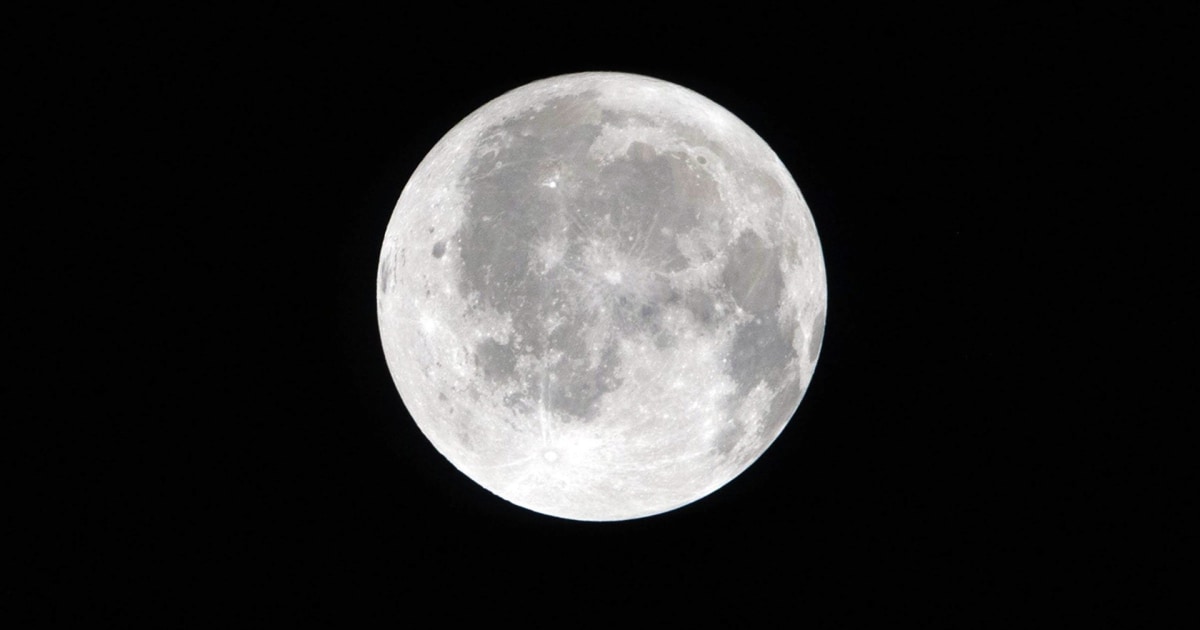
In a milestone for NASA's ambitious return to the moon, the Artemis II crew is gearing up for a historic flyby of the far side of the lunar surface, set to offer unprecedented views of the moon's mysterious hidden hemisphere. Scheduled for launch in late 2025, the mission will mark the first crewed flight of NASA's Orion spacecraft and the first time humans venture beyond low Earth orbit since the Apollo era. According to reports from NBC News, the astronauts will skim as close as 4,000 to 6,000 miles above the lunar surface, providing what experts describe as the widest and best vantage point yet for photographing the far side.
The four-member crew—Commander Reid Wiseman, Pilot Victor Glover, Mission Specialist Christina Koch, and Mission Specialist Jeremy Hansen from the Canadian Space Agency—has been in intensive training at NASA's Johnson Space Center in Houston. This mission, the second in the Artemis program, builds on the uncrewed Artemis I test flight in 2022, which successfully looped around the moon and returned to Earth. Artemis II is designed primarily as a test of the spacecraft's systems with humans aboard, but the lunar flyby promises to deliver groundbreaking scientific observations.
One of the mission's most intriguing aspects is the planned trajectory around the far side of the moon, a region perpetually facing away from Earth due to the moon's synchronous rotation. 'This will be the first time a crew has seen the far side up close since Apollo,' said former NASA astronaut Mike Massimino, who discussed the mission on NBC's TODAY show. Massimino, who flew on two space shuttle missions, emphasized the crew's focus on visual documentation. 'They're going to be looking for geological features, craters, and any signs of past volcanic activity that we haven't been able to study in detail from orbiters,' he added.
During the approximate 40-minute flyby, the Orion capsule will enter a period of radio silence, losing direct contact with Mission Control in Houston. This communication blackout, a known challenge of deep space travel, will test the crew's ability to operate independently. NBC correspondent Tom Costello, reporting on the preparations, noted that the astronauts have simulated this scenario extensively. 'The team is ready for that isolation; it's all part of ensuring the spacecraft's life support and navigation systems perform flawlessly,' Costello said in his segment aired on April 6, 2026.
The far side of the moon, often mistakenly called the 'dark side,' is actually illuminated by the sun but remains unseen from Earth. It features a rugged terrain with far more craters and fewer flat basaltic plains, or 'maria,' than the near side. NASA's Lunar Reconnaissance Orbiter has mapped much of it since 2009, but human eyes—and high-resolution cameras—will provide a new layer of insight. The Artemis II crew plans to capture thousands of images, which will aid in planning future landings, including Artemis III's targeted crewed touchdown on the lunar south pole in 2026 or later.
Preparation for the mission has involved rigorous simulations, including zero-gravity training aboard parabolic flights and underwater analogs in the Neutral Buoyancy Lab. Wiseman, a Navy test pilot with over 3,000 flight hours, leads the team with a focus on safety. 'We're not just testing the vehicle; we're testing ourselves in an environment no human has experienced in over 50 years,' Wiseman said during a recent NASA briefing. Glover, the first Black astronaut slated for a lunar mission, highlighted the diversity of the crew as a symbol of inclusive space exploration.
Christina Koch, who holds the record for the longest single spaceflight by a woman at 328 days on the International Space Station, brings expertise in human physiology. Her role will include monitoring crew health during the 10-day mission. Hansen, representing international partners, underscores the Artemis Accords, a framework signed by over 40 nations to promote peaceful lunar exploration. 'This is a global effort, and the views from the far side will benefit scientists worldwide,' Hansen remarked in a pre-mission interview.
The Orion spacecraft, developed by Lockheed Martin, is powered by NASA's Space Launch System (SLS) rocket, the most powerful ever built. Standing taller than the Statue of Liberty, the SLS will propel Orion from Kennedy Space Center in Florida. The mission profile includes a launch window in September 2025, followed by a translunar injection burn to escape Earth's gravity. After the lunar flyby, Orion will loop back for a Pacific Ocean splashdown.
Challenges abound, including radiation exposure from the Van Allen belts and the South Atlantic Anomaly. NASA engineers have fortified Orion with shielding, but the crew will still face higher doses than on the ISS. 'We're monitoring everything closely; the data from Artemis II will refine our protections for longer stays,' said NASA Administrator Bill Nelson in a statement. The mission also tests the European Space Agency's service module, which provides propulsion and power.
Experts like Massimino point out that while the flyby won't involve landing, it sets the stage for sustainable lunar presence. 'The far side offers unique opportunities for radio astronomy because it's shielded from Earth's interference,' Massimino explained on TODAY. Future missions could place telescopes there, revolutionizing our understanding of the cosmos. Meanwhile, private companies like SpaceX and Blue Origin are vying for roles in Artemis, with Starship eyed for lunar landings.
The Artemis program, with a projected cost of $93 billion through 2025, aims to establish a long-term human presence on the moon as a stepping stone to Mars. Critics, including some in Congress, question the budget amid competing priorities like climate research. However, supporters argue the technological spin-offs— from advanced batteries to medical imaging—justify the investment. 'This isn't just about flags and footprints; it's about advancing humanity's frontiers,' Nelson asserted.
As launch day approaches, public excitement is building. NASA plans live coverage from Kennedy Space Center, with educational outreach to schools nationwide. The Appleton Times spoke with local astronomer Dr. Elena Vasquez, who said, 'Artemis II will inspire a new generation, much like Apollo did. Seeing the far side through human eyes is poetic.'
Looking ahead, the success of Artemis II is crucial for the program's timeline. Delays from technical issues, like heat shield concerns post-Artemis I, have pushed schedules, but officials remain optimistic. 'We're on track for a safe and spectacular mission,' said Kathy Lueders, associate administrator for exploration. The flyby, with its 40 minutes of silence, symbolizes the solitude and wonder of space travel.
In the broader context, Artemis II revives the spirit of international cooperation seen in Apollo-Soyuz in 1975. With partners from Japan, Europe, and Canada, the mission fosters diplomacy in orbit. As the crew trains, the world watches, anticipating images that could redefine our view of the moon's far side.
Ultimately, Artemis II isn't just a test flight; it's a bridge to the future. By circumnavigating the moon's hidden face, the astronauts will gather data essential for habitats, resource utilization, and beyond. As Massimino put it, 'What they'll see could change how we think about our nearest neighbor in space.' With the launch mere months away, anticipation runs high for this bold step outward.