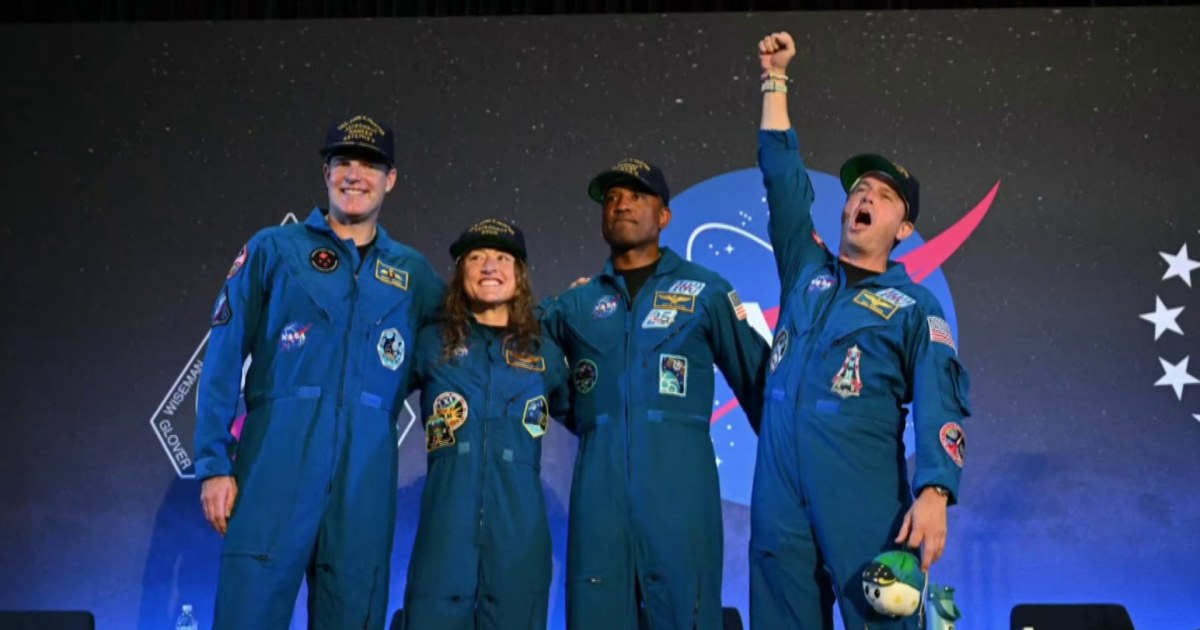
In a highly anticipated press conference held at the Johnson Space Center in Houston, Texas, on Monday, the four-member crew of NASA's Artemis II mission shared their reflections on what they described as a landmark journey around the Moon. The astronauts—Commander Reid Wiseman, Pilot Victor Glover, Mission Specialist Christina Koch, and Mission Specialist Jeremy Hansen—spoke publicly for the first time since their spacecraft, Orion, splashed down safely in the Pacific Ocean off the coast of Baja California on Friday, December 15, 2023. The mission, which launched from Kennedy Space Center in Florida on December 5, lasted approximately 10 days and marked the first crewed flight of NASA's Artemis program since the Apollo era ended over 50 years ago.
The crew's return capped a mission that tested critical systems for future lunar explorations, including the Orion capsule's life support, navigation, and reentry capabilities. According to NASA officials, the splashdown occurred at 4:37 p.m. ET, with recovery teams from the U.S. Navy and SpaceX assisting in retrieving the crew and vehicle. "It was a picture-perfect ending to an incredible adventure," said Wiseman during the conference, his voice carrying the weight of the historic achievement. The astronauts appeared healthy and upbeat, waving to crowds as they exited the recovery ship and boarded a helicopter bound for California.
During the 90-minute question-and-answer session moderated by NASA Administrator Bill Nelson, the crew recounted key moments from their orbital trek. Glover highlighted the thrill of the trans-lunar injection burn, which propelled Orion toward the Moon at speeds exceeding 24,000 miles per hour. "Looking back at Earth from that distance, it's humbling—reminds you how fragile our home is," Glover remarked, echoing sentiments often shared by previous spacefarers. Koch, who previously spent 328 days on the International Space Station, discussed the psychological aspects of the mission, noting the seamless teamwork that kept morale high in the confined quarters of the capsule.
Hansen, the first non-U.S. astronaut on a NASA deep-space mission as a representative from the Canadian Space Agency, emphasized the international collaboration underpinning Artemis. "This isn't just America's mission; it's a global effort to return to the Moon and beyond," he said. The inclusion of international partners aligns with the Artemis Accords, signed by 40 countries, which outline principles for peaceful lunar exploration. NASA's partnership with SpaceX for the recovery operations underscored the commercial sector's growing role in human spaceflight.
The mission's objectives were rigorously met, according to a post-flight report released by NASA on Sunday. Orion successfully completed two flybys of the Moon, coming within 80 miles of its surface on December 10, and conducted experiments on radiation exposure and spacecraft performance. No major anomalies were reported, though mission control noted minor thruster adjustments during the outbound leg. "Every system performed as designed, paving the way for Artemis III," Nelson stated, referring to the planned 2026 landing on the lunar south pole.
Background on the Artemis program reveals its ambitious scope: to establish a sustainable human presence on the Moon by the end of the decade, as part of NASA's broader goal to reach Mars in the 2030s. Artemis II built on the uncrewed Artemis I test flight in November 2022, which looped around the Moon and returned without incident. The crew's training regimen, spanning two years, included simulations at the Neutral Buoyancy Lab and wilderness survival exercises, preparing them for the isolation of deep space.
Family members and dignitaries filled the auditorium, with Wiseman's wife crediting the ground team's support. "Behind every astronaut is a network of experts who make the impossible routine," she said in a brief statement. Public reaction has been overwhelmingly positive, with social media buzzing about the mission's success and the diverse crew—comprising two women and a person of color, a first for lunar orbit.
However, not all perspectives were uniformly celebratory. Some space policy experts, speaking to Reuters on Saturday, raised questions about the program's $93 billion price tag through 2025, arguing that budget overruns could strain other scientific endeavors. "While inspiring, we must ensure Artemis doesn't eclipse Earth-based research," said Lori Garver, former NASA deputy administrator. NASA countered that the mission's technological spin-offs, like advanced batteries and medical monitoring, benefit everyday life.
The splashdown itself was a spectacle, broadcast live on NASA TV to millions. Recovery swimmers in the Pacific waters secured Orion within minutes, and the crew emerged smiling after a medical check aboard the USS Hornet. Environmental monitors reported no fuel leaks or debris issues, aligning with NASA's sustainability pledges. The Orion capsule, now en route to Kennedy Space Center for analysis, will undergo disassembly to inspect heat shield integrity after its fiery reentry at 25,000 mph.
Looking ahead, the Artemis II data will inform refinements for future missions. Artemis III, targeting a crewed lunar landing with SpaceX's Starship, faces delays due to development challenges, officials said. "We're learning every day, and this flight gives us confidence," Koch affirmed. The crew plans to embark on a worldwide goodwill tour, starting in Europe next month, to promote STEM education and international cooperation.
Beyond technical achievements, the mission holds symbolic weight. As the first woman and person of color slated for lunar landing in Artemis III, the crew's success amplifies NASA's diversity initiatives. "Representation matters—it shows kids from all backgrounds that space is for them," Glover noted. Educational outreach during the flight included live lessons to schools, reaching over 1 million students.
Challenges during the mission were minimal but noteworthy. A brief communication glitch on December 8 was resolved within hours, and the crew managed sleep shifts to maintain alertness. Post-mission quarantines, a nod to Apollo protocols, kept the astronauts isolated until Sunday. Medical evaluations confirmed no adverse effects from space radiation, though long-term studies will continue.
In the broader context of space race dynamics, China's recent lunar sample return mission in June provided competitive backdrop, but U.S. officials stressed collaboration over rivalry. "Space is big enough for all," Nelson quipped. The Artemis program's reliance on private industry, including Boeing's Orion and SpaceX's contributions, signals a shift from government monopoly.
As the crew transitions to debriefings, their reflections underscore the mission's human element. "It's not just about the tech; it's about pushing humanity's frontiers," Wiseman concluded. With Artemis II in the books, eyes turn to the next steps in humanity's return to the Moon, promising a new era of exploration.
The success also bolsters U.S. leadership in space, amid geopolitical tensions. European Space Agency Director General Josef Aschbacher praised the mission in a statement, noting its role in fostering global partnerships. Future missions will incorporate more international elements, including Japan's contributions to the Gateway lunar station, planned for 2028.