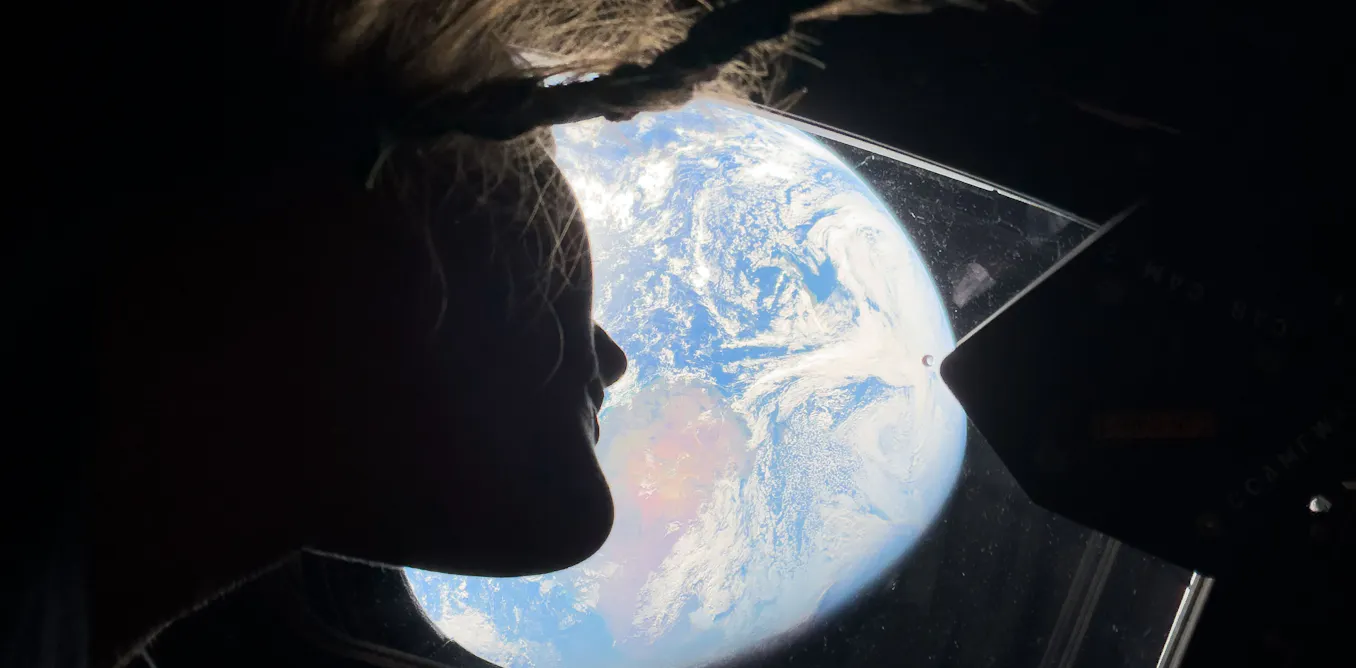
In a striking revival of humanity's lunar legacy, the crew of NASA's Artemis II mission has returned with a trove of digital photographs that not only document their historic journey around the Moon but also echo and update iconic images from the Apollo era. Launched in late 2024, the mission marked the first crewed flight of the Orion spacecraft, carrying astronauts Reid Wiseman, Victor Glover, Christina Koch, and Jeremy Hansen on a 10-day orbit that brought them closer to the lunar surface than any humans since Apollo 17 in 1972. According to space historian and curator Amy Foster, who has studied the visual culture of human spaceflight, these modern images offer a "refreshed look at space," blending timeless exploration motifs with the crisp clarity of contemporary technology.
The Artemis II crew, comprising experienced NASA astronauts Wiseman as commander, Glover as pilot, Koch as mission specialist, and Hansen from the Canadian Space Agency, underwent weeks of intensive photography training prior to launch. Equipped with Nikon D5 digital cameras—proven reliable on the International Space Station—and even iPhones, the team was prepared to capture the mission's visual narrative in ways that surpassed the 1960s-era 35mm Hasselblad cameras used during Apollo. "Taking photos with the device so many people have in their pockets is leaps and bounds beyond photography equipment used during Apollo 17," Foster noted in an analysis published by The Conversation.
Unlike the Apollo missions, which focused on lunar landings, Artemis II was a flyby, swinging the Orion spacecraft at a greater distance from the Moon than its predecessors. This trajectory allowed the crew to glimpse more of the lunar landscape in a single view, aided by the spacecraft's six windows—five of which featured live-streaming video cameras. During the flyby, the astronauts collaborated with the Artemis Science Team on the ground, describing prospective landing sites, craters, and geological features in real time. Viewers following the mission online heard these exchanges, which were broadcast live, providing a window into the crew's observations as they hurtled through space at speeds exceeding 24,000 miles per hour.
One of the mission's most anticipated photographic moments came early on, around five hours after liftoff, when the crew captured an image of the fully lit Earth against the blackness of space. This photo draws direct parallels to a famous shot taken by Apollo 17 geologist Harrison Schmitt in 1972, often called the "Blue Marble." Schmitt's image, which showed Earth illuminated by the Sun and later featured in Al Gore's 2006 documentary An Inconvenient Truth, became one of the most viewed photographs of the 20th century. The Artemis II version, however, depicts Earth lit by the Moon's glow rather than direct sunlight, highlighting the thin atmospheric layer that protects life and generates polar auroras.
"That was Earth 1972, and now we have Earth 2026—both serving as documents of singular moments in Earth’s long history," Foster wrote, referring to the new image as a modern counterpart. While the Apollo photo spent over five decades as an iconic emblem of environmental awareness, the Artemis II image was shared with the public within hours of capture, thanks to high-speed data transmission and social media. Yet, in an era dominated by AI-generated deepfakes, Foster cautioned that it "might get less public recognition" amid concerns over photo manipulation.
The mission's timing, aligned with the Moon's phase, prevented the crew from witnessing a classic Earthrise like the one immortalized by Apollo 8 in 1968. Instead, they experienced an "Earthset," akin to a sunset, and even a partial solar eclipse as the Moon passed between Earth and the Sun. These unique angles were anticipated during pre-mission planning, with the crew trained by geologists to identify scientifically valuable features. "The conversation between the astronauts on the Orion capsule and the Artemis Science Team was also broadcast," allowing global audiences to share in the excitement, Foster reported.
Post-mission, the photographs stored on high-capacity memory cards have begun to flood NASA's databases, promising to exceed the nearly 4,000 images taken during Apollo 17. The Orion's larger interior and advanced cameras enabled more extensive documentation than ever before, capturing not just the Moon but also the crew's daily life aboard the spacecraft. Wiseman, Glover, Koch, and Hansen, who splashed down safely in the Pacific Ocean on December 5, 2024, after orbiting Earth and the Moon, have already shared select images that have gone viral on platforms like X and Instagram.
For many, including those born after the Apollo program's end—like Foster, a member of Generation X—these photos fill a long-standing void. "Like many born after NASA’s first slate of lunar missions, my memories of space include visuals like the ill-fated Challenger launch; Mercury program astronaut John Glenn’s return to orbit in a space shuttle in 1998, at age 77; and seeing photos of deep space from the Hubble Space telescope," she reflected. But none of those events brought humans back to the Moon's vicinity, leaving a generation "thirsty for their own lunar memories to share."
The Artemis II images stand in contrast to post-Apollo space visuals, which often featured space shuttle launches, the modular International Space Station, or robotic Mars rovers navigating dusty terrains. "While the Artemis II photos have timeless, classic elements similar to the Apollo photos, better photographic tools give them a clean, crisp vibe," Foster observed. "Space travel now looks more like many people may imagine it’s supposed to look: grand, adventurous, audacious, sublime."
NASA officials have emphasized the mission's role in paving the way for future explorations. Artemis II served as a testbed for the Orion spacecraft and Space Launch System rocket, both crucial for the Artemis program's goal of returning humans to the lunar surface by 2026 with Artemis III. The photography, beyond its artistic value, aids in scouting landing sites and refining navigation systems. "These first few images from Artemis II are just the tip of the imagery iceberg," Foster added, predicting that as more photos are released, they will "continue to grow" in significance.
Experts in space history point to the rapid dissemination of these images as a hallmark of the digital age. Unlike the delayed processing of Apollo film, Artemis II's digital files were transmitted mid-mission, allowing real-time public engagement. This immediacy, facilitated by the internet, has made the photos "almost instantly iconic," according to Foster, fitting into a broader catalog of exploration imagery dating back centuries.
While the mission achieved all primary objectives without incident, some observers noted minor discrepancies in photo quality due to the spacecraft's distance from the Moon—about 500 miles at closest approach, farther than Apollo's 60 miles. NASA spokespeople confirmed that the extended range was intentional to test deep-space operations safely. Crew member descriptions during the flyby, such as Koch's remarks on the Moon's cratered horizon, were praised for their scientific detail, though full transcripts remain under review.
Looking ahead, the Artemis program continues with international partners, including Canada, Europe, and Japan, contributing to the Gateway lunar station. Hansen's participation underscores this collaboration, as Canada provides the Canadarm3 robotic system. The influx of Artemis II imagery is expected to inspire educational programs and public outreach, much like Apollo photos did in the 1960s and 1970s.
As NASA processes the full archive, anticipated releases in the coming weeks could reveal even more parallels to Apollo, such as updated views of lunar far-side features. Foster, who has curated spaceflight exhibits, anticipates these images will redefine public perceptions of space travel. "Building on the lessons of Apollo," she concluded, the photos herald a new chapter in human exploration, one captured in high definition for the world to witness.
In total, the mission's visual legacy not only commemorates a successful return to cislunar space but also bridges generational gaps, offering fresh icons for the 21st century. With Artemis III on the horizon, these photographs serve as both historical documents and motivational tools, reminding humanity of its enduring quest beyond Earth.