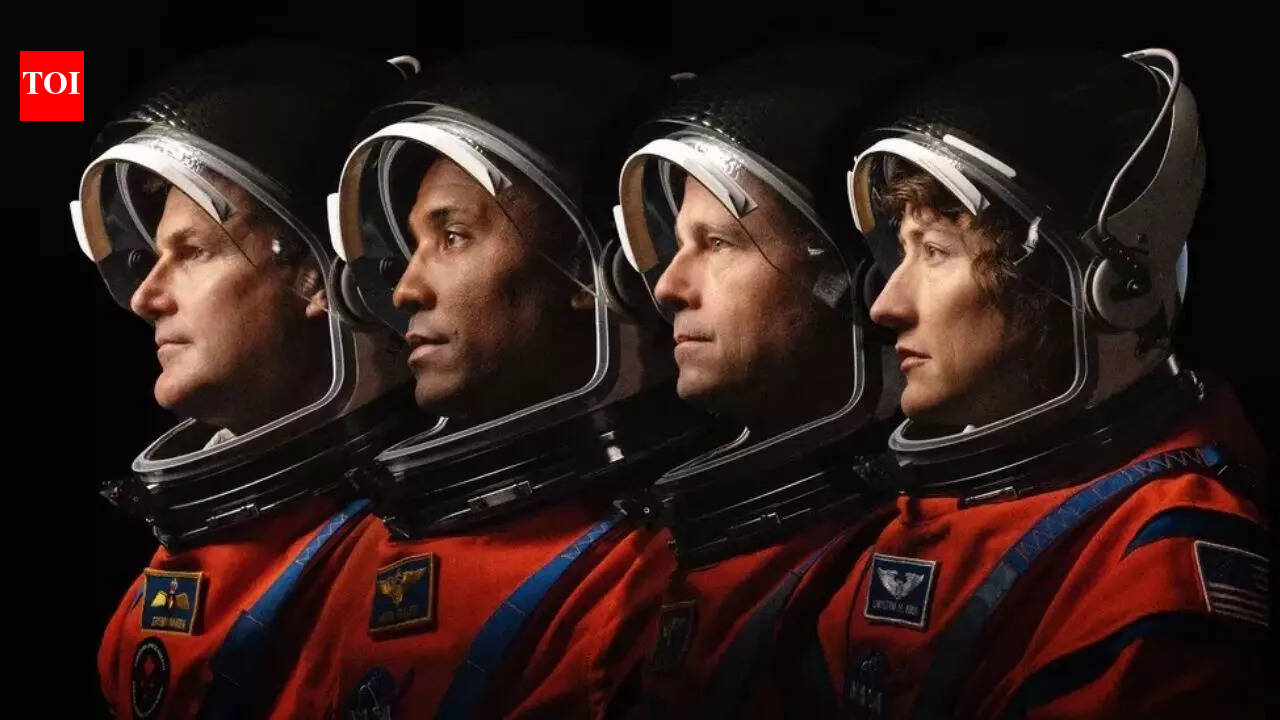
In a key step toward humanity's return to the Moon, the four astronauts selected for NASA's Artemis II mission have entered health quarantine as preparations accelerate for what promises to be a record-breaking flight. The crew, consisting of NASA astronauts Reid Wiseman, Victor Glover, and Christina Koch, along with Canadian Space Agency astronaut Jeremy Hansen, began their isolation period this week at the Johnson Space Center in Houston, Texas. This quarantine, a standard protocol to safeguard against illnesses that could derail the launch, underscores the meticulous planning underway for the mission slated to lift off no earlier than April 1, 2026, from Kennedy Space Center in Florida.
The Artemis II flight marks the first crewed mission in NASA's ambitious Artemis program, aimed at establishing a sustainable human presence on the lunar surface. Unlike the uncrewed Artemis I test flight that successfully orbited the Moon in late 2022, this upcoming voyage will send the four astronauts on a 10-day journey around the far side of the Moon without landing. According to NASA officials, the mission will test the Orion spacecraft's life support systems, navigation capabilities, and re-entry procedures under real spaceflight conditions, building critical data for future lunar landings.
The decision to initiate quarantine comes amid recent announcements from NASA highlighting major milestones for the Space Launch System (SLS) rocket and Orion capsule. Engineers at Kennedy Space Center completed the stacking of the SLS core stage with its solid rocket boosters earlier this month, a process that involved precisely aligning massive components weighing hundreds of tons. "We've achieved significant progress in integrating the vehicle's hardware," said a NASA spokesperson in a statement released to the press. "These steps ensure the rocket is ready to propel the crew safely into lunar orbit."
Health quarantine for astronauts is not a new practice but one refined over decades of spaceflight experience. During the Apollo era, crews isolated for up to three weeks before launch to avoid contagious diseases, a lesson learned from earlier missions where minor illnesses posed outsized risks in confined spacecraft. For Artemis II, the quarantine lasts approximately 13 days, during which the astronauts undergo medical evaluations, final training simulations, and restricted interactions limited to essential personnel who are also screened. Dr. J.D. Polk, NASA's chief health and medical officer, emphasized the importance of this phase in an interview last year, stating, "Protecting our crew's health is paramount; even a simple cold can compromise mission success in the vacuum of space."
The Artemis II crew was announced in April 2023, with Wiseman serving as commander, Glover as pilot, Koch as mission specialist, and Hansen representing international partners through the Artemis Accords. Wiseman, a veteran of a 2013 International Space Station expedition, brings leadership experience to the helm. Glover, who flew on SpaceX's Crew-1 mission in 2020, will handle primary spacecraft operations. Koch, holder of the record for the longest single spaceflight by a woman at 328 days aboard the ISS, adds expertise in long-duration missions. Hansen, a Canadian colonel and Artemis II's first non-U.S. commander on a deep-space flight, symbolizes growing global collaboration in space exploration.
Preparations for Artemis II have not been without challenges. The mission, originally targeted for late 2024, faced multiple delays due to technical issues with the Orion heat shield identified after Artemis I and ongoing refinements to the SLS upper stage. NASA Administrator Bill Nelson addressed these setbacks in a congressional hearing in March 2024, noting, "Safety remains our top priority; we're taking the time necessary to get this right for the crew and the program." The April 2026 target reflects these adjustments, allowing additional time for ground testing and software updates.
According to reports from the Times of India, which covered the quarantine entry, NASA has also greenlit final environmental testing for the Orion spacecraft at the Neil Armstrong Test Facility in Ohio. This phase simulates the harsh conditions of space, including extreme temperatures and vibrations, to verify the capsule's integrity. The testing is expected to wrap up by mid-2025, paving the way for the full vehicle assembly later that year.
The Artemis program, with a projected cost exceeding $90 billion through 2025, represents a cornerstone of U.S. space policy under both the Trump and Biden administrations. It builds on the success of Artemis I, where Orion traveled 1.4 million miles and returned flawlessly, validating the SLS as the most powerful rocket ever built. International partners, including the European Space Agency contributing the Orion service module, have praised the collaborative effort. ESA Director General Josef Aschbacher remarked in a recent panel, "Artemis II will not only test technology but also strengthen the bonds that will enable lunar exploration for generations."
Critics, however, have raised concerns about the program's pace and budget. Space policy experts at the Aerospace Corporation noted in a 2024 report that further delays could impact follow-on missions, including Artemis III, planned as the first crewed lunar landing since 1972. "The quarantine is a positive sign of momentum, but sustained funding and technical reliability are essential," the report stated. NASA has countered such views by pointing to robust bipartisan support in Congress, with the 2025 budget allocating $7.6 billion for Artemis-related activities.
Beyond the technical achievements, Artemis II holds symbolic weight as a milestone for diversity in space. The crew includes the first woman and the first person of color to venture beyond low-Earth orbit, highlighting NASA's push for inclusive exploration. Christina Koch, in a pre-quarantine briefing, shared her perspective: "This mission is about proving that the Moon is within reach for all of us, regardless of background." Her words resonate with broader efforts to inspire underrepresented communities in STEM fields.
As the astronauts settle into quarantine, their daily routines include physical fitness sessions, mission briefings via secure video links, and psychological evaluations to ensure mental readiness for the high-stakes flight. Family visits are curtailed, but morale-boosting messages from supporters worldwide are encouraged. Victor Glover, reflecting on past experiences, told reporters last month, "Quarantine focuses the mind; it's a reminder of the adventure ahead."
Looking ahead, the success of Artemis II will directly influence Artemis III, targeted for 2027, which aims to land astronauts near the Moon's south pole using SpaceX's Starship as a lunar lander. This progression is crucial for NASA's long-term vision of Mars missions in the 2030s. Private sector involvement, including Boeing's role in Orion and Lockheed Martin's SLS contributions, adds layers of complexity but also innovation to the endeavor.
The global space community watches closely as Artemis II approaches. Russia's Roscosmos and China's CNSA have their own lunar ambitions, with the International Lunar Research Station and Chang'e program advancing in parallel. Yet, U.S. officials emphasize the Artemis Accords, now signed by 43 nations, as a framework for peaceful cooperation. "Artemis II is more than a mission; it's a step toward a shared future in space," Nelson said in a recent address.
In Houston, the quarantine facility buzzes with quiet determination. Technicians finalize spacesuits, flight surgeons monitor vitals, and simulation teams run endless scenarios. For the crew, these days of isolation are the calm before the cosmic storm—a necessary prelude to etching their names in history. As launch day nears, the world anticipates the images of Earth rising over the lunar horizon, a testament to human ingenuity and the enduring quest to explore.
The Artemis II mission, with its blend of cutting-edge engineering and international teamwork, stands poised to reignite the spirit of the Space Age. While challenges remain, the entry into quarantine signals that NASA is on track to deliver on its promises, one careful step at a time.