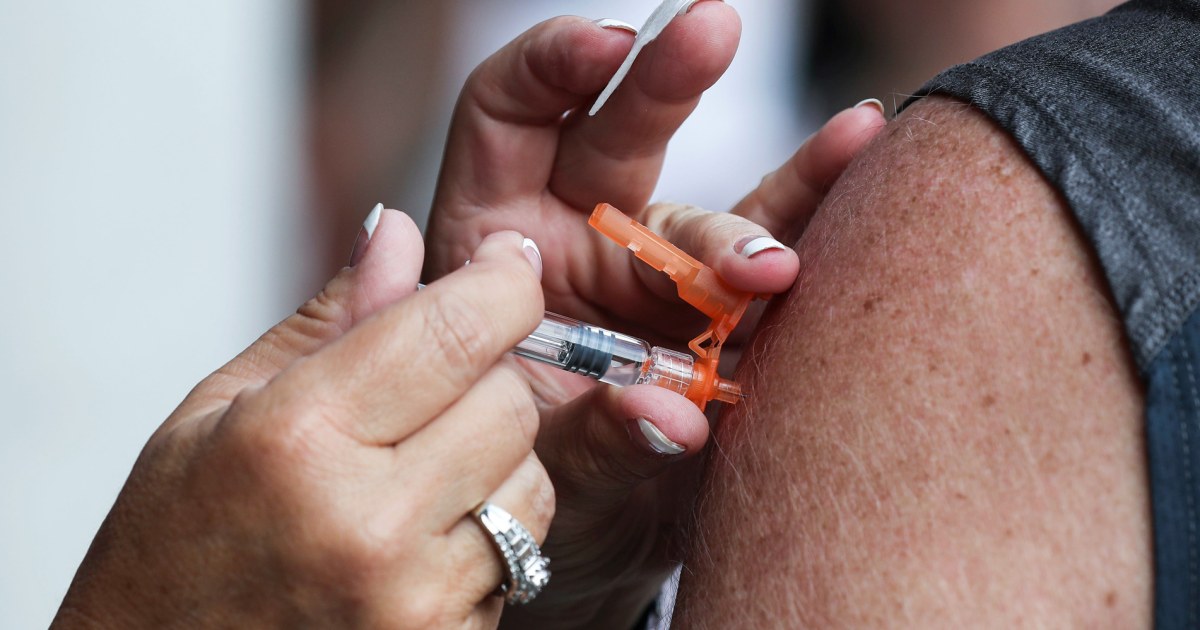
Amid declining vaccination rates across the United States, health officials are raising alarms over a resurgence in tetanus cases, the bacterial infection notorious for causing painful muscle spasms and a grim facial expression known as risus sardonicus. In 2024, the country reported 32 cases of tetanus, a sharp increase from the typical 15 to 28 cases seen in recent years. This year alone, at least 37 confirmed cases have been documented, marking the highest number in more than a decade, according to an investigation by NBC News and Stanford University.
The uptick comes as kindergarten vaccination rates for the diphtheria-tetanus-pertussis (DTaP) vaccine have fallen in more than 75% of U.S. counties and jurisdictions that provided data since 2019. The DTaP series, which protects against tetanus among other diseases, is recommended starting at two months of age for infants. Tetanus, caused by the Clostridium tetani bacterium found in soil and manure, spreads through puncture wounds rather than person-to-person contact, meaning there's no herd immunity to rely on. Lower vaccination coverage simply leaves more individuals vulnerable.
Doctors describe tetanus, often called lockjaw, as a devastating illness with symptoms appearing three to 21 days after exposure. Initial signs include muscle stiffness, progressing to severe spasms that can lock the jaw, arch the back, and impair breathing. "It looks terrible," said Dr. Mobeen Rathore, chief of pediatric infectious diseases and immunology at the University of Florida College of Medicine-Jacksonville. He recounted treating a 9-year-old unvaccinated boy in Florida this year who exhibited these spasms, requiring 37 days in the hospital. The child was sedated, intubated, and administered tetanus immune globulin and the vaccine to prevent future infections.
Treatment for tetanus is not only grueling but extraordinarily expensive. A 2019 case in Oregon involved a 6-year-old unvaccinated boy who incurred nearly $1 million in medical bills after contracting the disease from a puncture wound, as detailed in a Centers for Disease Control and Prevention report. Rathore emphasized the stark contrast in costs: "It’s not even pennies to dollars; it’s pennies to hundreds of thousands of dollars. It’s very expensive." He recalled tetanus wards from his medical school days, where patients endured dark, silent isolation to avoid triggers like noise or light that could provoke spasms—a challenge in modern, brightly lit intensive care units.
Historical data underscores the vaccine's impact. In 1948, when the tetanus vaccine was first combined with those for diphtheria and pertussis, the U.S. recorded 601 cases. Widespread vaccination efforts dramatically reduced incidences, but recent trends threaten that progress. Dr. Matthew Davis, enterprise physician-in-chief and chief scientific officer at Nemours Children’s Health in Florida and Delaware, noted that "it wasn’t until we had widespread vaccination that we saw a decline in cases of tetanus and thereby a reduction in the risk of mortality from it."
Personal stories highlight the human toll. Nikki Arellano, a 42-year-old from Reno, Nevada, hadn't received a tetanus booster since 2010. Last month, while helping set up a wedding altar, she suffered a minor cut from a metal arch. A week later, jaw pain made chewing difficult, and soon her mouth locked shut. "My jaw was completely locked shut," Arellano said. Rushed to the emergency room, sedatives, painkillers, and muscle relaxers failed to unlock it. Diagnosed with tetanus, she spent nearly a week hospitalized on intravenous antibiotics, enduring full-body spasms triggered by the IV pump's beeping. "Every time that it would run out, it was like a really, really loud beeping noise. When that started is when my muscle contractions would pop off," she recounted. The spasms arched her back painfully and made swallowing difficult, raising fears for her airway.
Experts point to multiple factors fueling the rise. Boosters are recommended every 10 years after the childhood series, yet many adults remain unaware. John Johnson, a vaccination and epidemic response adviser at Doctors Without Borders, who works in regions like the Democratic Republic of the Congo where tetanus persists, called the U.S. cases preventable. Last year, the DRC reported 540 cases, according to the World Health Organization. "It’s one of those things that’s so stupidly easy to prevent," Johnson said. "If you see one case of tetanus in the U.S., it’s a shame. There’s no reason we should be seeing this disease anymore."
Climate change adds another layer of risk, particularly in disaster-prone areas. Natural events like hurricanes, floods, and tornadoes increase exposure through injuries from debris such as nails or glass shards. Kristie Ebi, an epidemiologist and professor of global health at the University of Washington, explained that "as the Earth warms, there’s already a documented increase in the frequency, intensity and duration of many extreme weather and climate events." More floods combined with declining vaccinations heighten vulnerability to tetanus. States like Florida, Texas, and Kansas—frequently hit by such disasters—have seen notable drops in DTaP rates.
In Florida, which endured the most damage from billion-dollar weather events last year according to the National Centers for Environmental Information, kindergarten DTaP vaccination rates fell from 94.1% in the 2016-17 school year to 88.8% in 2024-25. Broward County, one of the areas most at risk from hurricanes, reported an 82.2% rate for the current school year. Rathore, based in Florida, expressed concern over a potential "post-vaccination era," adding, "It is unfortunate that the children are going to suffer."
Texas has faced major severe weather in recent years, and NBC News data indicates that 85% of its counties have recorded declines in kindergarten DTaP rates since 2019. Several central Texas counties show steep drops over the past decade. Kansas, averaging 81 tornadoes annually per the National Weather Service, also reports lower rates. In Ford County, which sees the most tornadoes in the state, 83.98% of kindergartners received the tetanus vaccine in the 2024-25 school year.
A recent case in Kansas illustrates the dangers. A 16-year-old unvaccinated boy suffered a foot puncture wound that his family initially treated at home with burdock leaves and bread mold. As spasms worsened and swallowing became difficult, he was hospitalized a week later. He spent 40 days in intensive care, receiving sedatives and muscle relaxants, but developed ventilator-associated pneumonia and bedsores. Physical and speech therapy followed, and while he got a tetanus vaccine during treatment, his family declined others upon discharge, according to the case report.
These incidents underscore the need for renewed focus on vaccination. Globally, tetanus remains a threat in under-vaccinated regions, but in the U.S., the resurgence signals a reversal of hard-won gains. Health experts urge parents and adults to ensure up-to-date shots, especially ahead of outdoor activities or in high-risk areas. As natural disasters become more frequent, the intersection of environmental changes and vaccine hesitancy could amplify outbreaks, prompting calls for public health campaigns to boost immunization rates.
While cases remain relatively low compared to historical peaks, any increase in a preventable disease like tetanus worries infectious disease specialists. Rathore and others hope education and access to vaccines can stem the tide before isolated incidents become widespread concerns. For now, the message is clear: a simple shot can prevent weeks of agony and life-threatening complications.