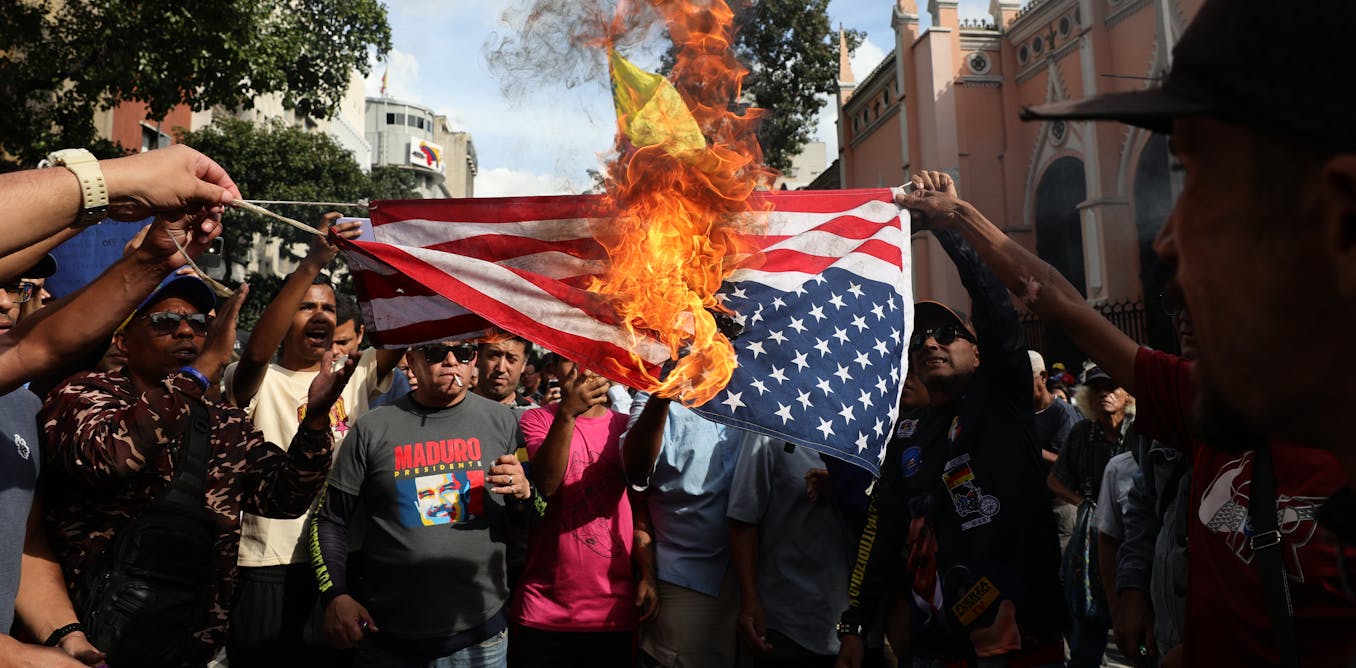
In a bold and controversial move, the United States under President Donald Trump launched a military operation on January 3 that resulted in the capture of Venezuelan President Nicolás Maduro, sparking widespread debate about international law and the future of global relations. The operation, which involved U.S. forces targeting Maduro's regime, has been described by critics as an act of regime change that could rewrite the rules of intervention in the Western Hemisphere. According to an analysis published by The Conversation, this intervention highlights the limitations of New Zealand's recent foreign policy shift toward closer alignment with Washington, forcing the country to confront a potential reckoning in its international stance.
The U.S. action in Venezuela did not come without warning. Reports indicate a military buildup in the region, coupled with a series of deadly U.S. attacks on alleged drug boats in the Caribbean and eastern Pacific beginning in September 2025. These incidents foreshadowed the larger operation, which Trump has framed as necessary to stabilize the oil-rich nation. In public statements, Trump has openly discussed U.S. companies' involvement in reviving Venezuela's oil industry, which holds the world's largest known oil reserves. "The US will 'run' Venezuela," Trump said, according to reports, until conditions allow for a "safe transition of power." The exact nature of this transitional governance remains unclear, with no detailed timeline or structure outlined by the administration.
New Zealand's response to the unfolding crisis has been measured but cautious. Foreign Minister Winston Peters issued a statement expressing concern, saying New Zealand "expects all parties to act in accordance with international law." This position reflects the government's broader approach under the National-led coalition, which has oriented foreign policy more closely toward the United States since taking office. However, Peters' optimism about adherence to legal norms has been questioned amid the apparent unilateral nature of the U.S. intervention.
The operation aligns with the Trump administration's National Security Strategy, released in December of the previous year, which emphasizes reestablishing U.S. dominance in the Western Hemisphere. Experts have likened this to an updated version of the 19th-century Monroe Doctrine, a policy that divided the world into spheres of influence controlled by major powers. Under this framework, the U.S. views Latin America, including Venezuela, as within its regional purview. The Conversation article notes that while many Venezuelans may welcome Maduro's departure—given his regime's reputation as dictatorial—the initial elation could sour if U.S. control imposes terms that prioritize American interests over local needs.
Legal challenges to the intervention are mounting on multiple fronts. Under the U.S. Constitution, only Congress holds the authority to declare war, yet there is little evidence that President Trump briefed lawmakers on plans for regime change in Venezuela. Internationally, the move appears to contravene the United Nations Charter, which prohibits interference in a sovereign state's domestic affairs absent a clear threat to international peace and security. In Venezuela's case, no such threat was formally established by the UN or other bodies. "Unilaterally removing Maduro from power is an act of war and apparently violates US federal as well as international law," states the analysis from The Conversation, underscoring the precedent this sets for global norms.
Supporters of the U.S. action, though not directly quoted in available reports, have pointed to Venezuela's economic collapse and humanitarian crisis as justification, arguing that Maduro's rule had already destabilized the region through migration and drug trafficking. The intervention's backers highlight the potential for economic revival, particularly in the oil sector, which could benefit not just the U.S. but global energy markets. Critics, however, warn that the "might is right" approach exemplified by Trump could exacerbate instability, especially if Venezuelan resistance to U.S. oversight leads to prolonged conflict.
For New Zealand, a small nation with a long history of advocating for multilateralism, the Venezuela crisis intersects with broader foreign policy dilemmas. Since World War II, successive governments in Wellington have championed a rules-based international order through institutions like the United Nations. Yet, the second Trump administration has shown "disregard, even contempt," for this worldview, according to The Conversation. This tension has manifested in New Zealand's subdued responses to other global issues, such as refraining from strong public solidarity with allies like Canada and Denmark amid territorial disputes involving the U.S., and maintaining silence on Israel's actions in Gaza and the West Bank.
The government's reluctance to recognize a Palestinian state and its hesitance to challenge Trump's trade protectionism further illustrate this accommodating stance. In the past 12 months, New Zealand has adopted a "low-key" approach alongside partners like Britain and Australia, hoping to moderate the "America First" agenda through quiet diplomacy. However, the Venezuela intervention suggests this strategy has limits, as it failed to influence U.S. policy even before the January events.
Beyond Venezuela, the U.S. action raises alarms about its ripple effects on other hotspots. Trump has sent mixed signals regarding Russia's invasion of Ukraine, with his antipathy toward Europe potentially favoring a settlement on Moscow's terms. Analysts question whether the administration would respond similarly to a hypothetical Chinese invasion of Taiwan, noting that the Venezuela precedent might embolden other superpowers to disregard smaller states' sovereignty. "Trump’s unilateral intervention in Venezuela will encourage similar actions elsewhere," warns the expert commentary, emphasizing that indifference is not an option for nations like New Zealand.
New Zealand's initial reaction to the crisis—a statement that it is "concerned by and actively monitoring developments in Venezuela and expects all parties to act in accordance with international law"—has been criticized as falling short of a firm position. This comes at a time when the country must navigate its alliances carefully. Closer ties with the U.S. offer security and economic benefits, particularly in the Indo-Pacific region, but they risk compromising New Zealand's commitment to inclusive global governance.
The Venezuela situation also ties into ongoing regional dynamics. Maduro's regime had faced international isolation for years, with sanctions from the U.S. and European allies exacerbating Venezuela's hyperinflation and food shortages. The January 3 operation, involving special forces raids in Caracas, reportedly met limited resistance, leading to Maduro's swift capture and relocation to an undisclosed U.S. facility. Venezuelan opposition leaders have expressed cautious support, but street protests in support of or against the change continue to roil the capital.
Economically, the stakes are high. Venezuela's oil reserves, estimated at over 300 billion barrels, represent a prize that could reshape global energy supplies if U.S. firms gain preferential access. Trump administration officials have hinted at contracts for American energy giants like ExxonMobil, though details remain speculative. This prospect has drawn praise from some quarters in Washington but condemnation from Latin American neighbors, who fear a return to era of U.S. hegemony.
As New Zealand grapples with these developments, calls are growing for a clearer foreign policy direction. The Conversation analysis frames this as a "moment of reckoning," where Wellington must choose between prioritizing alignment with a great-power-centric world or upholding a system where middle and small powers have a voice. Continuing the current path could erode credibility on the international stage, while a more assertive stance might strain relations with key partners.
Looking ahead, New Zealand officials are expected to convene discussions on the implications of the Venezuela intervention. Prime Minister Christopher Luxon has not yet commented directly, but sources within the government indicate internal debates about balancing alliance commitments with principled diplomacy. International observers, including UN Secretary-General António Guterres, have urged restraint and dialogue, though the U.S. has dismissed such calls as irrelevant to its security interests.
In the end, the capture of Maduro on January 3 marks not just a turning point for Venezuela but a test for the post-World War II order. For New Zealand, it underscores the challenges of navigating a world where unilateral power plays challenge established norms, prompting a reevaluation of how far the country is willing to go in accommodating its largest ally.