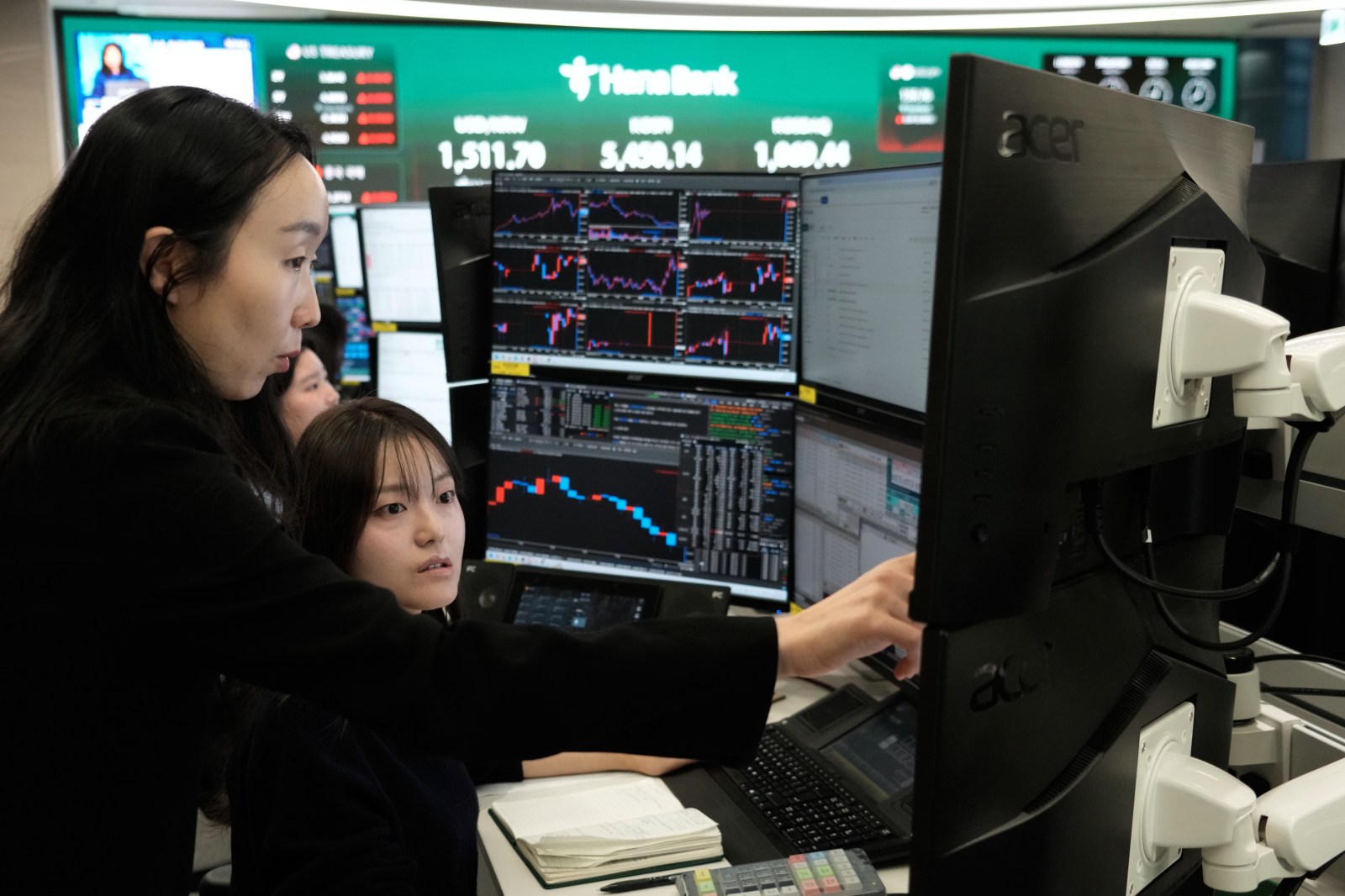
TOKYO — Asian stock markets that were open for trading on Monday mostly climbed higher, buoyed by cautious optimism even as investors kept a wary eye on escalating tensions in the Middle East, surging oil prices, and the latest pronouncements from U.S. President Donald Trump regarding the ongoing war in Iran.
The benchmark Nikkei 225 index in Japan rose nearly 1.1 percent to 53,692.42 during morning trading sessions. In South Korea, the Kospi index advanced 1.5 percent to 5,460.24. Trading remained halted in several key markets, including Australia for the Easter holiday and Hong Kong and Shanghai for a traditional Chinese holiday, limiting the regional picture but underscoring the patchy recovery amid global uncertainties.
At the center of investor concerns is the intensifying conflict in Iran, where U.S. forces have been engaged in military operations. President Trump has set a Tuesday deadline for Iran to reopen the Strait of Hormuz, a vital chokepoint for global oil shipments. According to reports from the region, the deadline has heightened fears that the war could escalate further if unmet, potentially disrupting international energy supplies even more severely.
Over the weekend, Trump issued additional threats against Iran, coinciding with continued bombing campaigns in the area. In a notable incident, the United States successfully rescued two aviators after their fighter jet was shot down by Iranian forces, according to Pentagon officials. The operation highlighted the risks faced by U.S. personnel and added to the narrative of a protracted conflict that shows no signs of abating.
Oil prices, a key barometer of the war's economic fallout, continued their upward trajectory on Monday. Benchmark U.S. crude oil futures gained 38 cents to settle at $111.92 per barrel, while Brent crude, the global pricing standard, rose $1.71 to $110.74 per barrel. Energy markets had been closed on Friday for Good Friday observances, but the prices have been on a sharp climb in recent days, driven by apprehensions that the Iranian conflict will extend beyond initial expectations and constrict supply routes.
The United States sources only a small fraction of its oil imports from the Persian Gulf region, but as a globally traded commodity, any disruptions ripple through worldwide markets. Countries like Japan, which import a substantial portion of their energy needs, are particularly vulnerable to closures in the Strait of Hormuz. Japanese officials have expressed concerns about potential shortages, with the nation's heavy reliance on the waterway making it a focal point for economic strategists in Tokyo.
"As we kick off the first full trading week of April, the word uncertainty is paramount," said Jay Woods, an analyst at Freedom Capital Markets in New York. "Last year it was centered on the impact of ‘Liberation Day’ tariffs, this year it’s uncertainty surrounding the ongoing Iranian War." Woods' comments capture the shift in global financial anxieties, from trade policies in previous years to geopolitical risks now dominating headlines.
U.S. stock markets, closed on Friday for Good Friday, are set to resume trading on Monday, providing a critical gauge of how Wall Street reacts to the latest developments. Some European exchanges also paused trading last week, but major bourses like those in London and Frankfurt are expected to open with similar caution. Analysts anticipate volatility as traders digest the oil surge and Trump's impending deadline.
The conflict's roots trace back several months, with U.S. involvement intensifying after Iranian forces targeted American assets in the Gulf. Trump's administration has framed the military actions as necessary to protect shipping lanes and counter Iranian aggression, though critics in international circles have called for diplomatic channels to be exhausted first. Iranian state media, meanwhile, has portrayed the U.S. moves as unprovoked invasions, vowing retaliation if the Strait remains blockaded.
Beyond equities and energy, currency markets reflected the unease. The U.S. dollar edged slightly higher against the Japanese yen, reaching 159.65 yen on Monday from 159.63 the previous session. The euro weakened marginally to $1.1509 from $1.1517, signaling a flight to safer assets amid the turmoil. These shifts, though modest, underscore how interconnected financial flows are with Middle Eastern stability.
For resource-dependent economies in Asia, the implications are profound. Japan's Prime Minister, in a statement over the weekend, emphasized the need for diversified energy sources to mitigate risks from the Hormuz Strait. South Korean officials echoed similar sentiments, noting that prolonged high oil prices could fuel inflation and slow export-driven growth in the region.
Looking ahead, the Tuesday deadline looms large. If Iran complies, it could ease some pressure on oil markets and boost sentiment; failure to do so might trigger further U.S. actions, according to military experts. Diplomatic efforts, including backchannel talks reported by sources in Washington, offer a sliver of hope, but skepticism abounds given the weekend's escalatory rhetoric.
The broader global economy faces a test of resilience. Last year's tariff battles under Trump's 'Liberation Day' initiatives had already strained supply chains; now, the Iranian War adds a layer of unpredictability that could push inflation higher and complicate central bank policies worldwide. Investors are bracing for what comes next, with eyes on both Tehran and the White House.
In Washington, AP Business Writer Matt Ott contributed to reporting on the energy markets' response. Yuri Kageyama, covering from Tokyo, highlighted the Asian markets' measured gains as a sign of guarded hope. As the week unfolds, the interplay between geopolitics and finance will remain front and center for markets around the world.
This story is developing, with updates expected as U.S. markets reopen and reactions to Trump's deadline emerge. For now, the rise in Asian shares offers a tentative bright spot in an otherwise tense landscape.