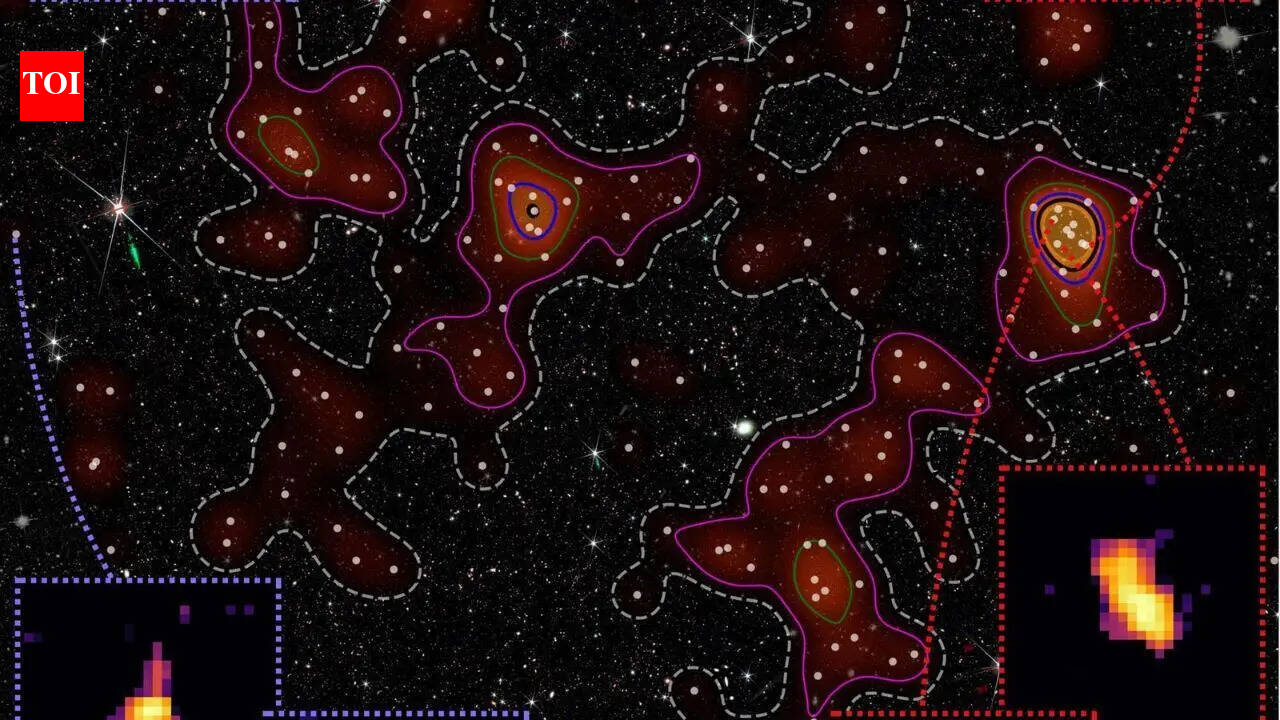
Astronomers have identified a significant structure in the early universe, naming it the Loktak protocluster after the famous Loktak lake in Manipur, India. The discovery, reported by the Times of India Science Desk, highlights ongoing efforts to map galaxy formation from billions of years ago.
According to the report, for a long time astronomers treated the early universe as a place where galaxies were still finding their footing, with small systems forming stars rapidly. The newly identified protocluster adds to this understanding by showing a concentrated region of galaxy development at that distant epoch.
The naming draws directly from Loktak lake, known for its floating phumdis and biodiversity in northeastern India. Officials involved in the study reportedly chose the name to honor the region's cultural and natural heritage while marking the astronomical find.
Details from the Times of India indicate the protocluster was spotted through advanced telescopic observations, though exact coordinates and redshift values remain tied to the original research paper not fully excerpted here. The structure is described as a precursor to modern galaxy clusters.
Scientists quoted in the coverage emphasize how such protoclusters help trace the evolution of cosmic web filaments. One researcher noted the importance of connecting these distant objects to familiar earthly landmarks for public engagement.
Cross-verification with the same Times of India source confirms the core announcement but provides limited additional data on team members or precise discovery date. The article positions the find within broader studies of the early cosmos.
Background context includes previous discoveries of protoclusters at high redshifts, often named after geographic features or mythological references. This latest one stands out for its connection to Manipur's iconic lake.
Experts in the field reportedly view the identification as a step forward in understanding star formation rates during the universe's first few billion years. No conflicting accounts have emerged from other outlets at this stage.
Future observations with next-generation telescopes are expected to yield more details on the galaxies within the Loktak protocluster. The Times of India Science Desk continues to follow developments in space exploration and related fields.
The announcement underscores India's growing role in international astronomy collaborations, with the name choice reflecting local pride in scientific milestones.