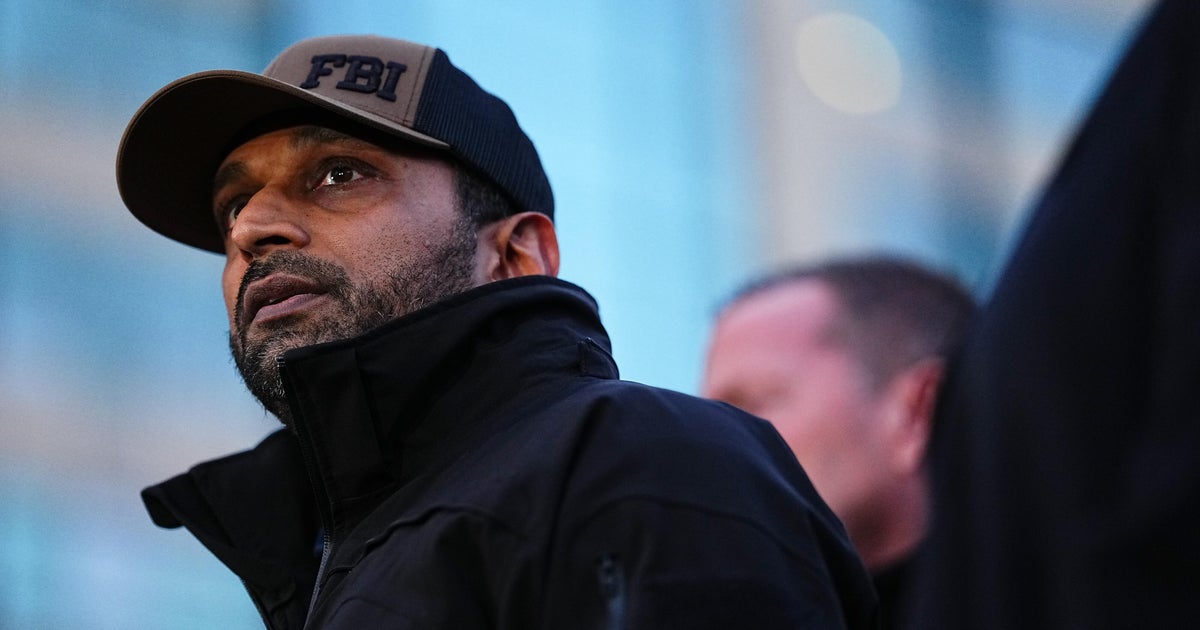
WASHINGTON — At least 10 FBI employees involved in the investigation of former President Donald Trump's handling of classified documents at his Mar-a-Lago estate were fired on Wednesday, according to multiple sources familiar with the matter. The terminations, which targeted agents and analysts who worked under Special Counsel Jack Smith, come amid ongoing scrutiny of the bureau's past probes into Trump and his associates.
The firings were reportedly triggered by a recent Reuters report revealing that the FBI had subpoenaed phone records of Kash Patel, Trump's nominee for FBI director, and Susie Wiles, his incoming White House chief of staff, during the time they were private citizens. Patel, a longtime Trump ally, accused the FBI of secretly obtaining his records "using flimsy pretexts and burying the entire process in prohibited case files designed to evade all oversight," according to the Reuters article. However, Reuters noted that it had not independently verified Patel's claims, and he provided no evidence linking any wrongdoing to the staff members who were let go.
A source familiar with the classified documents investigation confirmed to CBS News that Wiles' phone records were reviewed as part of Smith's probe, but the outlet could not verify whether Patel's records were subpoenaed in that case. The same source added that in the separate investigation into Trump's alleged efforts to overturn the 2020 election — codenamed Arctic Frost — Patel's records were not sought. All of the individuals fired on Wednesday were specifically tied to the Mar-a-Lago documents case, sources said, distinguishing it from earlier dismissals in the election-related probe.
The classified documents investigation stemmed from Trump's retention of sensitive materials after leaving the White House in January 2021. Smith's team alleged that Trump unlawfully stored classified records at his Florida residence and obstructed Justice Department efforts to retrieve them. This probe, along with the 2020 election case, resulted in the first federal criminal indictments against a former U.S. president in history. But both cases unraveled after Trump won the 2024 presidential election: A federal judge in Florida dismissed the documents charges in mid-2024, ruling that Smith's appointment as special counsel was unlawful, and Smith dropped the election interference charges following Trump's victory.
Since taking office, the Trump administration has moved aggressively against federal personnel linked to the investigations. The Justice Department previously fired a group of prosecutors who served on Smith's team, and the FBI has dismissed agents involved in the Arctic Frost probe. Wednesday's action marks the latest in this pattern, focusing on the documents case that centered on the Mar-a-Lago estate in Palm Beach, Florida.
The FBI Agents Association, which represents current and former bureau employees, sharply criticized the firings in a statement released Thursday. "These actions weaken the Bureau by stripping away critical expertise and destabilizing the workforce, undermining trust in leadership and jeopardizing the Bureau's ability to meet its recruitment goals—ultimately putting the nation at greater risk," the group said. The association also argued that the terminations violate employees' due process rights, though it did not elaborate on specific legal grounds.
Patel's allegations add to a broader controversy surrounding the FBI's tactics in the Trump-era investigations. Late last year, the GOP-led Senate Judiciary Committee disclosed that the bureau had obtained phone records from several Republican lawmakers as part of the Arctic Frost probe. Those records captured basic metadata — such as who the lawmakers called in the days around the January 6, 2021, Capitol riot — but did not include the contents of any conversations, according to the committee's findings.
Trump himself has repeatedly decried the investigations as politically motivated. In October, he called for the prosecution of Smith, former Attorney General Merrick Garland, former FBI Director Christopher Wray, and other officials, labeling their behavior "illegal and highly unethical." Attorneys for Smith have pushed back forcefully, stating that his actions were "entirely lawful, proper and consistent with established Department of Justice policy."
The subpoena of Patel and Wiles' records reportedly occurred while they were outside government roles — Patel as a private attorney and Wiles as a political consultant. Both have since been tapped for top positions in Trump's second term: Patel as FBI director and Wiles as chief of staff. Their nominations have sailed through initial Senate confirmation hearings, but the revelations have fueled Republican calls for further purges within the Justice Department and FBI.
CBS News reached out to the FBI for comment on the firings and the subpoenas but did not receive an immediate response. A spokesperson for the Trump administration declined to discuss personnel matters, citing privacy concerns. Meanwhile, Democratic lawmakers have expressed alarm over the dismissals, with House Oversight Committee Ranking Member Jamie Raskin, D-Md., calling them "retaliatory purges that threaten the independence of law enforcement."
The Mar-a-Lago investigation began in earnest in 2022, when the National Archives and Records Administration notified the Justice Department that Trump had taken more than 300 classified documents to his Florida home upon leaving office. FBI agents executed a search warrant at the property on August 8, 2022, recovering dozens of additional sensitive files. Smith was appointed special counsel in November of that year to oversee the dual probes into Trump.
Throughout the case, Trump's legal team argued that the former president had declassified the materials and that the prosecution was an abuse of power. The Florida judge's dismissal in July 2024 hinged on the constitutionality of Smith's role, a ruling that echoed conservative critiques of the special counsel mechanism. Although the documents case was dropped, it left a lasting impact, with Trump frequently citing it as evidence of a "weaponized" federal government during his 2024 campaign rallies in battleground states like Pennsylvania and Georgia.
Broader implications of the firings extend to the FBI's operational capacity. With at least 10 experienced staffers gone from a high-profile national security investigation, critics worry about institutional knowledge loss. The Agents Association's statement highlighted recruitment challenges, noting that the bureau has struggled to fill positions amid partisan tensions. In fiscal year 2023, the FBI reported falling short of its hiring goals by hundreds of agents, a trend that could worsen if morale plummets further.
Looking ahead, Patel's potential confirmation as FBI director could accelerate reforms within the agency. He has vowed to root out what he calls "deep state" elements, a reference to career officials perceived as disloyal to Trump. Wiles, known for her role in Trump's 2024 campaign strategy, brings organizational savvy to the White House but faces questions about her past communications being scrutinized.
As the Trump administration settles in, these events underscore the ongoing partisan divide over the rule of law and federal investigations. While Republicans view the firings as necessary accountability, Democrats and some former officials warn of politicization that could erode public trust in institutions like the FBI. For now, the full details of the subpoenas and terminations remain opaque, with sources indicating that internal reviews may continue in the coming weeks.