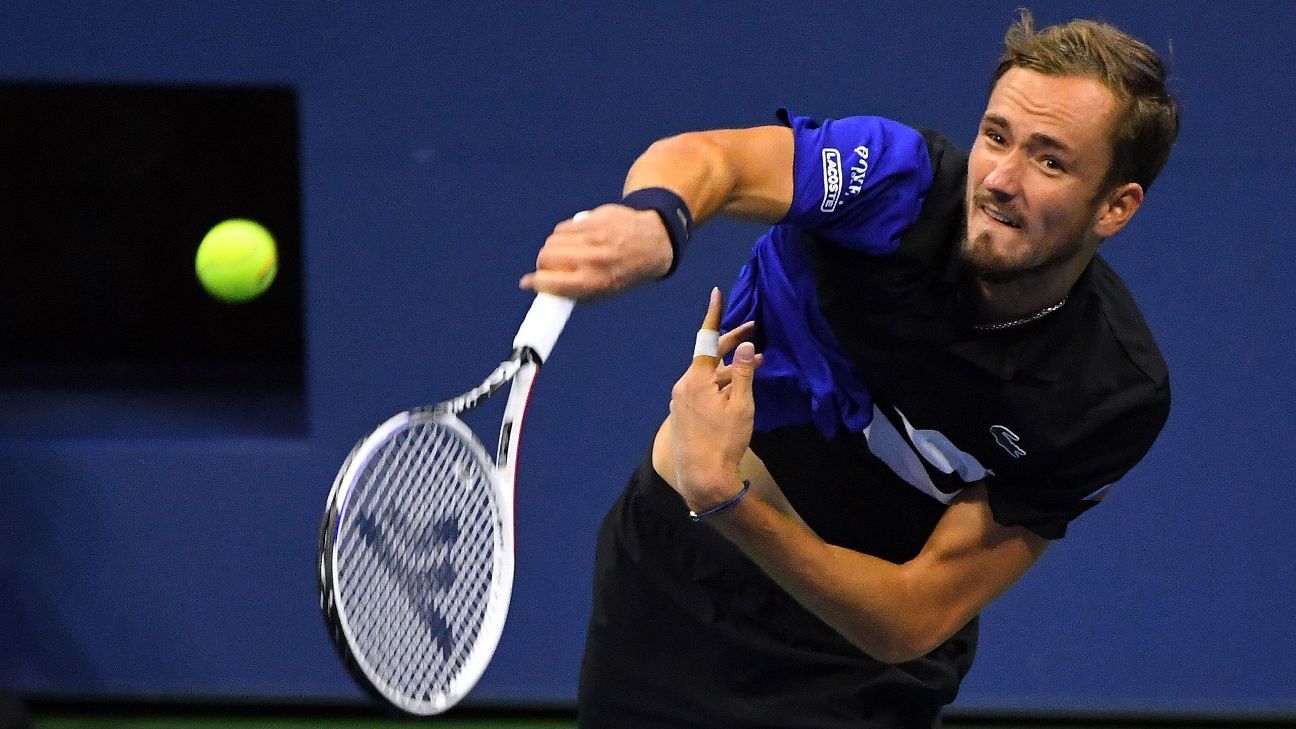
LONDON — As the war in the Middle East escalates, sending shockwaves through global travel networks, a handful of professional athletes find themselves stranded in Dubai, unable to depart for upcoming competitions. Former U.S. Open champion Daniil Medvedev is among them, having recently won the ATP 500 event in the United Arab Emirates but now facing widespread flight cancellations that have grounded his plans to head to California.
Medvedev, the Russian tennis star, reposted a report on his Instagram account on Monday from the Russian-language tennis outlet Bolshe, confirming he was safe and staying at a friend's apartment in Dubai. The post came amid reports of chaotic travel disruptions triggered by the ongoing conflict, which has led to the suspension of numerous flights across the region. According to the ATP Tour, a small number of players and team members remain in the city following the tournament's conclusion last week.
The ATP issued a statement on Monday emphasizing its commitment to those affected. "The health, safety and wellbeing of our players, staff and tournament personnel is our priority," the organization said. "We can confirm that a small number of players and team members remain in Dubai following the conclusion of the recent ATP 500 event."
Officials noted that the stranded individuals and their teams are being housed in the tournament's official hotels, where their immediate needs are being fully supported. This includes provisions for food, security, and other essentials as they await clearance to travel. Medvedev and the others are scheduled to compete at the BNP Paribas Open in Indian Wells, California, where main-draw matches are set to begin on Wednesday.
"We are in direct communication with those affected, as well as with tournament organizers and security advisors," the ATP continued in its statement. "At this stage, travel assessments remain subject to ongoing assessment in line with airline operations and official guidance. We will continue to provide appropriate support to ensure players and their teams can depart safely when conditions allow."
The situation in Dubai is part of a broader ripple effect from the Middle East conflict, which has intensified in recent days with military actions involving Israel, Iran, and other regional powers. Airlines such as Emirates and Etihad have canceled dozens of flights, citing safety concerns and airspace closures. Dubai International Airport, one of the world's busiest hubs, reported significant delays and diversions on Sunday and Monday, stranding thousands of passengers, including athletes preparing for international events.
Beyond tennis, the disruptions have hit other sports hard. England's and Pakistan's men's developmental cricket teams were in the United Arab Emirates over the weekend for a scheduled match that was ultimately canceled on Sunday. The England and Wales Cricket Board confirmed the postponement, stating that the teams were safely relocated to alternative accommodations while monitoring the situation.
In basketball, youth players participating in a EuroLeague tournament in the region encountered similar issues when the event was abruptly canceled over the weekend. Organizers cited the volatile security environment as the reason, with participants from across Europe left to navigate canceled flights and limited consular support. One parent, speaking anonymously to European media, described the scene at a Dubai hotel as "chaotic," with families huddled together awaiting updates from airlines.
Soccer has also been paralyzed in the area. Asian Champions League games involving teams from the Gulf states were put on hold indefinitely, and the Qatari league suspended all matches starting last Friday. The Qatar Football Association announced the decision in a brief statement, prioritizing player safety amid reports of incoming missile threats and airspace restrictions.
Even motorsports are reassessing plans. The governing body for Formula 1, the FIA, released a statement on Monday affirming its focus on "safety and wellbeing" as it evaluates upcoming races in the region. The next Grand Prix on the calendar is the Bahrain Grand Prix, scheduled for April 12-14, but organizers have not yet indicated any changes. Sources close to the FIA told Reuters that contingency plans are being drawn up, potentially including relocation or delays if the conflict persists.
The war's origins trace back to heightened tensions following the October 7, 2023, Hamas attacks on Israel and the subsequent Gaza conflict, which has now expanded to involve Hezbollah in Lebanon and Iranian proxies across the region. Recent escalations, including Israeli strikes on Iranian targets and retaliatory actions, have prompted international airlines to impose broad restrictions. The U.S. State Department issued a Level 4 travel advisory for parts of the Middle East on Sunday, urging Americans to avoid the area entirely.
For athletes like Medvedev, the timing could not be worse. The 28-year-old, who reached the U.S. Open final in 2021 and won the title in 2021 before losing it in 2022, had just claimed his second Dubai title last week, defeating Ugo Humbert in the final. His next match in Indian Wells is against qualifier Alexandre Muller, but arrival uncertainties loom large. Tournament director Tommy Haas told reporters on Monday that organizers are prepared to accommodate any delays, potentially adjusting the schedule if necessary.
Other tennis players have voiced concerns on social media. Australian star Alex de Minaur, who pulled out of Dubai due to injury, posted support for those stuck there, writing, "Stay safe everyone." Meanwhile, the Women's Tennis Association has not reported similar issues for its players, as the WTA tour's recent event in Dubai concluded earlier without noted travel snags for departures.
The International Olympic Committee has remained largely silent on the matter, but insiders suggest monitoring of regional qualifiers for the 2024 Paris Games, some of which are hosted in the Middle East. Broader implications extend to amateur sports as well; a youth soccer tournament in Abu Dhabi was canceled, affecting over 1,000 young athletes from 20 countries.
As the conflict shows no immediate signs of abating, sports organizations worldwide are scrambling to balance competition calendars with participant safety. The ATP's proactive stance in Dubai offers a model, but experts warn that prolonged disruptions could lead to forfeited matches and financial losses in the millions. For now, Medvedev and his peers wait, their athletic pursuits paused by geopolitical forces far beyond the court.
In a region long known as a hub for international sports events—hosting everything from the Dubai World Cup horse race to the Abu Dhabi Grand Prix—the war marks a stark interruption. Officials from the UAE's National Emergency Crisis and Disasters Management Authority reported on Monday that all sports facilities remain secure, but travel remains the primary bottleneck. As airlines tentatively resume some routes, hope flickers for a swift resolution, allowing athletes to refocus on the game.