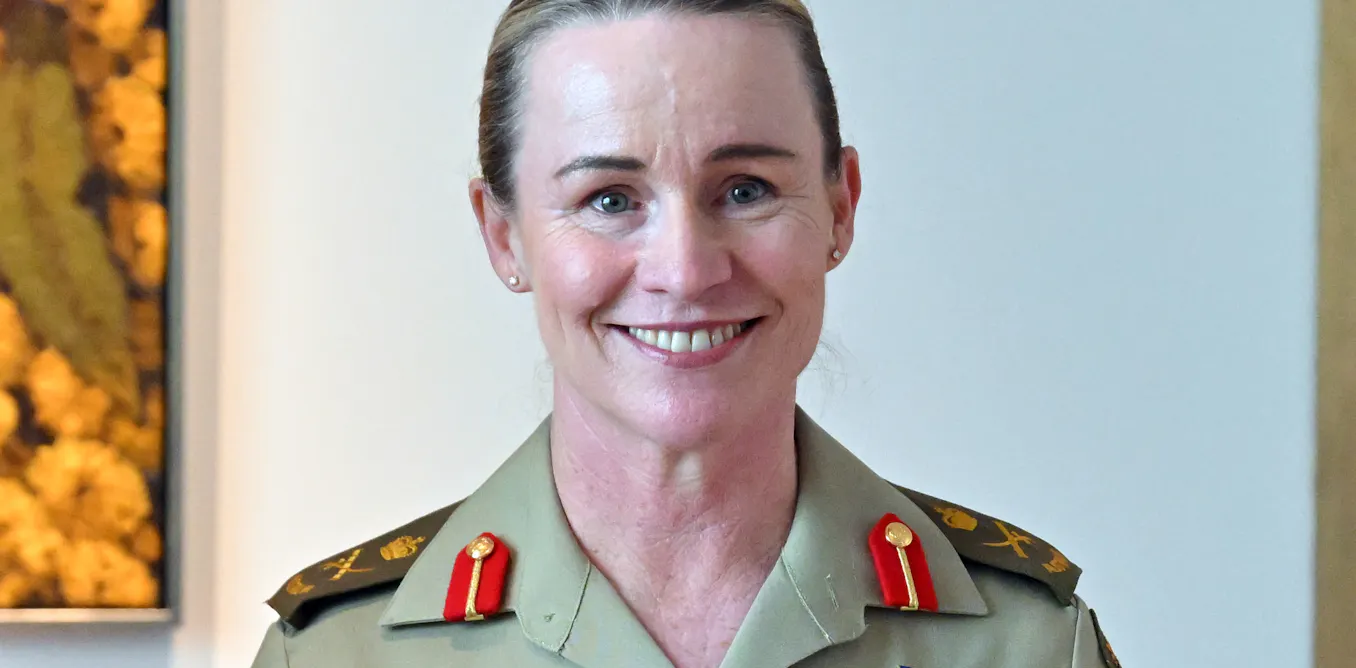
In a historic milestone for the Australian Defence Force, Prime Minister Anthony Albanese announced on Monday the appointment of Lieutenant General Susan Coyle as the nation's first female chief of army. The move marks the first time a woman has been named head of any of the Australian military's three services, signaling a significant step toward gender diversity in the country's top military leadership. Coyle, currently serving as chief of joint capabilities, will assume the role in July, replacing Lieutenant General Rick Burr.
The announcement came ahead of the government's planned unveiling of its 2026 statement on defence strategy and investment later this week. Albanese highlighted the appointments as part of a broader effort to strengthen Australia's military posture amid evolving regional security challenges. "These appointments reflect the depth of talent in our Defence Force and our commitment to building a capable and adaptable military," Albanese said during a press conference in Canberra.
Coyle's extensive career spans nearly four decades, beginning with her enlistment in the Army Reserves in 1987. She has held command positions at tactical, operational, and strategic levels, including as commander of the Task Group in Afghanistan and commanding officer of the 17th Signal Regiment. Her diverse experience, from frontline operations to high-level planning, positions her uniquely for the army chief role, according to defence analysts.
Defence Minister Richard Marles emphasized the broader implications of Coyle's appointment for women in the military. "This is deeply significant not just for women currently serving in the ADF, but for those considering a career in defence in the future," Marles said. He noted that Coyle's rise comes at a time when the Australian Defence Force has been actively working to increase female representation, with women now comprising about 20 percent of personnel across all services.
Alongside Coyle's appointment, Vice Admiral Mark Hammond, the current chief of navy, was named as the new chief of the Defence Force, succeeding Admiral David Johnston. Hammond, who has commanded submarines and the Australian fleet since taking over as navy chief in 2022, brings specialized naval expertise to the top post. This marks the second consecutive naval officer to lead the ADF, a choice seen as particularly relevant given Australia's commitments under the AUKUS security pact with the United States and the United Kingdom.
The AUKUS agreement, announced in 2021, focuses on enhancing Australia's naval capabilities, including the acquisition of nuclear-powered submarines. Hammond's background in submarine operations is expected to guide the implementation of these initiatives, which are projected to cost tens of billions of dollars over the coming decades. Officials have stressed that the appointments align with the need to address growing strategic tensions in the Indo-Pacific region.
Rear Admiral Matthew Buckley will step up as the new chief of navy, promoted from his current role as deputy chief. Buckley, a career naval officer with experience in fleet operations and international deployments, will oversee the navy's ongoing modernization efforts. The trio of appointments, effective from July 1, were selected following a rigorous merit-based process, according to a spokesperson for the Department of Defence.
During the press conference, Hammond addressed recent international developments, particularly Australia's readiness to support allies in potential hotspots. He confirmed that the navy possesses the capability to respond to any United States request for assistance in the Strait of Hormuz, though no such request has been made. "We’ve got 10 surface combatants right now, eight of them are at sea today. The navy is ready as it ever has been," Hammond said, underscoring the force's operational tempo.
The Strait of Hormuz, a critical chokepoint for global oil shipments, has been a focal point of tension amid ongoing conflicts in the Middle East. Albanese, speaking to the ABC earlier in the day, clarified that Australia had not received any formal ask from the U.S. regarding a potential blockade proposed by former President Donald Trump. "I want to see the resumption of peace talks. We want to see an end to this conflict. It’s having a devastating impact on the global economy, and the longer it goes, the bigger the impact will be, and the longer the tail will be, as well," Albanese stated.
Australia's military leadership transitions occur against a backdrop of increased defence spending. The government has committed to reaching 2.4 percent of GDP on defence by the mid-2020s, up from current levels around 2 percent. This includes investments in long-range strike capabilities, cyber defence, and joint operations, all areas where Coyle has demonstrated expertise during her tenure as chief of joint capabilities.
Coyle's appointment has been met with praise from military advocacy groups focused on gender equality. The Australian Women in Defence Network described it as "a landmark achievement that will inspire the next generation of servicewomen." However, some commentators have noted ongoing challenges, such as cultural barriers and retention rates for female personnel, which persist despite policy reforms introduced in recent years.
The timing of the announcements is no coincidence, coming just days before Albanese's departure on Tuesday for a fuel diplomacy trip to Brunei and Malaysia. The visit follows a similar trip to Singapore last week and aims to bolster energy security ties in Southeast Asia amid global supply disruptions. Officials said the prime minister would discuss defence cooperation and regional stability during the engagements.
Looking ahead, the new military chiefs will play pivotal roles in shaping Australia's response to emerging threats, including cyber warfare and climate-related security risks. The 2026 defence strategy, set for release this week, is expected to outline priorities such as enhancing interoperability with allies under frameworks like the Quadrilateral Security Dialogue, which includes Australia, the U.S., Japan, and India.
As Australia navigates these complex dynamics, Coyle's leadership is anticipated to bring fresh perspectives to army operations, particularly in areas like personnel welfare and technological integration. Her predecessors have overseen major reforms, including the integration of women into all combat roles since 2013, a policy that Coyle helped implement during her career.
In summary, the appointments represent not only a personal triumph for Coyle and her colleagues but also a forward-looking strategy for the Australian Defence Force. With regional tensions simmering and global alliances deepening, the new leadership team faces the task of ensuring Australia's military remains agile and prepared for an uncertain future.