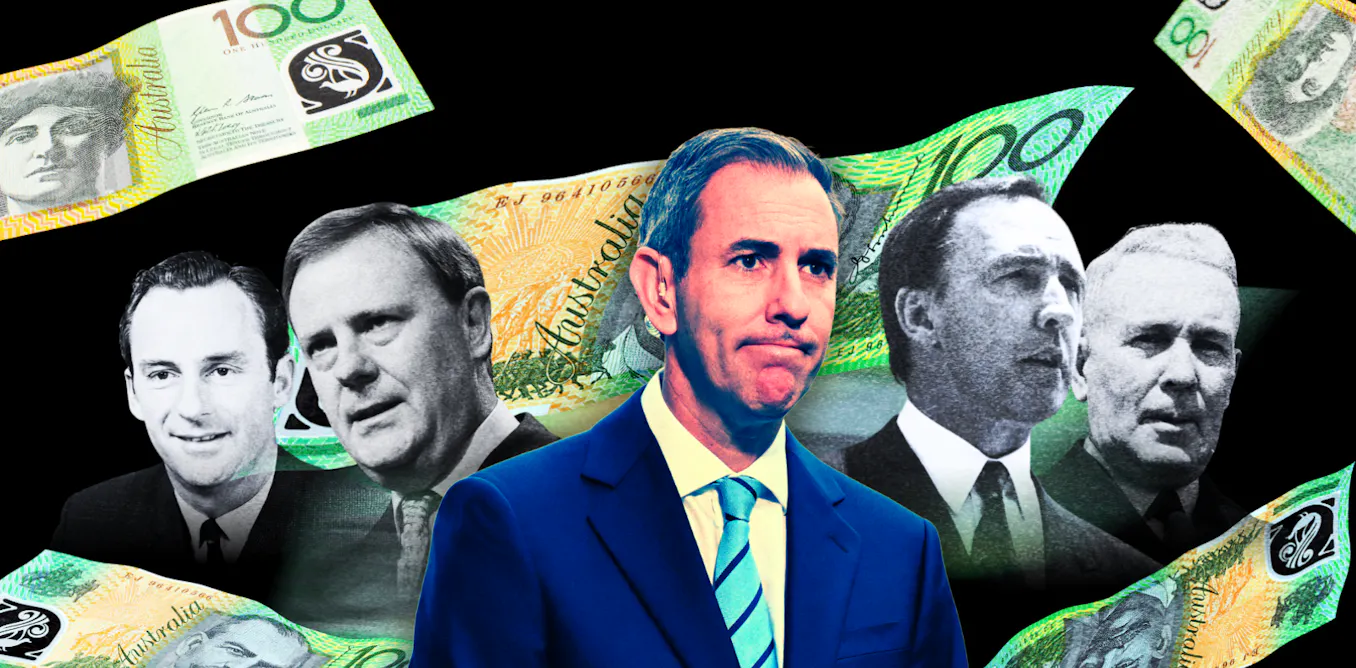
Treasurer Jim Chalmers unveiled his fifth budget this week amid escalating global tensions and domestic economic pressures, prompting comparisons to landmark Australian budgets that reshaped the nation's economy over the past eight decades. The 2026 budget introduces changes to negative gearing, capital gains tax and trusts, yet analysts describe it as incrementally reformist rather than a full-scale overhaul like several predecessors.
Four budgets since World War II stand out for driving significant economic reform, according to historical reviews. These include Ben Chifley's 1942 effort, Bill Hayden's in 1975, Paul Keating's 1989 package and Peter Costello's first budget in 1996. Joe Hockey's 2014 attempt fell short due to political resistance, leaving subsequent governments more cautious about bold moves.
Chifley's 1942 budget supported Australia's wartime mobilization after Japan's attacks on Pearl Harbor and Darwin. Military spending climbed to roughly 34 percent of gross domestic product. It also centralized income taxation at the federal level and created the National Welfare Fund to underpin social services such as unemployment benefits and child endowment.
Hayden's 1975 budget arrived after the Bretton Woods system collapsed and amid the oil shock that triggered stagflation. Inflation reached about 17 percent while unemployment rose from 2 percent to 5 percent. The budget introduced Medibank, Australia's first universal healthcare system that evolved into Medicare, and signaled a shift away from traditional Keynesian approaches.
"Today, it is inflation itself which is the central policy problem – more inflation simply leads to more unemployment."
Hayden's measures halved the growth in government spending and urged wage restraint to stabilize the economy. Keating's 1989 budget sought to lock in reforms from the Hawke era, including the floating of the Australian dollar, financial deregulation and tariff reductions. It was the one Keating said would "bring home the bacon" as earlier changes began to deliver results, though spending cuts contributed to the early 1990s recession.
Costello's 1996 budget tackled a $9 billion deficit through spending reductions and asset sales, paving the way for a decade of surpluses. Prime Minister John Howard later called it "the most important of all budgets" delivered during his nearly 12 years in office and "the best and bravest in 25 years." The groundwork helped enable the introduction of the Goods and Services Tax in 2000.
Hockey's 2014 budget aimed to eliminate a $37.9 billion deficit with deep cuts to health, education and social services. Critics labeled it a budget of "broken promises," and Senate opposition blocked or altered many provisions. Its main legacy was to discourage later governments from pursuing major structural changes.
Chalmers developed the current budget against a backdrop of severe energy shocks from the Middle East conflict and fracturing international economic orders established after World War II. Domestically, productivity growth has slowed, housing costs have surged and long-term fiscal pressures have mounted alongside climate risks.
The 2026 measures target negative gearing, capital gains and trusts, yet they fall short of the scale seen in earlier transformative budgets. Taxation adjustments remain less sweeping than the Howard-era GST and less fundamental than the broad liberalization of the 1980s and 1990s.
Future reformist budgets after 2026 could address resource taxation, introduce a carbon tax or revive public housing initiatives from the Chifley period that offered low-interest loans to states for rental stock. Officials have not confirmed timelines for such steps.
Economists note that Chalmers' approach reflects caution shaped by past political setbacks. The budget balances immediate cost-of-living relief with targeted structural tweaks while avoiding the deeper disruptions that defined previous eras of change.