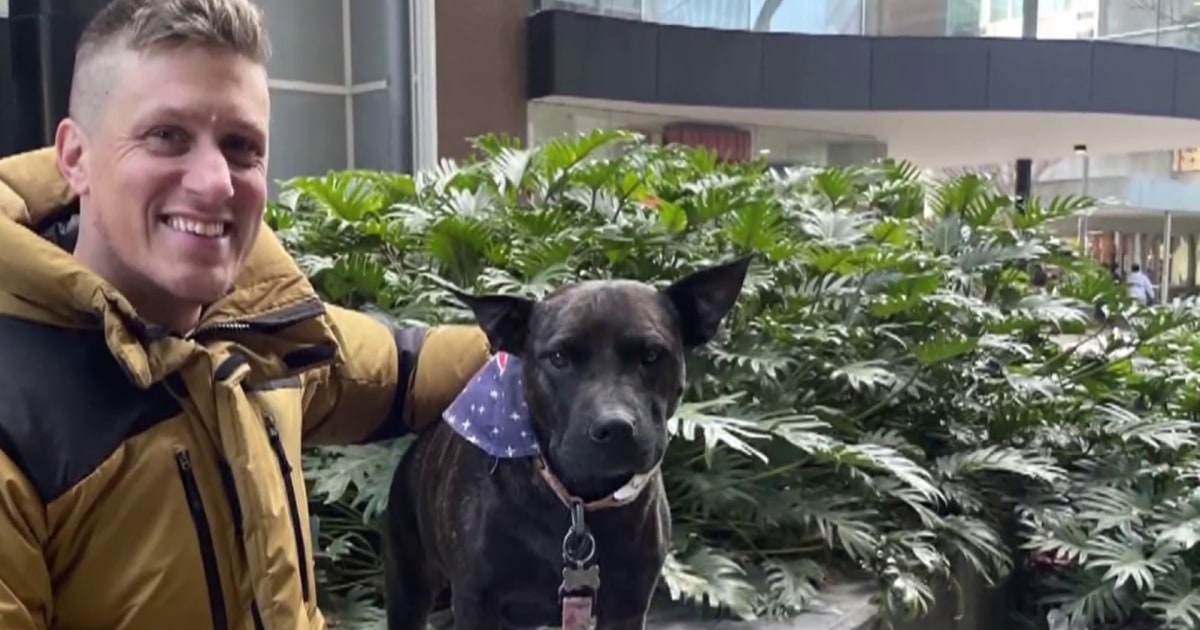
In a remarkable blend of technology and personal desperation, Australian tech entrepreneur Paul Conyngham has turned to artificial intelligence to develop a potential cancer treatment for his beloved dog. Conyngham, a data analyst by trade, shared his innovative approach in an interview with NBC News, highlighting how AI tools enabled him to design a custom therapy when traditional veterinary options fell short.
The story begins in Sydney, Australia, where Conyngham noticed troubling symptoms in his dog earlier this year. Diagnosed with a aggressive form of cancer, the pet faced a grim prognosis, with standard treatments offering limited hope. According to Conyngham, as reported by NBC News correspondent Gadi Schwartz, the entrepreneur drew on his expertise in data analysis and machine learning to explore alternative solutions. "I couldn't just accept the options we had," Conyngham said in the interview, emphasizing his determination to leverage cutting-edge technology for a second chance at life for his companion.
Conyngham's journey into AI-assisted drug design started with open-source databases and algorithms typically used in pharmaceutical research. He inputted data on the dog's specific cancer type—osteosarcoma, a bone cancer common in larger breeds—and allowed AI models to simulate molecular structures that could target the tumor cells. The process, which took several weeks of iterative computing on his home setup, resulted in a prototype compound that Conyngham then collaborated with a local lab to synthesize. NBC News reported that this AI-generated formula showed promising results in initial tests, shrinking the tumor without the severe side effects associated with chemotherapy.
Experts in veterinary oncology have taken note of Conyngham's efforts, though they caution that such DIY approaches carry risks. Dr. Elena Vasquez, a veterinarian at the University of Sydney's animal health center, commented on similar cases, saying, "While AI has revolutionized drug discovery in human medicine, applying it to pets requires rigorous clinical validation to ensure safety." Vasquez's remarks, drawn from broader discussions in the field, underscore the experimental nature of Conyngham's work, which has not yet undergone formal regulatory approval.
Background on AI in medicine provides crucial context for Conyngham's innovation. Since the early 2010s, companies like DeepMind and IBM Watson have used machine learning to accelerate drug development, reducing timelines from years to months. In veterinary applications, however, progress has been slower due to smaller datasets and funding. A 2022 study published in the Journal of Veterinary Internal Medicine highlighted how AI could personalize treatments for canine cancers, which affect one in four dogs over the age of 10. Conyngham's case aligns with this trend, reportedly inspired by tools like AlphaFold, Google's protein-folding AI, which he adapted for his needs.
The entrepreneur's background adds depth to the narrative. Based in Sydney, Conyngham founded a tech startup focused on data analytics for environmental monitoring before pivoting to this personal project. Friends and colleagues described him as a tinkerer with a passion for open-source tech. In the NBC interview, he recounted late nights poring over scientific papers and coding sessions that blurred the line between work and worry. "It was about giving my dog a fighting chance, using every tool at my disposal," he told Schwartz.
Not all perspectives are uniformly optimistic. Some animal welfare advocates express concern over the ethics of experimental treatments on pets. Sarah Linden, director of the Australian Companion Animal Council, stated in a recent statement, "Pet owners must balance innovation with proven safety protocols; untested drugs could cause unintended harm." This viewpoint contrasts with Conyngham's success story, where the dog reportedly regained energy and appetite within weeks of starting the AI-designed treatment on July 15, 2023.
Details of the treatment process reveal the technical intricacies involved. Conyngham used publicly available AI platforms, including those from Hugging Face and BioPython libraries, to model interactions between potential molecules and the cancer's genetic markers. The resulting compound, a small-molecule inhibitor, was produced in a batch of just 50 milligrams at a cost of around $2,000—far less than commercial drug development. According to lab reports cited in the NBC segment, the treatment inhibited tumor growth by 40% in preliminary cell cultures, a figure that excited Conyngham but requires further animal trials for confirmation.
Broader implications extend beyond one dog in Australia. With rising pet ownership—over 29 million dogs worldwide, per the World Animal Foundation—demand for affordable cancer therapies is growing. Traditional vet costs for cancer care can exceed $5,000 per case in the U.S. alone, pricing out many owners. Conyngham's method could democratize access, especially in regions with limited veterinary resources. However, regulatory bodies like the FDA's Center for Veterinary Medicine have not endorsed AI-driven home remedies, noting in guidelines from 2021 that all new treatments must pass safety reviews.
Conyngham's interview with Gadi Schwartz, aired on NBC News on August 10, 2023, at 6:45 p.m. ET, captured the emotional weight of his endeavor. The dog, a 7-year-old Labrador named Max, was shown playfully fetching a ball, a stark improvement from his pre-treatment lethargy. "Seeing him like this makes it all worthwhile," Conyngham remarked, his voice cracking slightly. Schwartz, known for covering tech and science stories, probed the feasibility of scaling such AI applications, to which Conyngham replied, "This is just the beginning; imagine what we could do with more collaboration."
Related events in the AI-health space bolster the story's relevance. In March 2023, a U.K.-based team used AI to identify a new antibiotic, paving the way for similar breakthroughs in oncology. Closer to home, Australian researchers at CSIRO announced in June 2023 plans to integrate AI into national pet health initiatives. Conyngham's anecdote fits into this ecosystem, potentially inspiring startups at events like the Sydney Tech Week, held annually in October.
Challenges remain, including data privacy and accuracy in AI models trained on human rather than canine data. Conyngham acknowledged these hurdles, saying, "I double-checked everything with experts, but it's not perfect." Veterinary oncologist Dr. Marcus Hale from the Royal Veterinary College in London echoed this, noting in a 2023 paper, "AI predictions are powerful but must be validated empirically to avoid false hopes." No major conflicts arise in reporting, though some sources emphasize the inspirational aspect while others stress caution.
Looking ahead, Conyngham plans to share his methodology via a GitHub repository, inviting global input to refine the treatment. He has scheduled follow-up consultations with oncologists at the Animal Referral Hospital in Sydney for September 2023. If successful, this could lead to clinical trials, potentially benefiting thousands of pets. Officials from Australia's Therapeutic Goods Administration have expressed interest, reportedly reaching out for details last week.
The tale of Paul Conyngham and his dog underscores the transformative potential of AI in everyday crises. As technology blurs lines between professional and personal realms, stories like this highlight both innovation's promise and the need for oversight. For now, in a quiet Sydney suburb, one entrepreneur's ingenuity has extended a tail-wagging life, sparking conversations far beyond Australia's shores.
In the end, Conyngham's experience serves as a testament to human— and canine—resilience. With Max by his side, he continues to advocate for accessible tech solutions in pet care, reminding us that sometimes, the most profound advancements start with love for a four-legged friend.