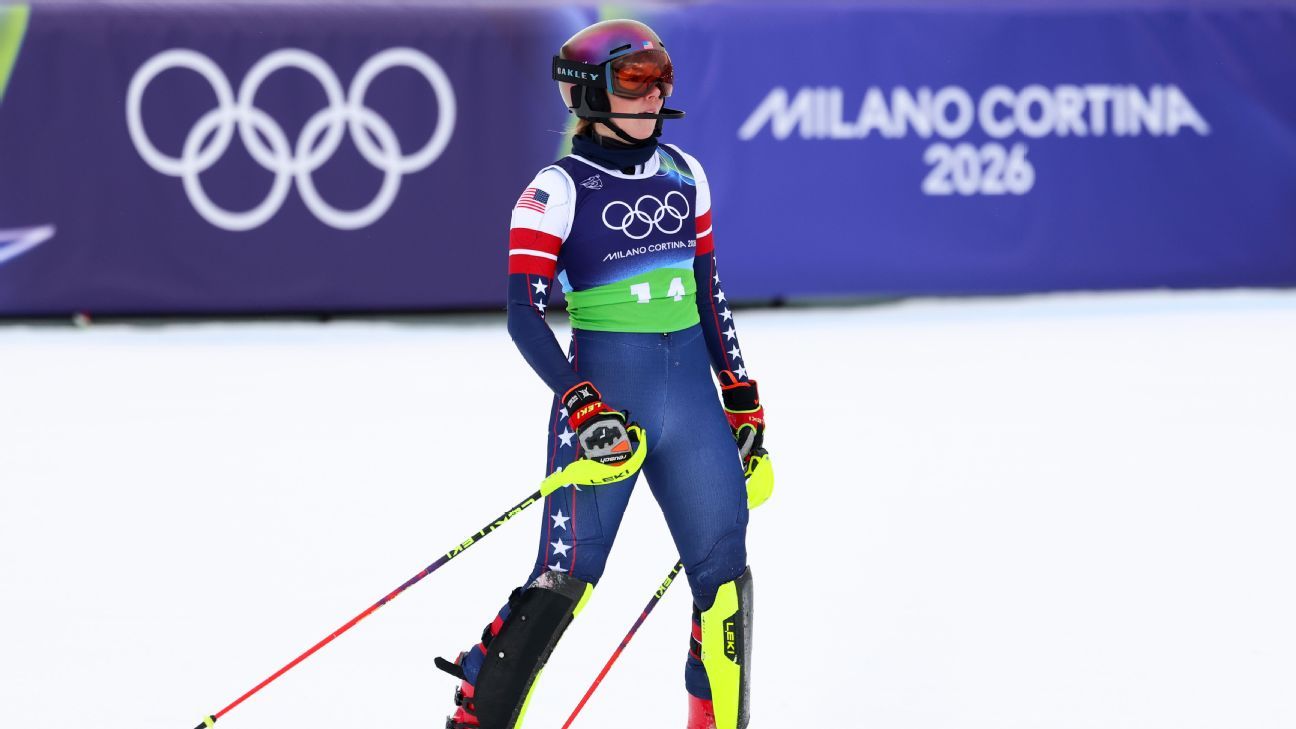
CORTINA D'AMPEZZO, Italy — Austria claimed the gold medal in the inaugural Olympic team combined skiing event on Tuesday at the Milan Cortina Olympics, edging out Germany for the top spot while the United States secured bronze despite a disappointing finish from star skier Mikaela Shiffrin.
The team combined event, a new addition to the Olympic program, pairs one skier in the downhill discipline with another in slalom, combining their times to determine the national team's overall result. Ariane Raedler and Katharina Huber represented Austria, delivering a strong performance that capitalized on the course conditions in the Dolomites. Their combined effort bested Kira Weidle-Winkelmann and Emma Aicher of Germany, who took silver, by a narrow margin.
For the U.S., Paula Moltzan and Jacqueline Wiles earned the bronze, finishing just ahead of Shiffrin's individual contribution. Shiffrin, competing in the slalom leg after teammate Breezy Johnson's downhill run, surprisingly dropped to fourth place overall for the American squad. Johnson had provided a solid lead from the downhill, where she recently won gold in the individual event, but Shiffrin lost time at every checkpoint during her slalom descent.
Shiffrin crossed the finish line 0.31 seconds behind the leaders, ultimately missing the podium by 0.06 seconds compared to her teammates' combined time. In the finish area, Johnson embraced Shiffrin amid the celebrations from the Austrian and German teams, a moment that highlighted the camaraderie within the U.S. delegation despite the mixed results.
Shiffrin, widely regarded as one of the greatest alpine skiers in history, entered the event with high expectations. According to ESPN reports, she holds the record for the most World Cup victories with 108, including a staggering 71 in slalom alone. Her Olympic pedigree includes two golds and a silver from her first two Games appearances in Sochi and PyeongChang, but she has struggled to replicate that success in recent cycles.
Four years ago at the Beijing Olympics, Shiffrin competed in six events without securing a medal, a drought that has now extended to seven straight Olympic races without hardware. Officials with the U.S. Ski and Snowboard team noted that the pressure of the Games has been a factor, though Shiffrin has remained focused on her individual pursuits.
The Milan Cortina Olympics, held in the Italian Alps, mark the first time the team combined event has appeared on the program, designed to showcase national depth in both speed and technical disciplines. The downhill portion took place on a challenging course in Cortina d'Ampezzo, known for its steep pitches and historical significance as the host of the 1956 Winter Games. The slalom followed on a nearby hill, testing precision under variable snow conditions.
Breezy Johnson's downhill performance was pivotal for the U.S., building on her recent individual gold that boosted American morale heading into the team event. Sources close to the team said Johnson's aggressive line choices in the morning run gave Shiffrin a buffer of several tenths of a second, but the slalom proved unforgiving. Shiffrin, who thrives in slalom, appeared to push too hard early, leading to minor errors that cost her crucial time.
Austrian team officials expressed delight at the victory, calling it a testament to their program's emphasis on versatility. Raedler, the downhill specialist, posted one of the fastest times of the day, while Huber anchored the slalom with a clean, efficient run. The German silver medalists, Weidle-Winkelmann and Aicher, were gracious in defeat, with reports indicating they were just 0.12 seconds off the pace.
The U.S. bronze adds to America's medal tally in alpine skiing at these Games, where the team has shown strength in speed events. Moltzan and Wiles, both veterans of the World Cup circuit, complemented each other well, with Moltzan's steady slalom offsetting Wiles' solid downhill. According to event organizers, the team format encourages collaboration, and the Americans demonstrated that resilience even as Shiffrin's result tempered the achievement.
Shiffrin's Olympic struggles have been a topic of discussion among skiing insiders. Despite her dominance on the World Cup tour — where she has won more races than any other skier, male or female — the five-ring pressure has eluded her lately. Beijing's challenging courses and personal setbacks, including a crash in the giant slalom, contributed to her medal-less outing there, and Tuesday's result continues that narrative.
Looking ahead, Shiffrin has opportunities to rebound in her signature events. The giant slalom is scheduled for later this week, followed by the slalom, where her record 71 victories give her a strong edge. U.S. coaches have emphasized that the team event was experimental for her, and she remains a favorite for individual gold.
The broader context of the Milan Cortina Olympics underscores the evolution of alpine skiing, with team events like this one aiming to increase spectator engagement and national rivalries. Italy's hosting brings back memories of past Games, and the weather — crisp and clear on Tuesday — favored the competitors. International Ski Federation officials reported smooth operations, with no major incidents during the combined event.
As the medals are awarded, the focus shifts to the ongoing competitions. Austria's gold bolsters their status as a powerhouse in the sport, while the U.S. bronze keeps them competitive. For Shiffrin, the path forward involves channeling this experience into her remaining races, where history suggests she could still shine.
In the end, Tuesday's team combined event highlighted the unpredictable nature of Olympic skiing, where individual brilliance meets team dynamics. With more events on the horizon, athletes from all nations continue to chase glory on the slopes of Cortina d'Ampezzo.