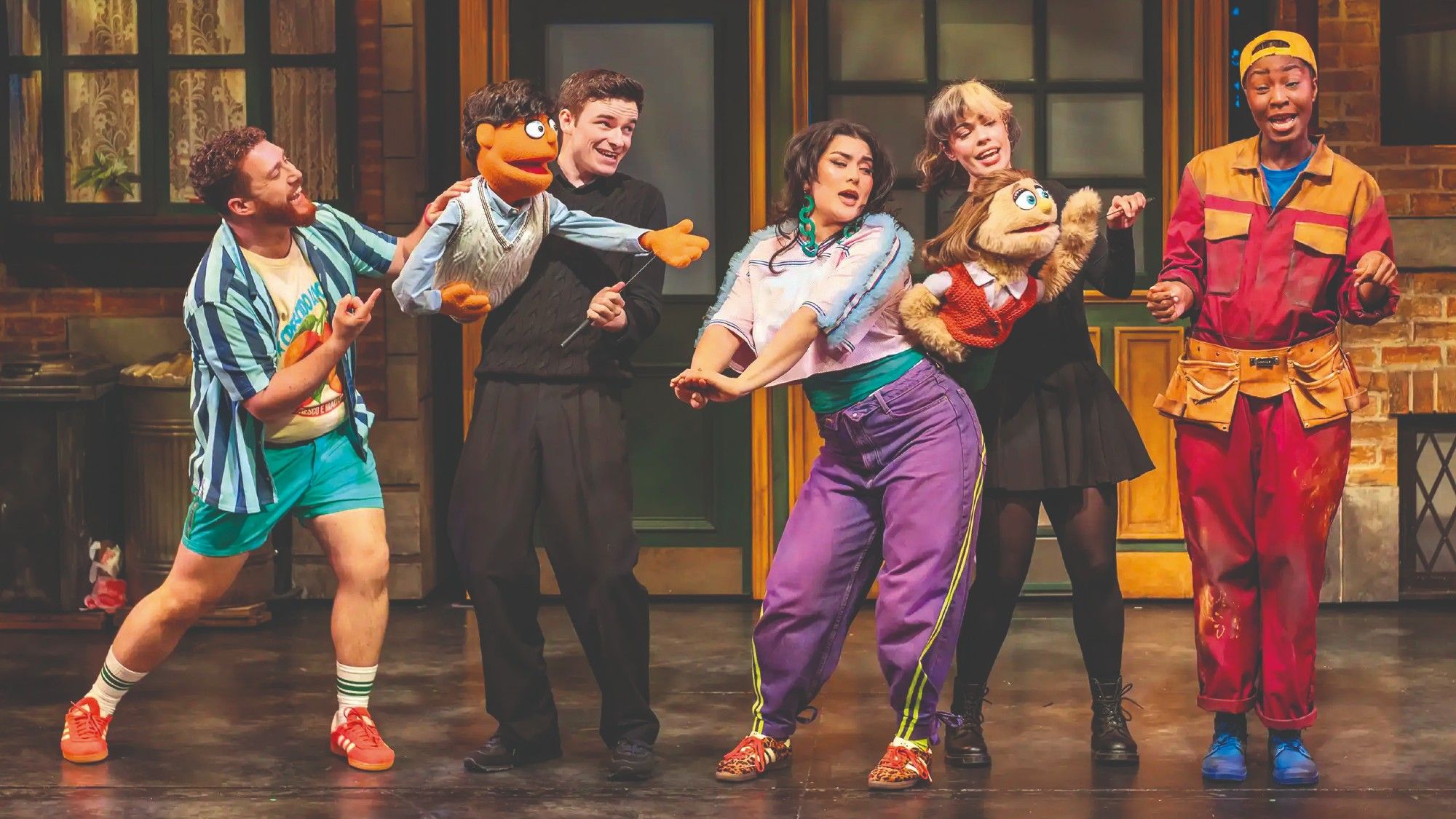
LONDON — Twenty years after its uproarious debut on Broadway and subsequent romp into the West End, the adult puppet musical Avenue Q has returned to London's theater scene with a revival that blends nostalgic charm with contemporary tweaks. The production, now playing at the Shaftesbury Theatre in London WC2, runs until August 29 and promises audiences a mix of puppetry, satire, and song that has not lost its edge, according to multiple critics who have praised its enduring appeal.
The show, created by songwriters Robert Lopez — known for works like The Book of Mormon and Frozen — and Jeff Marx, first captivated audiences in 2003 with its irreverent take on growing up in the modern world. Described by Marianka Swain in The Telegraph as a “bonkers-yet-ingenious” production, Avenue Q was hailed as a sort of “Sesame Street for adults,” featuring cute puppets delivering jaw-droppingly offensive comic songs. Its initial Broadway run earned three Tony Awards, including Best Musical, and it quickly transferred to the West End, where it became a fixture for over five years, closing in 2012 after more than 1,500 performances.
For this revival, producers have made subtle updates to keep the material fresh, incorporating references to modern phenomena like Netflix, artificial intelligence, and OnlyFans. As Swain noted in her review, these changes ensure the show remains relevant without sacrificing “one ounce of the show’s gleefully outrageous humour.” The core spirit of the original persists, with puppets engaging in antics that push boundaries, from simulated sex scenes to songs that tackle taboo subjects with gleeful abandon.
Arifa Akbar, writing in The Guardian, highlighted the show's tongue-in-cheek trigger warning: “contains puppet nudity.” She pointed out that this barely scratches the surface of the content, which includes puppets participating in explicit scenarios and belting out numbers like “If You Were Gay,” “Everyone’s a Little Bit Racist,” and “The Internet Is for Porn.” The latter is led by the character Trekkie Monster, a puppet evoking “Cookie Monster-turns-dirty vibes,” Akbar observed, adding that the overall effect is “delightfully subversive, and extremely funny.”
Despite its rude exterior, the musical carries a deeper emotional core. Dominic Maxwell in The Times described it as “more full of heart than snarl.” Lopez and Marx's songs address the real anxieties of young adults navigating post-college life, as in “What Do You Do with a BA in English?” Even the more provocative tracks, Maxwell said, “smartly, catchily” avoid endorsing nastiness or self-righteousness, instead conveying that life is “more complicated than that” — a message that feels even more pertinent today amid polarized social debates.
The revival features a cast delivering pin-sharp performances, according to Louis Chilton in The Independent. He praised the ensemble's energy but noted that some elements show their age. For instance, the song “Everyone’s a Little Bit Racist” appears rooted in “an understanding of racism that society has mercifully grown beyond,” Chilton wrote. Additionally, references to Gary Coleman, the child star from the 1980s sitcom Diff'rent Strokes who passed away in 2010, may puzzle younger viewers unfamiliar with his cultural footprint.
Sarah Hemming in the Financial Times echoed this sentiment, acknowledging that parts of the show “have aged badly.” Yet she emphasized its fundamental strengths, calling Avenue Q a “fundamentally big-hearted show” with an uplifting message to “hang on in there.” The revival, she said, is packed with the same “silly, sweet and saucy comedy” that earned it a fistful of awards in the 2000s, including the Olivier Award for Best New Musical during its original West End run.
The production's history underscores its lasting impact on musical theater. After Broadway, where it ran for 2,534 performances until 2009, Avenue Q toured internationally and inspired regional productions worldwide. Its blend of Muppet-style puppets operated by visible human performers — a technique that breaks the fourth wall — was innovative at the time, drawing comparisons to Jim Henson's creations while venturing into adult territory. Critics at the time lauded its ability to lampoon societal issues like unemployment, relationships, and identity without descending into mere shock value.
In the context of today's theater landscape, this revival arrives at a moment when audiences seek escapist yet thoughtful entertainment. London's West End has seen a surge in revivals post-pandemic, with shows like The Phantom of the Opera and Lion King drawing crowds, but Avenue Q's niche as an offbeat comedy sets it apart. Ticket sales for the run, produced by the team behind the original, have been strong, with performances scheduled nightly except Sundays, starting at 7:30 p.m. and matinees on select days.
Directors and cast members have spoken about the challenges of updating the material while preserving its essence. In interviews tied to the opening on June 1, 2023 — marking exactly two decades since the Broadway premiere — producer Nicholas Paleologou emphasized the show's timeless themes. “The anxieties of entering adulthood haven't changed much,” he said, according to reports from theater insiders. The puppetry, crafted by Rick Lyon and the original design team, remains a highlight, with eight main characters including Princeton, a recent graduate puppet, and Kate Monster, his love interest.
While most reviews are glowing, not all are unanimous on its contemporary resonance. Chilton in The Independent suggested that the racial humor, though intended as satire, might land differently in an era of heightened sensitivity to such topics. “Younger audiences will not understand the reference to Gary Coleman,” he added, pointing to a generational gap that could dilute some jokes. Conversely, Maxwell in The Times argued that the show's nuance prevents it from feeling outdated, as it critiques oversimplification rather than prejudice itself.
Hemming in the Financial Times balanced these views by focusing on the production's technical polish. The set, evoking a gritty New York apartment block on Avenue Q, is brought to life with vibrant lighting and choreography that integrates the puppeteers seamlessly. Musical director Nigel Wright oversees the score, which features catchy melodies backed by a tight orchestra. Audience reactions during previews reportedly included laughter that echoed through the theater, with standing ovations common.
Beyond the stage, Avenue Q's revival taps into broader cultural conversations about media and technology. Songs updated with nods to AI and streaming services reflect how the internet has evolved since the original's 2003 context, when broadband was still novel. Trekkie Monster's porn anthem, now with OnlyFans mentions, underscores the show's willingness to evolve, as Akbar noted in The Guardian.
As the run continues through late summer, theatergoers have the chance to experience a piece of musical history that has influenced subsequent works, including Lopez's later successes. Swain in The Telegraph captured the excitement: the show “romped into the West End” two decades ago, and this return feels like a welcome homecoming. With tickets available via the Shaftesbury Theatre box office or online platforms, it's poised to remind new generations why it became a phenomenon.
Looking ahead, the production's success could pave the way for more puppet-based musicals in the West End, a format that blends whimsy with wit. While some elements may require further adaptation for future revivals, its core message of resilience amid life's complexities endures. As Maxwell put it, in a world that often demands black-and-white answers, Avenue Q offers a colorful reminder that humanity — puppet or otherwise — thrives in the gray areas.