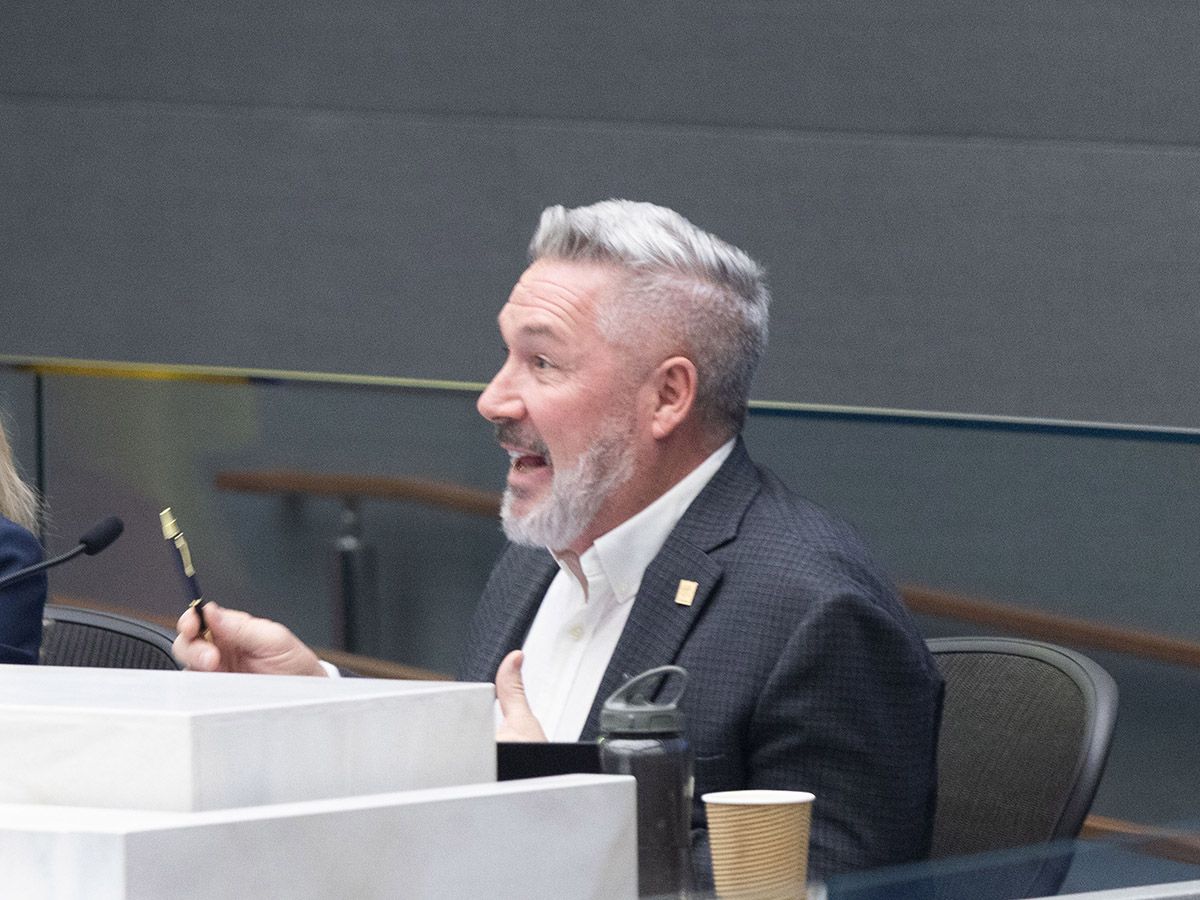
CALGARY, Alberta — Calgary City Councillor Dan McLean unleashed a fiery critique of what he calls city hall's "War on the Car" during a recent council meeting, arguing that urban planning decisions are fueling congestion, road rage, and accidents across the city.
The outburst came on Wednesday as council debated the approval of a six-storey mixed-use development in the Altadore community, featuring both residential and commercial spaces but with limited parking. Residents in the area raised strong objections, citing inadequate transit options and concerns over pedestrian safety amid already strained infrastructure.
McLean, known for his outspoken style, did not hold back in his address to fellow councillors. "And we wonder why there’s so much road rage and so many accidents," he said, pointing to the proliferation of congested developments that are making it harder for Calgarians to navigate the city. He described a growing frustration among drivers, where commutes that once took 20 minutes now stretch to 40, leaving people in a "pissed-off mood."
According to McLean, narrow roads redesigned by the city exacerbate the problem, forcing vehicles to pull over to let others pass. "It takes you twice as long to get where you’re going so when you do get some open road you’re going to a little faster. That’s a danger," he warned, emphasizing that while he expects drivers to follow traffic rules, the city's policies are pushing people to their limits.
The councillor specifically targeted separated bike lanes as a symbol of misguided priorities. He referenced the bike lane on 15th Avenue S.W., noting that before the recent snowfall, it saw "slim to none" usage, falling short of the city's own modest targets. "Then you see this bike lane completely empty except for somebody removing all the snow," McLean said, arguing that such features narrow streets, eliminate parking, and do little to alleviate traffic woes.
McLean's comments come amid broader debates over Calgary's transportation strategy, which has increasingly emphasized walkable communities, public transit, and reduced car dependency to combat climate change. He accused city hall executives of hypocrisy in this push, claiming they preach low-carbon living while driving "pretty nice vehicles. Trucks. Gas guzzlers" parked in the executive lot or residing in sprawling suburbs.
"It’s the culture at city hall. They all talk a big game. They all talk about how we’ve got to go into more walkable, accessible communities, less driving," McLean stated. He labeled city leaders as "climate change fanatics" who envision a future with fewer cars on the road, forcing residents into dense downtown condos to shrink their carbon footprints.
The Altadore project, which includes squeezing in as many units as possible to maximize developer profits and city tax revenue, drew particular ire from McLean. He described it as part of a pattern of "milking every ounce of real estate," where community impacts take a backseat to financial gains. Despite the objections and McLean's protests, a majority of council ultimately approved the development, greenlighting construction in the neighborhood.
Local residents echoed some of McLean's concerns during the public hearing. Community members highlighted the existing transit shortcomings in Altadore, a southwest Calgary enclave known for its family-oriented vibe and proximity to downtown. One attendee, speaking on condition of anonymity, told reporters after the meeting that the lack of parking would only worsen the "nightmare" of getting around an area already plagued by narrow streets and heavy traffic.
City transportation officials have defended the overall strategy, pointing to data showing that Calgary's population growth—now exceeding 1.3 million—necessitates a shift away from car-centric planning. In a statement released following the meeting, a city spokesperson noted that the Altadore project aligns with the Calgary Transportation Plan, which aims to increase transit ridership by 25 percent by 2030 and promote active transportation modes like cycling and walking.
However, McLean dismissed such goals as unrealistic, asserting that "the car is not going anywhere" in a city as spread out as Calgary. He linked the impatience bred by congestion directly to rising collision rates, though official statistics from Alberta Transportation show a complex picture: while overall accidents have ticked up slightly in recent years, factors like weather and construction play significant roles.
This isn't the first time McLean has clashed with city hall's direction. Elected in 2021 for Ward 13, which includes parts of Altadore, he has consistently advocated for more parking provisions and road widening. His comments this week build on earlier criticisms of bike lane expansions, which he and some residents argue prioritize ideology over practicality in a winter city where cycling remains seasonal at best.
Beyond the immediate project, McLean's rant highlights a deepening divide in Calgary's urban policy debates. On one side, environmental advocates and planners push for sustainable growth to meet provincial emissions targets; on the other, drivers and suburban representatives like McLean argue for infrastructure that accommodates the automobile's dominance. A recent poll by the Angus Reid Institute found that 62 percent of Albertans view the province's education system skeptically, but transportation frustrations appear even more universal, with social media buzzing about road rage incidents weekly.
As Calgary grapples with these tensions, similar battles are playing out elsewhere in Canada. In Vancouver and Toronto, anti-car measures like congestion pricing have sparked backlash, while Edmonton recently approved a major highway expansion. Here, the approval of the Altadore development may signal that council's progressive lean holds, but McLean's vocal dissent ensures the "War on the Car" narrative will persist in public discourse.
Looking ahead, McLean has vowed to continue pressing for changes, including a review of bike lane efficacy and more community input on rezoning. City hall, meanwhile, plans to roll out its next transportation update in early 2024, potentially addressing some of the congestion hotspots McLean identified. For now, Calgarians navigating the city's evolving streets remain caught in the gridlock—both literal and figurative.