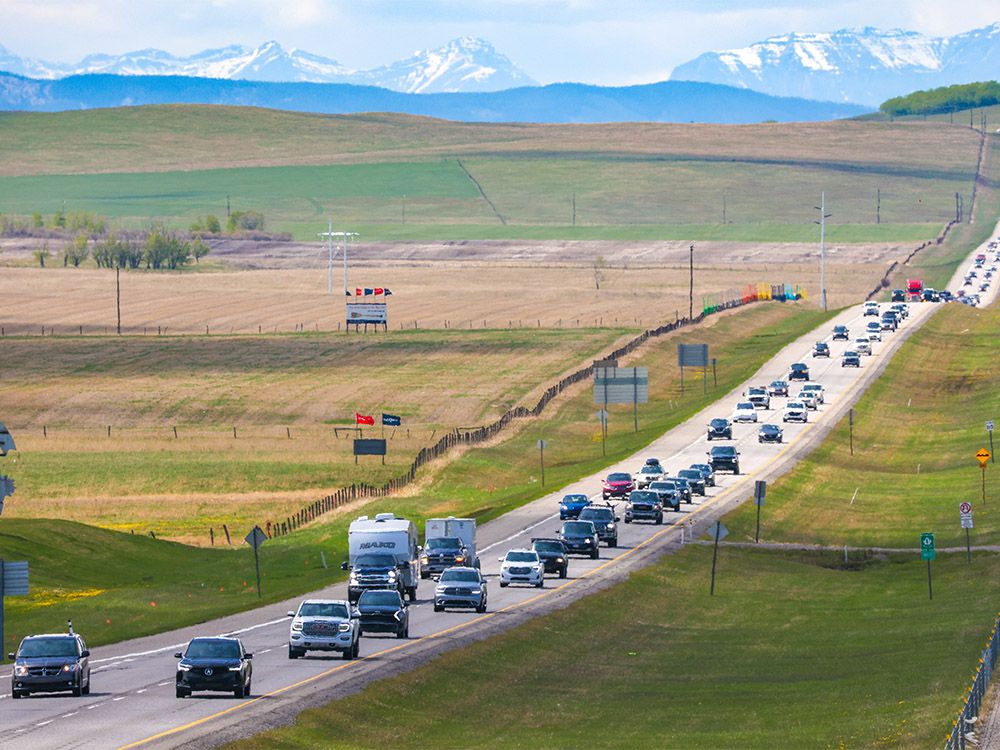
EDMONTON, Alberta — Alberta is moving closer to raising speed limits on its divided highways to 120 km/h, following strong public support in a recent government survey. The province's transportation minister, Devin Dreeshen, announced the results on Monday, revealing that 68 percent of respondents backed the increase from the current 110 km/h limit on qualifying roadways. The survey, which garnered the third-highest response rate in Alberta government history, also showed overwhelming approval for related safety measures, such as banning trucks from the far left lane on multi-lane divided highways.
According to Dreeshen, the findings represent a significant endorsement from Albertans, particularly those who commute on rural routes. "Having almost 70 per cent for 120 km/h is great," Dreeshen said in an interview. He noted that the government typically considers a proposal successful if it achieves around 60 percent support, and this result exceeded that threshold handily. The minister emphasized that regular drivers on these highways, often in rural areas, have been vocal in requesting the change to better align posted speeds with road designs.
The proposed speed limit hike would apply to divided highways with three or more lanes in one direction, including major corridors like Highway 2 between Calgary and Edmonton, Highway 16 (the Yellowhead), Highway 1 (the Trans-Canada), Highway 63 to Fort McMurray, Highway 43 to Grande Prairie, and Highway 4 toward the U.S. border. However, urban sections such as the ring roads around Calgary and Edmonton, as well as Calgary's Deerfoot Trail, would remain exempt to address city-specific traffic concerns.
In addition to the speed increase, 92 percent of survey participants supported prohibiting commercial trucks from using the far left lane on these multi-lane stretches. Dreeshen described this as a way to provide a clearer passing lane for other vehicles, potentially improving flow and safety. "One very big step closer to a time when if there are three or more lanes on a divided highway where everyone is going in the same direction, truckers will not be allowed in the far left lane," he explained, highlighting how this could ease congestion for passenger cars.
The survey's robust participation underscores public interest in highway improvements, especially amid ongoing discussions about enhancing rural connectivity in Alberta. Dreeshen, who represents the central Alberta riding of Innisfail-Sylvan Lake, pointed out that these roadways were engineered with 120 km/h in mind from the outset. "When we look at our big beautiful divided highways designed for 120 km/h, we want to make our design speeds line up with the posted speeds like they do in the United States and Europe," he said.
Alberta drivers, many of whom have experience on higher-speed roads abroad or in other provinces, appear receptive to the idea. Dreeshen recounted travels where motorists encounter similar limits without incident, suggesting that responsible driving norms would carry over. "We obviously want to improve the driving experience for Alberta drivers," he added, framing the initiative as a response to calls for shorter commute times in rural areas.
Critics of the plan, though not detailed in the survey breakdown, have raised concerns about potential increases in accidents or reckless behavior. Dreeshen acknowledged the existence of dangerous drivers on current roads, regardless of limits. He shared a personal anecdote from a drive to Calgary, where he witnessed five new Audis speeding at over 150 km/h and weaving through traffic on Highway 2. "These idiots need to be pulled over by the cops," he said, stressing that enforcement remains key to addressing "the bozos out there."
Despite such incidents, Dreeshen expressed confidence that the majority of Albertans drive responsibly. He described the highways as well-suited for higher speeds, countering fears that a 10 km/h bump could lead to chaos. "These divided highways in Alberta are designed for 120 km/h," he reiterated, noting that many jurisdictions elsewhere trust drivers to match the infrastructure.
To test the waters, the Alberta government plans a pilot program in the spring, starting with a section of Highway 2. Other communities along divided highways have expressed interest in joining the trial, according to Dreeshen. He emphasized a cautious approach: "I am being cautious and want to 'ease Albertans into being comfortable having a 120 km/h speed limit.'" A full detailed report on the survey will be released early in the new year, providing deeper insights into respondent demographics and feedback.
The initiative falls under Premier Danielle Smith's United Conservative Party government, which has prioritized infrastructure upgrades since taking office. Dreeshen, as the province's point person on roads, has been instrumental in gauging public sentiment. The survey's timing aligns with broader efforts to modernize Alberta's transportation network, including recent debates over coal mining policies and urban development that indirectly affect highway usage.
Public response to the survey highlights a divide in opinions on speed limits, with supporters arguing for efficiency and detractors warning of safety risks. While the 68 percent approval rate is seen as a win by the government, opponents may view it as insufficient given the stakes. Dreeshen remained optimistic, stating, "I’m just trying to make life better," in reference to everyday commuters who stand to benefit.
Alberta's highways serve as vital arteries for the province's oil, agriculture, and tourism economies, carrying millions of vehicles annually. Raising speeds could shave minutes off long hauls, such as the four-hour drive from Calgary to Edmonton, but it also prompts questions about enforcement resources. The Royal Canadian Mounted Police and Alberta sheriffs, responsible for traffic patrols, have not yet commented on how the change might impact their operations.
Looking ahead, the spring pilot will offer real-world data on traffic patterns, accident rates, and driver compliance. If successful, the 120 km/h limit and truck lane restrictions could roll out province-wide by late 2024 or early 2025. Communities like those along Highway 43, which connects to remote northern areas, are eager for improvements that could boost local economies by facilitating faster goods transport.
The debate echoes similar discussions in other Canadian provinces, where Quebec and parts of Ontario have experimented with variable speed limits. In the U.S., states like Texas and Montana allow 120 km/h or higher on interstates, providing a model that Alberta officials reference. Dreeshen's comments suggest the province aims to join this trend, balancing freedom of movement with public safety.
As Alberta navigates these changes, the focus remains on data-driven decisions. The survey's results, while promising, are just one piece of the puzzle. With a detailed report forthcoming and a pilot on the horizon, drivers can expect updates that will shape the future of the province's roads. For now, the path forward appears to be gaining speed.