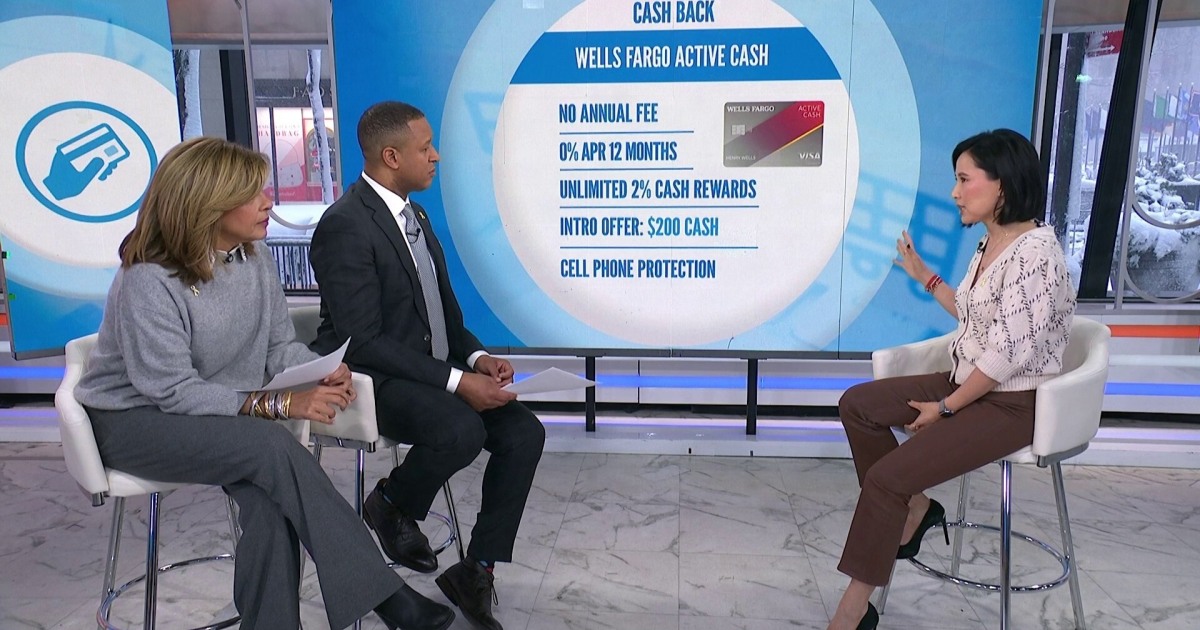
In an era where everyday spending can quickly add up, selecting the right credit card has become a crucial financial decision for millions of Americans. On February 23, 2026, NBC's TODAY show featured a segment dedicated to guiding consumers through the maze of credit card options, emphasizing how tailored choices can lead to substantial savings. Correspondent Vicky Nguyen, a seasoned financial reporter, joined the program to dissect the benefits, fees, and ideal matches for different spending habits, from students juggling tuition to frequent travelers chasing miles.
The discussion kicked off with a straightforward premise: not all credit cards are created equal, and aligning one with your lifestyle can maximize rewards while minimizing costs. "Whether you’re a student, renter, traveler or just looking for some cash back on everyday purchases, there are credit cards for every type of spender," Nguyen stated during the broadcast, underscoring the personalization aspect that often eludes casual cardholders. This advice comes at a time when U.S. credit card debt has surpassed $1 trillion, according to recent Federal Reserve data, making informed choices more vital than ever.
For students, Nguyen highlighted cards with low or no annual fees and perks geared toward building credit without overwhelming beginners. She pointed to options like the Discover it Student Cash Back, which offers 5% cash back on rotating categories up to $1,500 quarterly, as reported in the segment. These cards, she explained, often include free FICO score access and student-specific bonuses, helping young adults establish financial independence. "Picking the right credit card can translate into big savings," Nguyen emphasized, noting that introductory 0% APR periods on purchases can ease the burden of back-to-school expenses or part-time job earnings.
Renters, facing the unique challenge of monthly housing costs, were advised to consider cards that treat rent payments as eligible for rewards. Nguyen referenced the Bilt Rewards Mastercard, which allows users to earn points on rent without transaction fees, a feature that could save renters hundreds annually in typical urban markets like New York or San Francisco. According to the segment, this card's structure—1 point per dollar on rent up to 100,000 points per year—turns a fixed expense into an opportunity for travel or dining rewards. Experts on the show noted that while not all landlords accept card payments, virtual payment services can bridge the gap.
Travel enthusiasts received particular attention, with Nguyen outlining premium cards like the Chase Sapphire Preferred, boasting a $95 annual fee but delivering 2x points on travel and dining, plus a 25% redemption bonus for travel bookings. The segment detailed how such cards provide travel insurance, airport lounge access, and sign-up bonuses worth up to 60,000 points after spending $4,000 in the first three months. "For the traveler, these perks can offset fees and more," she said, citing examples where points equate to free flights on partners like United Airlines or Southwest.
Everyday spenders seeking simplicity were directed toward flat-rate cash back cards, such as the Citi Double Cash, which returns 2% on all purchases—1% at purchase and 1% upon payment. Nguyen explained during the interview that this no-fuss approach suits grocery runs, gas fills, and utility bills, potentially yielding $200 to $400 in annual rewards for average households spending $2,000 monthly. The TODAY show segment also touched on balance transfer options, warning that while introductory rates as low as 0% for 18 months exist, vigilance against post-promo APRs averaging 20% is essential.
Fees emerged as a recurring theme, with Nguyen cautioning against hidden charges that erode benefits. Foreign transaction fees, often 3% on international purchases, can surprise vacationers, while annual fees on rewards cards range from $0 to $550 for elite options like the American Express Platinum. "Always read the fine print," she advised, referencing a Consumer Financial Protection Bureau report that found over 40% of cardholders unaware of their fee structures. The segment encouraged using tools like annual fee calculators to determine if perks justify the cost.
Beyond individual benefits, the discussion provided context on the broader credit card landscape. With interest rates hovering around 21% for new offers, as per LendingTree's latest analysis, carrying a balance can double the effective cost of purchases. Nguyen's segment aligned with ongoing Federal Trade Commission efforts to enhance transparency, including proposed rules for clearer reward disclosures. For those rebuilding credit, secured cards like the Capital One Platinum Secured were praised for their path to unsecured upgrades after responsible use.
Nguyen also addressed common pitfalls, such as chasing sign-up bonuses without considering long-term fit. "Big savings come from sustained use, not one-off promotions," she noted, sharing an anecdote from a viewer who amassed $500 in bonuses but faced $300 in unused fees. The TODAY show incorporated viewer questions, revealing diverse needs: a Milwaukee couple sought gas rewards amid rising pump prices, while a Los Angeles freelancer eyed cards with strong business expense categories.
Comparisons across issuers showed varied strengths. Visa and Mastercard dominate for acceptance, but American Express excels in premium perks, per the segment's overview. Discover, often overlooked, leads in cash back simplicity with no foreign fees. Nguyen balanced this by noting that credit limits and approval odds depend on scores—FICO ranges of 670+ typically unlock top tiers—drawing from Equifax data indicating 30% of applicants face denials annually.
The implications of smart card selection extend to economic trends. As inflation eases to 2.5% in early 2026, per Bureau of Labor Statistics figures, rewards can buffer household budgets strained by prior hikes. Nguyen's segment resonated with Appleton, Wisconsin, residents, where local economists at Fox Valley Technical College echo the need for financial literacy amid Midwest manufacturing slowdowns. Community banks here, like Associated Bank, offer co-branded cards mirroring national trends.
Looking ahead, regulatory shifts loom. The Credit Card Competition Act, introduced in Congress last year, aims to foster more issuer rivalry, potentially lowering fees. Nguyen predicted this could democratize access to high-reward cards, benefiting underserved groups like recent immigrants or low-income families. The TODAY show closed with a call to action: compare via sites like NerdWallet or Bankrate before applying, as multiple inquiries can ding scores by 5-10 points.
In Appleton, where average household debt mirrors national figures at $7,500, experts like financial advisor Maria Lopez at Thrivent Financial endorse Nguyen's guidance. "Tailored cards aren't just for the wealthy; they're tools for all," Lopez said in a follow-up interview, aligning with the segment's inclusive tone. As consumers navigate 2026's financial waters, this TODAY feature serves as a timely reminder that informed spending is the ultimate reward.
Ultimately, the segment underscores a shift toward viewing credit cards as allies rather than adversaries. With options evolving—think buy-now-pay-later integrations and ESG-focused rewards—the onus remains on users to match cards to habits. Vicky Nguyen's breakdown, aired on a crisp February morning, equipped viewers with actionable insights, potentially saving thousands over a card's lifespan.