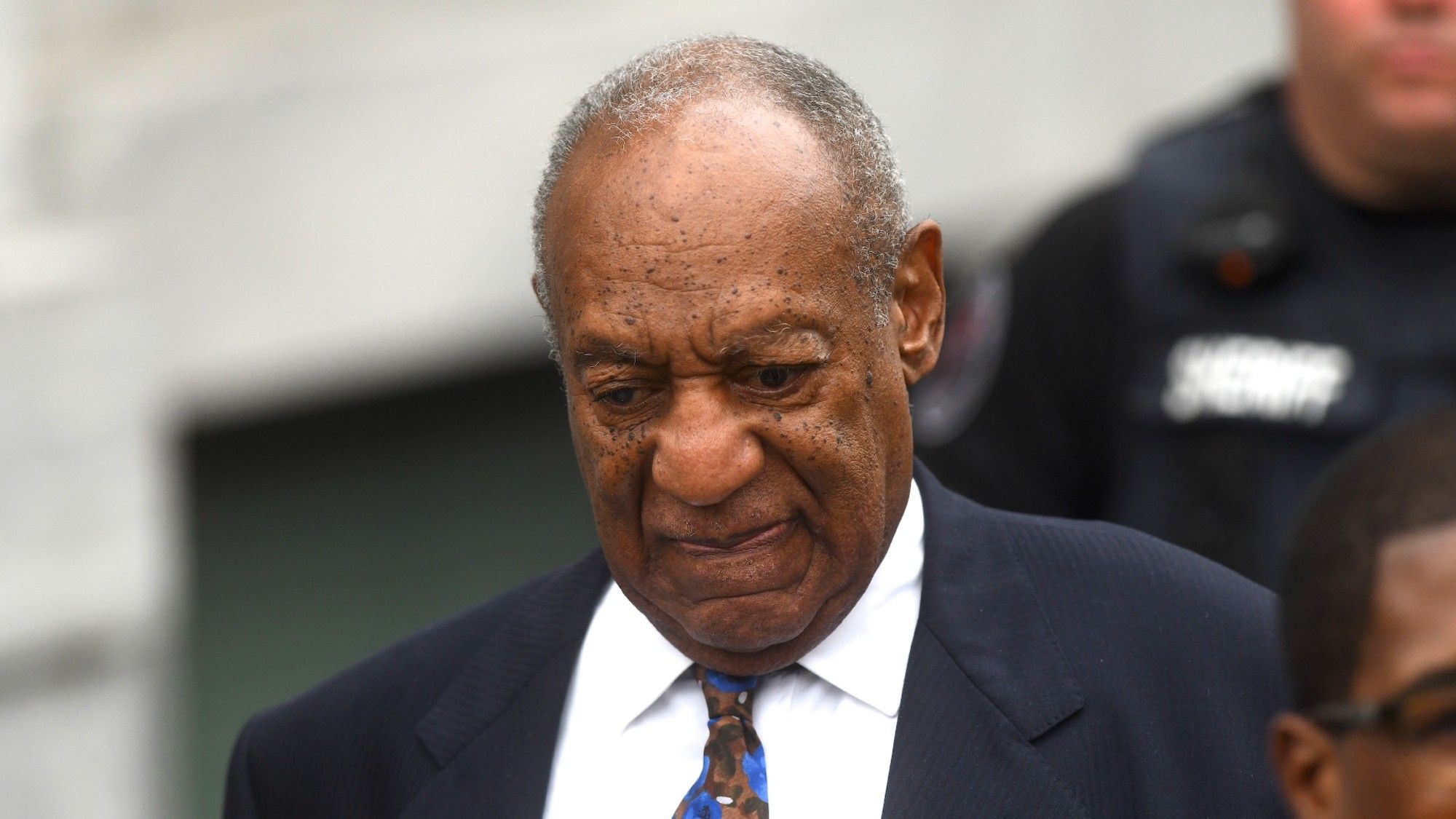
In a landmark civil verdict that echoes the lingering shadows of the #MeToo era, a California jury on Monday awarded $59.25 million in damages to Donna Motsinger, who accused comedian Bill Cosby of drugging and sexually assaulting her more than five decades ago. The decision, reached after a trial in Los Angeles Superior Court, found Cosby liable for the 1972 incident when Motsinger was a 24-year-old waitress. The jury's breakdown included $17.5 million for past damages, $1.75 million for future damages, and a substantial $40 million in punitive damages aimed at punishing the actor for his actions.
Motsinger's allegations stem from an evening in April 1972, when she met Cosby, then a rising star known for his wholesome family-man image on television, at a Los Angeles nightclub where she worked. According to her testimony, Cosby offered her pills to help with a headache, which left her incapacitated. He then escorted her to his stand-up comedy show, and later, while she was unconscious, assaulted her in a hotel room. 'I trusted him, and he betrayed that trust in the worst possible way,' Motsinger said during the trial, recounting how the incident shattered her life and led to years of therapy and emotional turmoil.
Cosby, now 88 and in declining health, did not testify at the trial, nor did he appear in person. His absence underscored the physical toll of age and the legal battles that have defined his later years. The verdict comes amid a series of lawsuits against the once-beloved entertainer, whose career included iconic roles in shows like I Spy and The Cosby Show, which aired from 1984 to 1992 and made him a household name synonymous with American family values.
The jury deliberated for just two days before delivering the unanimous decision, according to court records. Motsinger's legal team, led by attorney Gloria Allred, who has represented numerous accusers in high-profile sexual assault cases, hailed the outcome as a step toward accountability. 'This is not just about one woman; it's about validating the experiences of all those who came forward against powerful men,' Allred said outside the courthouse, emphasizing the trial's role in the broader reckoning sparked by the #MeToo movement in 2017.
For Motsinger, the monetary award was secondary to the recognition of her suffering. Speaking to reporters after the verdict, she described the money as 'icing on the cake,' but stressed that 'the accountability is more important.' She added, 'It has been 54 years to get justice, and I know it's not complete for the rest of the women, but I hope it helps them a little bit.' Her words captured the long wait many of Cosby's more than 60 accusers have endured, with allegations dating back to the 1960s.
Cosby's legal team expressed immediate disappointment with the ruling. Jennifer Bonjean, one of his attorneys, told the media, 'We are disappointed in the outcome,' but maintained optimism for reversal. 'We believe we have a strong appeal and we'll pursue that,' she said, hinting at challenges based on procedural issues similar to those that freed Cosby from prison in 2021. Bonjean argued during the trial that the statute of limitations should bar the case, but the jury focused on the evidence of assault presented.
The Associated Press reported that while Cosby has settled some similar lawsuits out of court and been ordered to pay in others, Monday's award represents 'likely the most he has had to pay in a case.' This financial blow adds to the mounting costs for Cosby, whose net worth has plummeted from an estimated $400 million at its peak to far less amid legal fees and settlements. Previous payouts include a confidential settlement with Andrea Constand, the Canadian woman whose 2004 accusation led to Cosby's 2018 criminal conviction.
That conviction, for drugging and sexually assaulting Constand at his Pennsylvania home, made Cosby the first major Hollywood figure imprisoned in the wake of #MeToo. He served nearly three years at a state prison in Pennsylvania before the state Supreme Court overturned the verdict in June 2021 on a technicality: prosecutors had agreed not to charge him in exchange for his 2005 deposition testimony, which was later used against him. The ruling did not exonerate Cosby but barred retrial, freeing him but leaving civil cases like Motsinger's open.
USA Today noted that Cosby has 'denied all allegations involving sex crimes,' portraying the accusations as part of a coordinated effort against him. His defenders have long claimed racial bias in the media coverage, pointing to Cosby as a trailblazing Black entertainer targeted unfairly. However, the sheer number of accusers—spanning decades and including high-profile figures like supermodel Beverly Johnson and actress Janice Dickinson—has eroded that narrative for many observers.
The New York Times described the latest verdict as further tarnishing Cosby's reputation, writing that his 'standing as one of America's most beloved entertainers dissolved' amid the flood of allegations. Once hailed as 'America's Dad' for his role as Dr. Cliff Huxtable, Cosby's fall from grace began in 2014 when a Hannibal Buress stand-up routine went viral, reigniting public awareness of the claims. By 2015, major networks had shelved a planned Cosby sitcom, and his honorary degrees and awards were revoked.
This California case is part of a wave of civil suits enabled by the Adult Survivors Act in New York and similar laws elsewhere, which temporarily lifted statutes of limitations for sexual assault claims. Motsinger filed her lawsuit in 2014, joining others in seeking justice outside the criminal system. Experts say these verdicts could encourage more survivors to come forward, even against deceased or elderly perpetrators, as Cosby's contemporaries like Harvey Weinstein face ongoing trials.
Beyond the courtroom, the decision highlights the enduring impact of sexual violence on victims. Motsinger, now 76 and living in Colorado, spoke of how the assault derailed her career aspirations in hospitality and left her with post-traumatic stress disorder. 'I lost decades to this,' she told the jury, describing nightmares and trust issues that persisted until she joined support groups for Cosby accusers in the late 2010s.
Looking ahead, Cosby's appeal could take years, potentially reaching higher courts on grounds of due process or evidence admissibility. Legal analysts, speaking on condition of anonymity, suggested the punitive damages might be reduced on appeal, as California caps such awards in some civil cases. Meanwhile, Motsinger's victory may inspire similar actions; at least two other Cosby accusers have active cases pending in federal courts.
The broader implications ripple through Hollywood and beyond, underscoring how #MeToo has shifted power dynamics. Organizations like Time's Up, founded in 2018, praised the verdict as 'a reminder that justice delayed is not justice denied.' For an industry still grappling with accountability—evidenced by recent convictions of figures like R. Kelly and Larry Nassar—this case serves as a cautionary tale about unchecked influence.
As Cosby retreats further from public view, confined largely to his Pennsylvania home due to health issues, the focus turns to the women whose voices brought him low. Motsinger's story, like those before it, illustrates the resilience required to challenge icons. Whether this award stands or falls on appeal, it marks another chapter in a saga that redefined cultural conversations on consent, power, and redemption.