By Jessica Williams
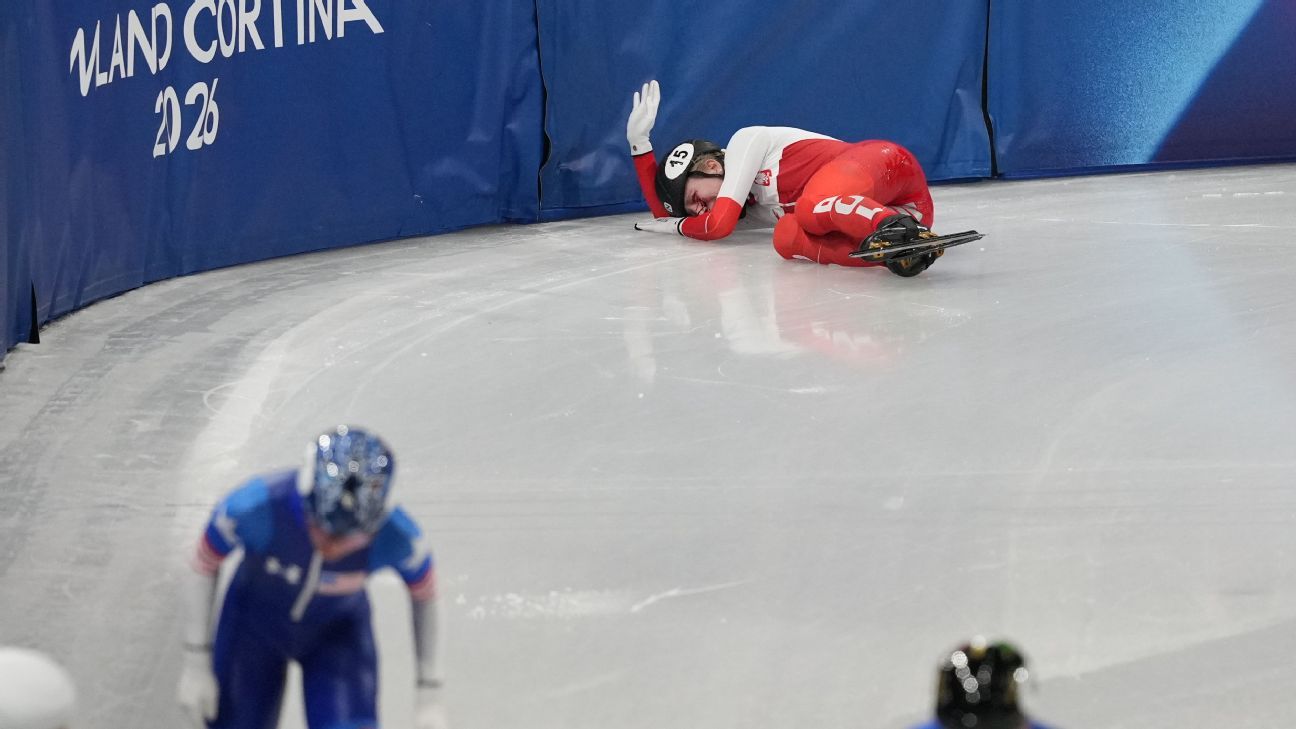
MILAN -- In a dramatic turn during the final night of short track speedskating at the Milan Cortina Olympics, Polish athlete Kamila Sellier was left bloodied and stretchered off the ice after a competitor's blade sliced above her left eye in the women's 1,500-meter quarterfinals on Friday evening. The incident, which unfolded at the packed Milano Ice Skating Arena, halted the race momentarily as medical teams rushed to Sellier's aid, drawing gasps from the crowd and underscoring the high-stakes perils of the sport.
The accident occurred as Sellier, a rising star in Polish short track speedskating, collided with Italy's Ariana Fontana and American skater Kristen Santos-Griswold during a tight maneuver in the quarterfinal heat. According to officials, Santos-Griswold was penalized for an illegal lane pass that contributed to the pile-up, preventing her from advancing. Sellier went down hard, sustaining a cut that left a trail of blood on the final corner of the track, which workers quickly cleaned during the pause.
A large white sheet was erected around Sellier to shield her from the arena's spectators, who had filled the venue to capacity for the concluding events of the short track program. As she was immobilized on a stretcher and wheeled away, Sellier managed to give a thumbs-up to the crowd, a gesture that offered some reassurance amid the tension. Polish officials later confirmed that her eye was unharmed, stating she received stitches at the arena before being transported to a hospital for further tests.
The race resumed after the interruption, with Fontana, a 15-time Olympic medalist, visibly affected but determined to continue. Her skinsuit showed nicks from the crash, and she received assistance from her physiotherapist for discomfort in her left hip during the break. Despite the setback, Fontana finished second in the restarted heat behind Belgium's Hanne Desmet, securing her spot in the semifinals.
Fontana's resilience paid off as she progressed through the competition, narrowly edging out China's Zhang Chutong at the finish line to advance to the finals. As the reigning Olympic silver medalist in the 1,500 meters from the previous Games, Fontana entered Milan Cortina with high ambitions. She aimed to tie Norwegian cross-country skier Marit Bjørgen's record as the most decorated Winter Olympian with 15 medals, building on her earlier successes in these Olympics: gold in the 2,000-meter mixed relay and silvers in the 500 meters and 3,000-meter relay.
Short track speedskating, known for its intense speeds and frequent collisions, has a history of such incidents at the Olympics. The sport's tight turns and close-quarters racing often lead to falls and injuries, as seen in past Games where blades have caused cuts and more severe harm. In Milan Cortina, this event highlighted the razor-thin margins between triumph and tragedy, with athletes pushing limits on a 111.12-meter oval track.
Sellier's injury comes at a pivotal moment for Polish speedskating, a program that has been steadily building international presence. At 24 years old, Sellier had shown promise in earlier rounds, qualifying for the quarterfinals with strong performances in the heats. Her withdrawal due to the injury means Poland will miss out on a potential medal contender in the event, though officials emphasized her health as the priority.
From the American perspective, Santos-Griswold's penalty drew mixed reactions. The U.S. Speedskating team, which has invested heavily in the discipline, saw the disqualification as a tough break. Santos-Griswold, competing in her Olympic debut, had been a dark horse in the field, but the infraction sidelined her ambitions for the semifinals and beyond.
Fontana's performance, meanwhile, captivated the home crowd in Italy. The 34-year-old veteran, who began her Olympic journey in 2006, has long been a fixture in short track events. Her medals from Milan Cortina add to a collection that spans five Winter Games, showcasing her endurance and skill in a sport where consistency is rare. "It's all about staying focused," Fontana said in a post-race interview, according to Italian media reports, reflecting on the crash's impact.
The International Skating Union, overseeing the event, reviewed footage of the incident and upheld the penalty on Santos-Griswold, citing rules against impeding other skaters. No further sanctions were reported against Fontana or Sellier, as the collision was deemed accidental. Officials noted that safety protocols, including immediate medical response, were followed meticulously.
Beyond the immediate drama, the women's 1,500 meters final proceeded without further hitches, with Desmet emerging as a strong favorite after her quarterfinal win. The event's conclusion marked the end of short track speedskating at Milan Cortina, a discipline that has grown in popularity since its Olympic debut in 1992. Over the years, it has produced iconic moments, from Apolo Ohno's triumphs to heartbreaking crashes like the one involving Sellier.
For Sellier, recovery will be key as she eyes future competitions, including the next World Championships. Polish skating federation representatives expressed relief at the positive initial assessment, saying in a statement that "Kamila's eye is OK, and she's in good spirits despite the stitches." They anticipate a full recovery, allowing her to return to training soon.
The incident also reignited discussions on equipment safety in short track. Blades, sharpened to a fine edge for speed, pose inherent risks, and some experts have called for protective gear enhancements. However, the sport's governing bodies maintain that current standards balance performance and safety effectively.
As the Milan Cortina Olympics wind down, Fontana's pursuit of Olympic history continues. With her advancement in the 1,500 meters, she positions herself for another medal, potentially equaling Bjørgen's record. The Italian star's journey embodies the grit required in winter sports, where a single mishap can alter trajectories.
In the broader context of these Games, held from February 6 to 22, 2026, in the Italian Alps and Milan, short track has delivered thrills and spills alike. Sellier's accident serves as a reminder of the human element in elite athletics, where athletes like her, Fontana, and Santos-Griswold compete not just for glory, but against the unforgiving nature of the ice.