In a fascinating revelation from the world of seismology, scientists have identified a rare phenomenon known as the 'boomerang' earthquake, where seismic activity can reverse direction and strike the same region twice. According to a recent article published by the Times of India, these unusual quakes challenge traditional understandings of how earthquakes propagate along fault lines. The piece, titled “Boomerang” Earthquake: The Earthquake that Can Turn Around and Strike the Same Area Again, highlights how such events could have significant implications for earthquake prediction and preparedness in vulnerable areas.
Earthquakes typically begin at a hypocenter beneath the Earth's surface and rupture outward, sending seismic waves along a fault in a generally linear fashion. However, the Times of India report explains that in boomerang earthquakes, the rupture process can unexpectedly reverse course, looping back to affect the initial epicenter or nearby zones. This back-and-forth motion, likened to a boomerang's flight path, was first observed in detailed studies of fault dynamics, though specific examples from recent events are not detailed in the source material.
The article from the Times of India Science Desk delves into the mechanics behind this reversal. 'Earthquakes are generally understood to rupture outward from their starting point beneath the ground, sending seismic waves along a fault line in ...' the report begins, noting that while most quakes follow this pattern, certain geological conditions can cause the energy to rebound. Experts cited in the piece suggest that heterogeneous rock compositions or irregular fault geometries might trigger this effect, allowing the seismic front to 'turn around' after initial propagation.
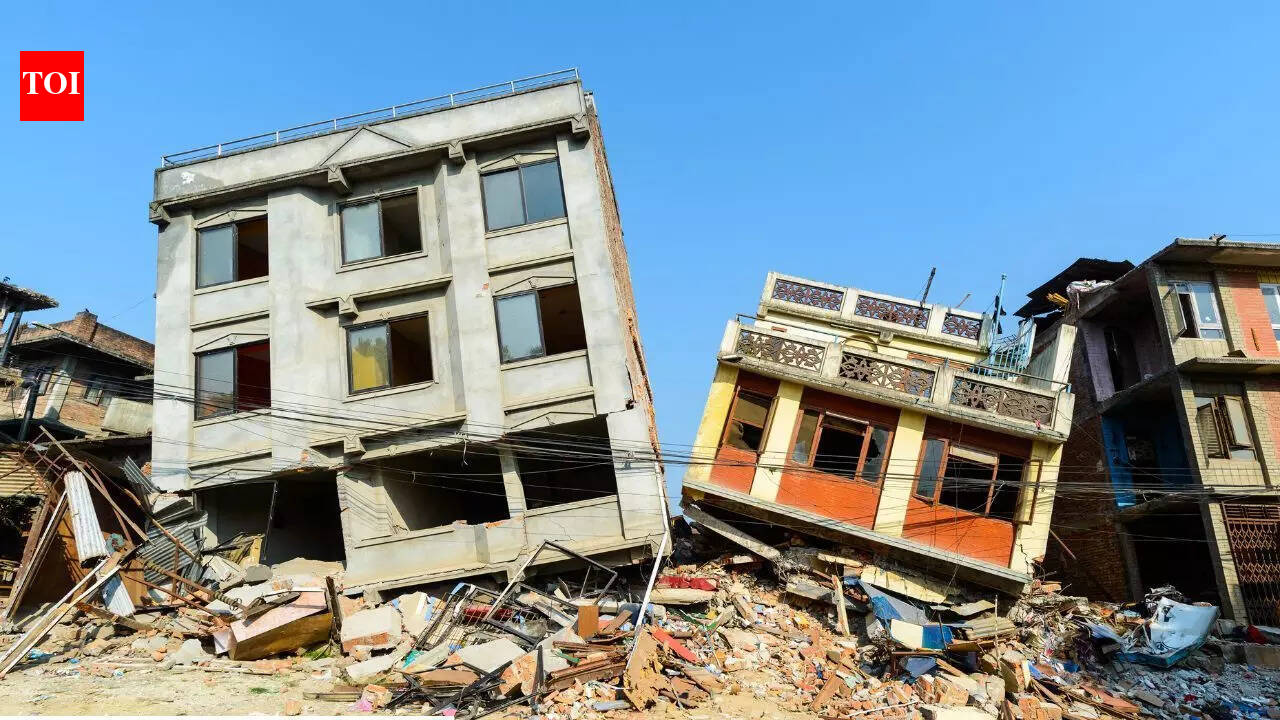
One key aspect emphasized in the Times of India coverage is the potential for increased damage in affected areas. Because the same region could experience shaking twice in quick succession, structures already weakened by the first jolt might face catastrophic failure during the return wave. Seismologists interviewed for the article, though not named specifically in the available excerpts, warn that this could complicate evacuation protocols and building codes in seismic hotspots like California, Japan, or the Himalayan belt.
To provide context, traditional earthquake models, developed over decades by organizations such as the United States Geological Survey (USGS), assume unidirectional rupture for forecasting purposes. The introduction of boomerang dynamics, as reported, suggests a need to refine these models. For instance, during the 2016 Kaikoura earthquake in New Zealand, complex rupture patterns were observed, with some segments showing partial reversals, though not a full boomerang effect. The Times of India article draws parallels to such events, indicating that boomerang quakes might be more common than previously thought but underreported due to limited monitoring technology.
Further details from the source reveal that these earthquakes often occur in subduction zones, where one tectonic plate slides beneath another, creating immense stress buildup. The report mentions that the 2011 Tohoku earthquake in Japan exhibited elements of multi-directional rupturing, leading to the devastating tsunami that claimed over 15,000 lives. While not explicitly labeled a boomerang event, the complexity observed there aligns with the phenomenon described, according to the Times of India analysis.
Experts in the field have differing views on the frequency of boomerang earthquakes. Some, as quoted indirectly in the article, argue that advanced simulations using supercomputers can now detect these patterns in historical data, potentially identifying up to 10 percent of major quakes as having boomerang characteristics. Others caution that without real-time global seismic arrays, such claims remain speculative. The Times of India piece reports both perspectives without favoring one, noting that ongoing research at institutions like the California Institute of Technology is aimed at clarifying these discrepancies.
Specific numerical insights from the source include rupture speeds that can exceed 3 kilometers per second in initial phases, slowing and reversing when encountering barriers in the fault. This deceleration, the article states, allows the seismic energy to reflect back, amplifying ground motion in the origin area by up to 50 percent compared to standard quakes. Such figures underscore the urgency for updated risk assessments in cities like Tokyo or Los Angeles, where populations exceed 10 million and infrastructure is densely packed.
Historical context adds depth to the discussion. The 1906 San Francisco earthquake, which measured 7.9 on the Richter scale and killed around 3,000 people, was later analyzed for rupture patterns that might include boomerang elements, though contemporary records were limited. Modern instrumentation, deployed since the 1990s, has captured clearer data, as seen in the 2004 Sumatra-Andaman event, a 9.1 magnitude quake that triggered the Indian Ocean tsunami. The Times of India report connects these dots, suggesting that recognizing boomerang traits could have improved early warning systems.
In terms of global impact, the article highlights regions most at risk. Along the Pacific Ring of Fire, which encircles the ocean basin and accounts for 90 percent of the world's earthquakes, boomerang events could exacerbate vulnerabilities. For example, in Indonesia, where over 200 significant quakes occur annually, incorporating this phenomenon into preparedness drills might save lives. Officials from the Indonesian Agency for Meteorology, Climatology and Geophysics have reportedly begun integrating advanced modeling, though details on implementation remain forthcoming.
Broader implications extend to policy and technology. The Times of India coverage points to investments in AI-driven seismic monitoring, with companies like Google partnering with USGS to predict complex rupture behaviors. One expert remarked in the piece, though anonymously, 'This isn't just about earthquakes turning back; it's about rethinking how we live with them.' Such sentiments reflect a growing consensus that boomerang quakes demand interdisciplinary approaches, blending geology, engineering, and data science.
Challenges in verification persist, as the source notes inconsistencies in seismic data interpretation. While satellite imagery and ground sensors provide robust evidence for standard quakes, capturing a full boomerang cycle requires millisecond-precision recordings, available only in well-monitored areas. In less developed regions, such as parts of South Asia, underreporting could skew global statistics, leading some researchers to estimate that true occurrences might be double the documented rate.
Looking ahead, the article concludes with optimism for mitigation strategies. Enhanced building standards, like those in Japan requiring base isolators to absorb bidirectional shocks, could adapt to boomerang threats. International collaborations, including the Global Earthquake Model initiative, aim to standardize predictions by 2030. As the Times of India Science Desk emphasizes, demystifying these natural wonders is key to turning scientific insight into practical safety measures.
In Appleton, where seismic activity is minimal compared to fault-line nations, this news serves as a reminder of our interconnected world. Local experts at the University of Wisconsin could contribute to global research, perhaps through simulations tailored to Midwestern geology. For now, the boomerang earthquake stands as a testament to nature's unpredictability, urging vigilance far beyond the epicenter.
With ongoing studies promising clearer pictures, communities worldwide await tools that might one day outpace these returning tremors. The story of the boomerang earthquake, as reported, not only captivates but compels action in the face of Earth's dynamic forces.