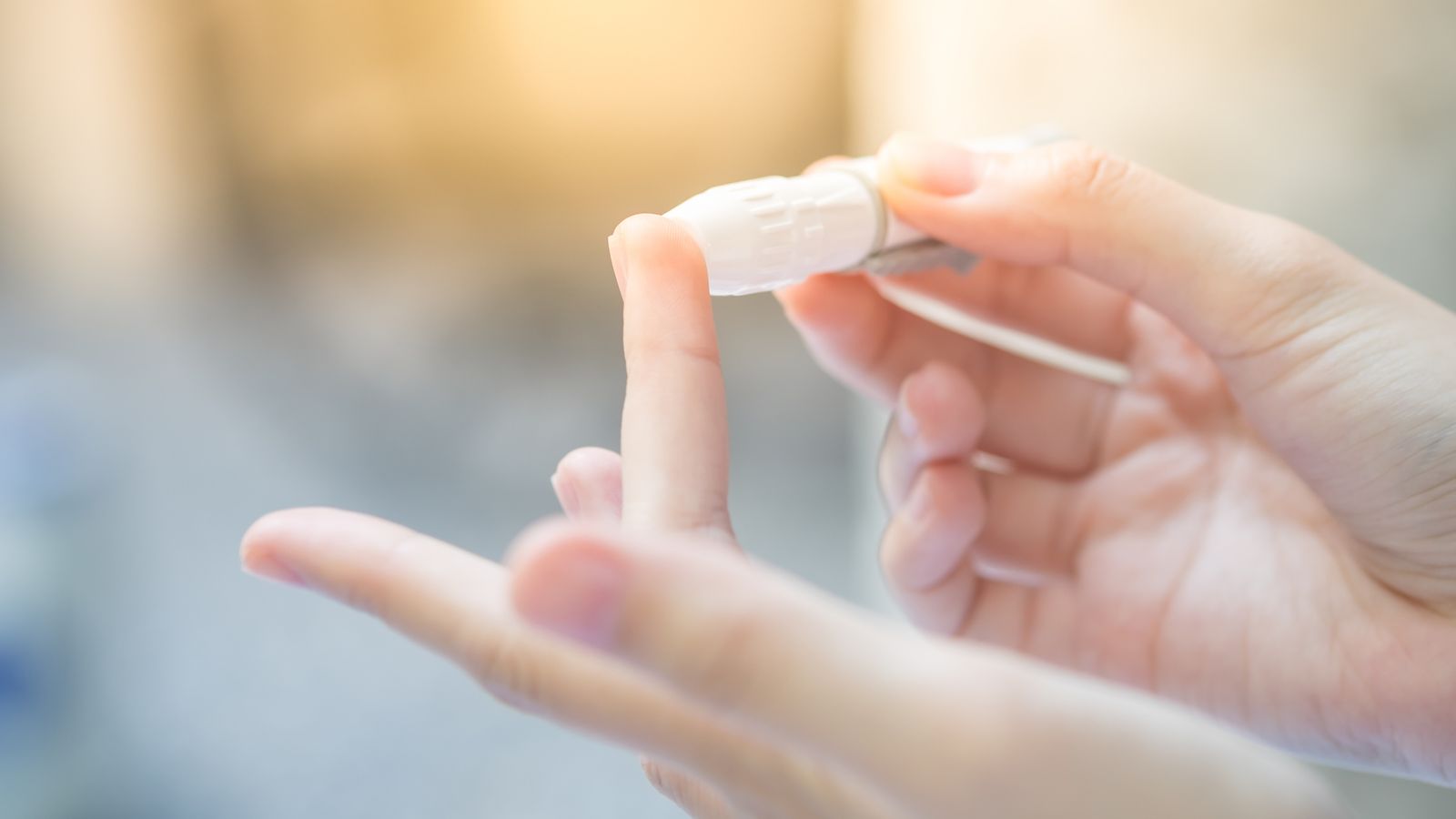
In a development that could transform early detection of Alzheimer's disease, scientists have unveiled a new at-home blood test method that allows individuals to collect a sample with a simple finger prick and mail it to a lab without the need for refrigeration. The technique, detailed in recent research, promises to make testing more accessible, particularly in remote or underserved areas where traditional diagnostic tools are often out of reach. Led by experts from institutions in Arizona and Sweden, the study involved 337 participants and demonstrated a strong correlation between the self-collected samples and established testing methods.
The research, published this week, highlights how a few drops of blood dried on a special card can reveal key proteins associated with Alzheimer's pathology and other brain changes. Traditional diagnostics for the progressive brain disorder, which impairs memory, thinking, and behavior, typically rely on invasive procedures like brain scans or lumbar punctures to extract spinal fluid. These methods are not only costly but also require specialized medical facilities, limiting their availability. In contrast, emerging clinical blood tests have shown promise in accuracy but demand professional phlebotomy and controlled storage conditions to preserve sample integrity.
Dr. Nicholas Ashton, who spearheaded the study while affiliated with the Banner Health Institute in Arizona and the University of Gothenburg's Sahlgrenska Academy in Sweden, emphasized the potential game-changing nature of this innovation. "This breakthrough could fundamentally change how we conduct Alzheimer's research by proving that the same biomarkers doctors use to detect Alzheimer's pathology can be measured from a simple finger prick collected at home or in more remote community settings," Ashton said in a statement. He noted that participants in the trial successfully obtained their own samples without assistance from researchers, underscoring the method's user-friendliness.
The trial's results indicated that the dried blood spot technique accurately identified biomarkers linked to Alzheimer's in the 337 volunteers, matching outcomes from conventional tests. This self-sampling approach eliminates many logistical barriers, such as the need for immediate lab transport or cold-chain logistics, which have historically restricted blood-based Alzheimer's screening. Ashton further explained that while the method is not yet ready for widespread clinical deployment—potentially years away—it opens new avenues for research. "We're opening doors to research that was previously impossible—studying diverse populations, conducting large-scale screening studies, and including communities that have been historically underrepresented in Alzheimer's studies," he added.
Alzheimer's disease affects millions worldwide, with symptoms gradually worsening over time and no known cure currently available. In the United States alone, it impacts over 6 million people aged 65 and older, according to estimates from the Alzheimer's Association, and its prevalence is expected to rise as populations age. Early detection is crucial for managing symptoms and participating in clinical trials for potential treatments, yet access remains uneven. The new method could address this disparity by enabling participation from rural areas, low-income communities, or even international settings where advanced healthcare infrastructure is scarce.
Collaborators from the University of Exeter in the United Kingdom also played a key role in the research, contributing expertise in dementia studies. Professor Anne Corbett, a dementia research specialist at the university, expressed enthusiasm about the accessibility gains. "What excites me most is that this work makes this type of research far more accessible," Corbett said. She described the advancement as more than a mere technical improvement, calling it "a paradigm shift in how we conduct neuroscience research." Corbett highlighted how it could empower "anyone, anywhere" to contribute to brain disease studies, fostering broader scientific progress.
Another co-author, Professor Clive Ballard from the University of Exeter Medical School, focused on practical applications beyond research. He indicated that ongoing investigations will explore whether the technique could serve as an initial screening tool in community settings. "Our ongoing work will determine whether this could also be a valuable way of identifying people in the community who would benefit from more detailed diagnostic tests for Alzheimer's disease," Ballard stated. This perspective suggests the method might eventually flag at-risk individuals for follow-up care, potentially streamlining healthcare pathways.
The study's findings build on a growing body of evidence supporting blood-based biomarkers for Alzheimer's. Recent years have seen advancements in plasma tests that measure proteins like amyloid and tau, which accumulate in the brain during the disease's early stages. However, these tests' reliance on fresh samples has confined them to clinical environments. By contrast, the finger-prick drying process—similar to methods used in newborn screening for metabolic disorders—preserves biomarkers effectively over postal transit, according to the researchers.
While the innovation has garnered praise, experts caution that it is still in the experimental phase. The trial's 337 participants were drawn from various demographics, but larger-scale validation is needed to confirm reliability across age groups, ethnicities, and health conditions. Regulatory approval for home-use kits would also require rigorous safety and efficacy reviews from bodies like the Food and Drug Administration in the U.S. or the Medicines and Healthcare products Regulatory Agency in the U.K.
This development comes amid heightened global attention to dementia. Just last month, a separate study revealed that Alzheimer's may be more prevalent among the elderly than previously estimated, with undiagnosed cases potentially skewing statistics. In the U.K., the National Health Service is preparing to trial advanced blood tests that could revolutionize diagnosis, aligning with efforts to integrate simpler tools into routine care. Meanwhile, intriguing parallels have emerged in veterinary research, where studies show cats developing dementia symptoms akin to humans, suggesting cross-species insights into the condition.
Beyond diagnostics, the method's implications extend to public health policy. Governments worldwide are grappling with the economic burden of Alzheimer's, projected to cost trillions in care by mid-century. Easier testing could enable earlier interventions, such as lifestyle modifications or emerging therapies like anti-amyloid drugs approved in recent years. In the U.S., the Biden administration has prioritized brain health initiatives, including funding for biomarker research, which could accelerate adoption of innovations like this one.
Scientists involved stress that equitable access will be paramount. Historical underrepresentation of minority groups in Alzheimer's studies has led to gaps in understanding disease progression across populations. Ashton's team aims to leverage the postal sampling to include more diverse cohorts, potentially uncovering genetic or environmental factors unique to certain communities. Corbett echoed this, noting that the shift toward inclusive research could yield breakthroughs tailored to global needs.
Looking ahead, the researchers plan to expand trials to thousands of participants, testing the method's viability in real-world scenarios like community health fairs or online recruitment drives. Partnerships with postal services and labs will be essential to ensure sample quality during shipping. If successful, this could pave the way for over-the-counter kits, much like glucose monitors for diabetes, democratizing Alzheimer's awareness.
In the broader landscape of neurodegenerative diseases, this finger-prick test represents a step toward less burdensome monitoring. As Ballard put it, the focus now is on translating lab success into community benefit, ensuring that those who need it most—often the hardest to reach—gain from the progress. With Alzheimer's touching families across socioeconomic lines, such innovations offer hope for a future where early detection is no longer a privilege but a standard option.
For now, the breakthrough underscores the rapid evolution in dementia science, driven by interdisciplinary collaboration across continents. As research progresses, it may not only aid in spotting warning signs but also fuel the quest for prevention and treatment, ultimately easing the toll of this unrelenting condition.