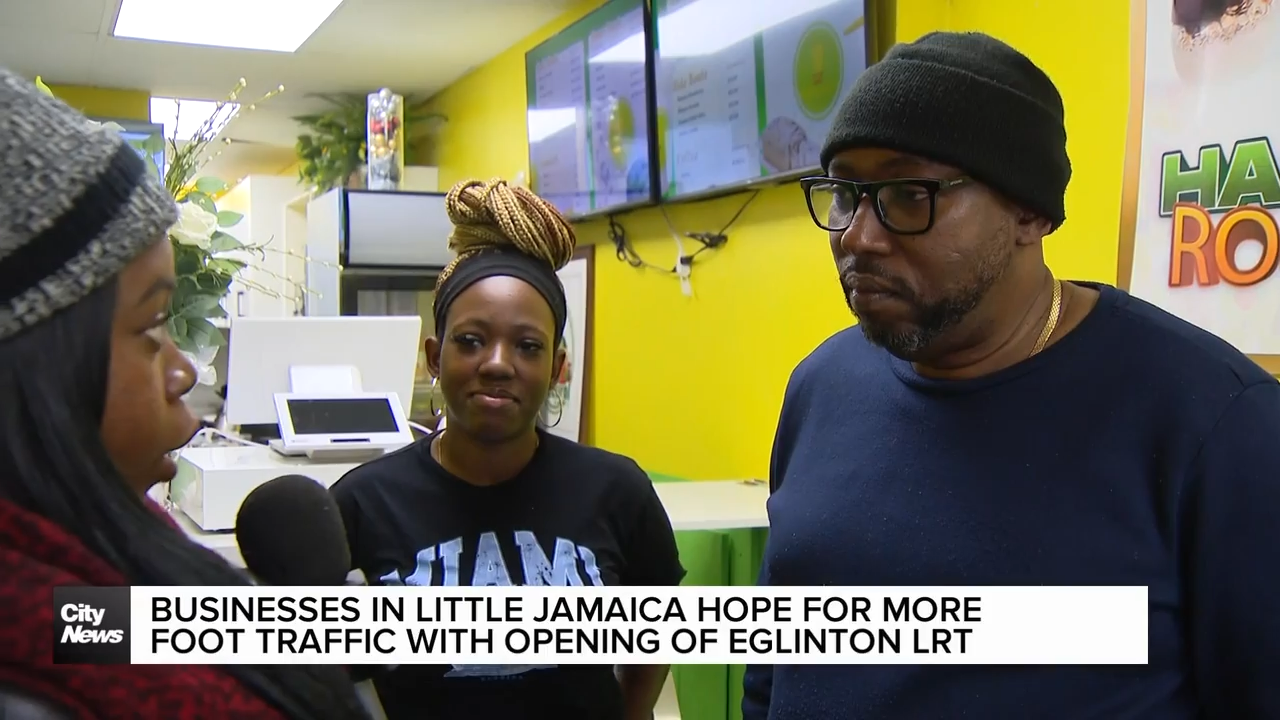
TORONTO — In the heart of Toronto's Little Jamaica, a vibrant cultural enclave along Eglinton Avenue West between Keele Street and Allen Road, the long-awaited opening of the Eglinton Crosstown LRT has brought mixed emotions for local business owners. While many hoped the new Line 5 transit would revive foot traffic after years of disruptive construction, one staple juice bar has shuttered its doors just as the line began operations. Claude Thompson, owner of Natural Flavas at 1657 Eglinton Avenue West, closed his brick-and-mortar store on Saturday, February 21, 2026, citing insufficient numbers to sustain the business amid rising costs and lingering effects of the project delays.
Thompson opened the storefront in 2024, optimistic that the LRT would be operational by then and boost the neighborhood's economy. "Yea we’re doing it, we thought the experience would have been different," Thompson told reporters. "The numbers are not enough to support a business like this, and given the cost of business today, it makes it a little difficult." He endured multiple postponements, including a rumored July 2025 opening that never materialized. "With the constant delays, we kept going, we kept going," he said. "We heard it was going to open in July, we said okay let’s hold out and see the result … The irony is, now that it’s open, we are closing."
His daughter, Gabrielle Thompson, shared the family's disappointment, pointing to the construction's early toll. "I just think that the foot traffic was necessarily not there from the beginning since the construction started," she said. The Thompsons acknowledged broader changes in the area, noting that "the character of the neighbourhood has changed significantly" in recent years, though they didn't pin the blame solely on the LRT work. Despite the closure, Claude Thompson remains committed to his brand. "We are more thinking about coming to you rather than you coming to us, so you may see us popping up elsewhere," he explained. "We’re out of the store, but we’re really not out of business. We’re going to continue."
Little Jamaica, a historical hub for Toronto's Black community since the mid-20th century, has long been known for its Caribbean cuisine, shops, and cultural events. But the Eglinton Crosstown LRT project, which broke ground in 2011, has tested its resilience. The 19-kilometer line, connecting Mount Dennis in the west to Kennedy Station in the east, faced numerous setbacks, including technical issues and supply chain problems, pushing its completion to early 2026. During this period, the construction barricades, detours, and noise significantly deterred customers, leading to widespread closures.
According to a 2022 report from the City of Toronto’s economic and community development committee, more than 140 stores in the corridor have shut down permanently since construction began. Analysts highlighted the disproportionate impact on Black-owned businesses, with 48 of the 85 such establishments in Little Jamaica closing their doors. Jason McDonald, chair of the Little Jamaica Business Improvement Area (BIA) and owner of Casual Beauty Salon at 1572 Eglinton Avenue West—a fixture in the neighborhood for over 25 years—described the ongoing crisis. "As you’ve seen, there are businesses still closing," McDonald told CityNews. "The foot traffic has not increased, I’m not saying it won’t in the future, however right now, Little Jamaica is in a state of emergency, and we need support from all levels of the government."
McDonald, who has witnessed over 300 small businesses close during his tenure, called for urgent intervention. "We need inquiries. We need compensation immediately and when I say compensation, I’m not talking about for the planters or the streetscape, or for the lights, business owners actually getting direct cheques from the government," he explained. The BIA recently held its first town hall meeting on Thursday, February 19, 2026, with plans for more gatherings to strategize revival efforts. Community members, including long-time residents, gathered to discuss ways to restore the area's economic vitality.
Not all owners share the Thompsons' immediate pessimism. Dhanushka Subeappu Kankanamalage, proprietor of Kingpin Wings at 1708 Eglinton Avenue West, reported early signs of improvement near the Oakwood station. "Right after Line 5 opened, I see a difference, but it will take some time I think," he said. Businesses around the station, one of 25 stops on the line, are particularly hopeful, as the LRT is expected to serve up to 14,600 passengers per hour in each direction once fully integrated with the TTC network.
Alicia Bailey, founder of Everblüm Essentials, set up a pop-up shop over the weekend inside the newly opened Souperlicious restaurant near Oakwood station. Reflecting on her childhood memories of the neighborhood, Bailey expressed sorrow over the losses. "I remember coming up to Little Jamaica with my parents as a child and yeah it’s just sad to see over the years that the construction stopped a lot of businesses," she said. Her temporary setup underscores the adaptive strategies some entrepreneurs are employing to weather the storm.
Government responses to the plight have been measured. Ontario Premier Doug Ford ruled out a public inquiry into the LRT delays earlier this month, a decision that drew sharp rebuke from local leaders. "Mr. Ford is free to have his opinions, he was elected premier, however, we disagree on this one," McDonald stated. Ford's office has previously attributed the delays to unforeseen engineering challenges and global events, including the COVID-19 pandemic, but has not committed to further probes.
Metrolinx, the provincial agency overseeing the project, emphasized its support programs in a statement to CityNews. The agency has a "dedicated community benefits and support program for local businesses and social enterprises in Toronto," which includes collaboration with Eglinton-facing BIAs like Little Jamaica's. Through three City of Toronto grants totaling $1.38 million, funding is provided for ongoing financial support, administered according to program guidelines and application processes. However, critics like McDonald argue that these measures fall short of direct aid to individual owners grappling with lost revenue.
The completion of the Eglinton Crosstown marks the end of a 15-year saga that transformed Toronto's transit landscape but at a steep cost to communities like Little Jamaica. With the line now operational, initial ridership data from Metrolinx shows a gradual uptick, though experts predict it could take months for patterns to stabilize. Urban planners note that similar projects, such as Vancouver's Canada Line, experienced a lag before economic benefits materialized, often requiring complementary investments in pedestrian-friendly infrastructure.
For residents and business owners, the stakes are personal. McDonald reiterated the community's enduring spirit: "The community is here. We want to serve; however, we need the support." As town halls continue and advocates push for policy changes, Little Jamaica's future hinges on whether the promised transit boon can offset years of hardship. Thompson's pivot to pop-ups may foreshadow a more mobile retail scene, but many hope for a return to the bustling streets of old.
In the broader context of Toronto's growth, the LRT's launch aligns with the city's push toward sustainable transport, aiming to reduce congestion on Eglinton Avenue, one of the busiest corridors. Yet, for Little Jamaica, the narrative is one of survival amid progress. As Bailey put it, the neighborhood's cultural significance demands preservation: a place where families once gathered now seeks renewal through collective action and governmental backing.