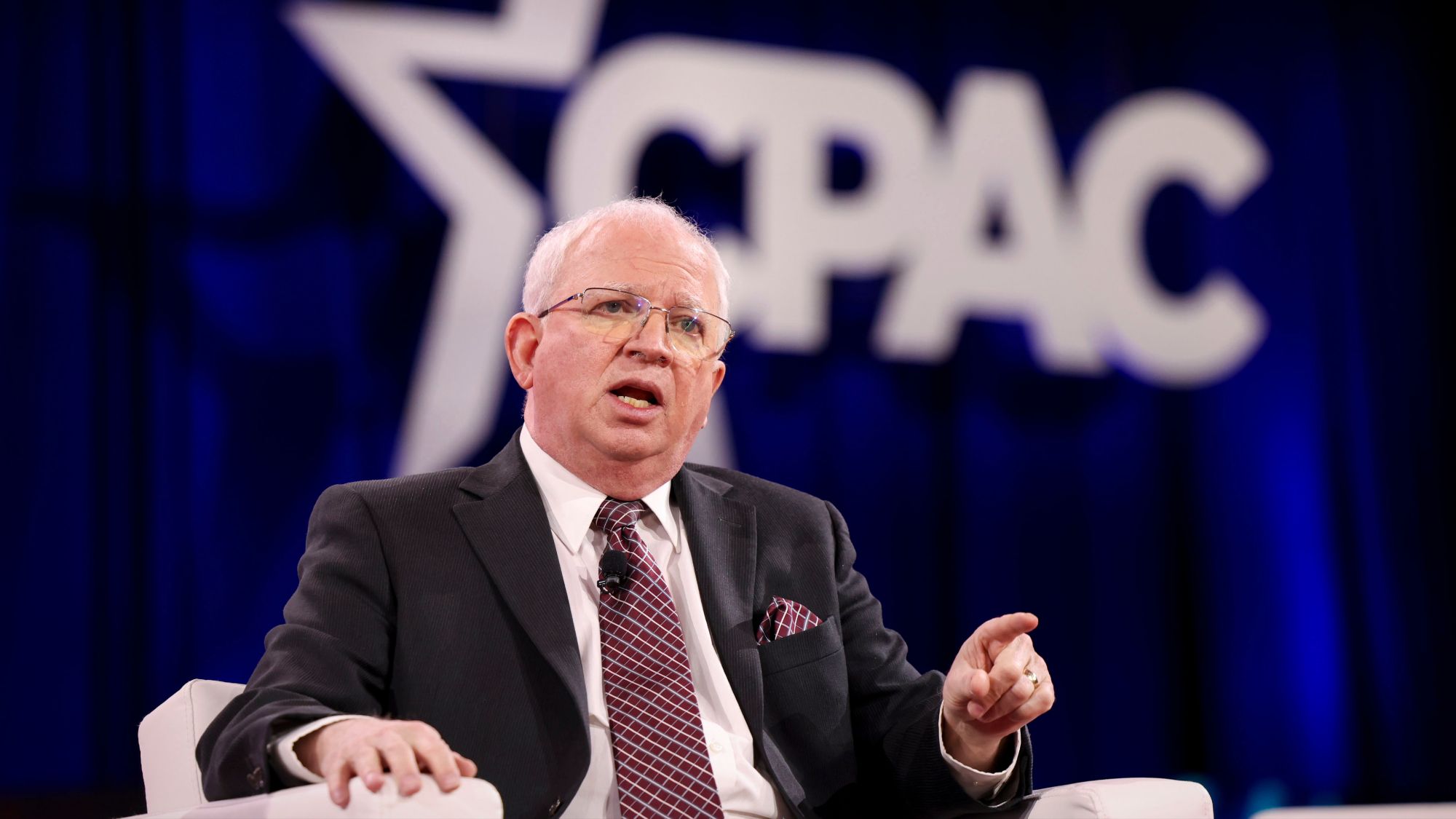
In a significant ruling that underscores ongoing accountability efforts related to the 2020 U.S. presidential election, the California Supreme Court has ordered the disbarment of attorney John Eastman, a prominent figure in former President Donald Trump's attempts to challenge the results. The decision, issued on Wednesday, upholds a 2024 ruling by the State Bar Court and requires Eastman to be "stricken from the roll of attorneys," effectively revoking his license to practice law in California.
Eastman, a longtime conservative legal scholar and former dean of Chapman University's law school, played a central role in devising strategies aimed at overturning Joe Biden's victory in the 2020 election. According to the State Bar Court's findings, Eastman concocted plans to submit slates of fake electors in key battleground states and to pressure then-Vice President Mike Pence to reject the certification of Biden's electoral votes during the January 6, 2021, joint session of Congress. These efforts, which culminated in the violent attack on the U.S. Capitol that day, were part of a broader campaign by Trump allies to subvert the election outcome.
The California Supreme Court's order marks the latest consequence for Eastman, who has faced intense scrutiny since the events of January 6. "Eastman remains one of the highest-profile figures in Trump’s orbit to face enduring consequences for participating in his 2020 election schemes," Politico reported, highlighting how the disbarment adds to a series of professional repercussions for those involved. While the ruling applies specifically to his California license, disbarment decisions are typically adopted by bar associations in other states, potentially limiting Eastman's ability to practice law nationwide.
Eastman's involvement began in the weeks following the November 3, 2020, election, when Trump refused to concede defeat. As a key advisor, Eastman authored memos outlining legal theories that argued Pence had unilateral authority to decide which electoral votes to count during the certification process. One such memo, circulated in early January 2021, suggested Pence could declare Trump the winner in disputed states or simply exclude those states' votes altogether, even without evidence of widespread fraud—a claim that has been repeatedly debunked by courts and election officials.
The State Bar of California initiated disciplinary proceedings against Eastman in 2022, charging him with multiple violations of professional ethics, including dishonesty and actions that brought discredit upon the legal profession. After a lengthy trial before the State Bar Court in 2023 and 2024, the panel recommended disbarment, a decision now affirmed by the state's highest court. "The ruling upheld a 2024 State Bar Court decision to disbar Eastman for concocting strategies to submit fake Trump electors and push Vice President Mike Pence to block Joe Biden’s victory in Congress on Jan. 6, 2021," according to a report from The Week.
Eastman's legal team has vowed to fight the decision, announcing plans to appeal to the U.S. Supreme Court on First Amendment grounds. They argue that the disbarment infringes on Eastman's rights to free speech and petition the government, framing his actions as legitimate legal advocacy rather than unethical conduct. "Eastman’s legal team said they would appeal his disbarment to the U.S. Supreme Court on First Amendment grounds," The Week noted, signaling that the case could extend the legal battles over January 6 accountability into the federal courts.
This development comes amid a wave of similar actions against lawyers associated with Trump's election challenges. State bars across the country have been actively pursuing disbarment proceedings against several attorneys, aiming to hold them accountable for what many view as attempts to undermine democracy. "State bars across the country have been trying to seek accountability against Eastman and other lawyers involved in trying to subvert the election," The New York Times reported, emphasizing the coordinated nature of these efforts.
For instance, Rudy Giuliani, Trump's personal attorney and a vocal proponent of election fraud claims, was disbarred in New York and Washington, D.C., in 2024 following findings that he made false statements about the election. Similarly, Jeffrey Clark, a former Justice Department official who pushed for investigations into unfounded voter fraud allegations, faces a disbarment in Washington, D.C., recommended in late 2024 but currently tied up in appeals as of early 2025. These cases illustrate a pattern where professional regulatory bodies are imposing sanctions on those who promoted baseless legal theories.
Eastman's disbarment also intersects with broader investigations into the January 6 events. He was indicted in Georgia in 2023 as part of a racketeering case against Trump and 18 co-defendants, accused of participating in a conspiracy to unlawfully alter the election results in that state. Additionally, Eastman testified before the House Select Committee investigating the Capitol attack, where he invoked his Fifth Amendment rights more than 100 times but did provide some documents and limited testimony.
Supporters of Eastman, including conservative legal groups, have decried the disbarment as politically motivated persecution. They contend that the proceedings represent an overreach by state regulators into attorneys' rights to represent clients zealously, even in controversial matters. Critics of the ruling, such as those from the Alliance Defending Freedom, have argued in similar cases that ethical violations must be weighed against the context of representing a sitting president during a disputed election.
On the other side, election law experts and bar association officials maintain that Eastman's actions crossed clear ethical lines. "The evidence showed that Eastman knowingly promoted false claims and pressured public officials in ways that threatened the integrity of the electoral process," said a spokesperson for the State Bar of California in a statement following the 2024 trial court decision. Legal ethicists have pointed to the memos' reliance on fringe interpretations of the Electoral Count Act of 1887, which were rejected by federal courts and Pence himself on January 6.
The timing of the California Supreme Court's ruling, coming just weeks before the 2024 presidential inauguration and amid renewed political tensions, amplifies its significance. As Trump prepares to return to the White House following his 2024 victory, the disbarment serves as a reminder of the lasting fallout from his previous term's end. It also raises questions about how such professional sanctions might influence the legal strategies of future administrations facing close elections.
Beyond Eastman, the ruling could set precedents for reciprocal disbarments in states where he has practiced or sought admission, such as Texas and Colorado, where preliminary proceedings have been reported. The American Bar Association has monitored these cases closely, noting in a 2024 report that over a dozen attorneys linked to the 2020 election challenges face some form of discipline. "Disbarment decisions are typically adopted by authorities in other jurisdictions," The Week observed, suggesting Eastman's professional future hangs in the balance pending interstate bar actions.
Looking ahead, the appeal to the U.S. Supreme Court could take months or years to resolve, potentially reaching the court by late 2025 or 2026. If successful, it might not only reinstate Eastman's license but also challenge the scope of state bar authority over political speech. Legal observers, including those from the Brennan Center for Justice, warn that such appeals could further polarize debates over lawyer ethics in high-stakes political litigation.
In the end, Eastman's disbarment represents a pivotal moment in the post-January 6 reckoning, where the legal profession grapples with its role in safeguarding democratic institutions. As state bars continue their pursuits, the case underscores the enduring divide over the 2020 election and the mechanisms designed to prevent its repetition.